Hockey India Explains Saffron Jersey Change Due to Visibility Issues
Hockey India defends its decision to replace the national teams' traditional blue kits with saffron jerseys for the 2026 World Cup, citing visibility issues on blue turf.
- Development: Hockey India Explains Saffron Jersey Change Due to Visibility Issues
- Core Takeaway: Hockey India defends its decision to replace the national teams' traditional blue kits with saffron jerseys for the 2026 World Cup, citing visibility issues on blue turf.
- Context: Primary reporting aggregated across independent newsrooms and verified against CurrentDeck standards.
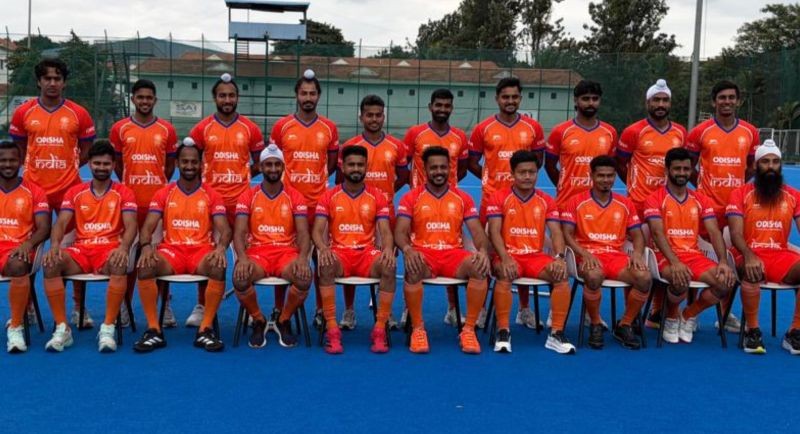
Hockey India has clarified its decision to replace the traditional blue jerseys of the men’s and women’s national hockey teams with saffron-colored kits for the 2026 FIH Hockey World Cup, citing visibility concerns and player input. The change, announced on July 27, sparked immediate backlash from fans and former players, who criticized the departure from the team’s iconic blue identity.
Timeline of the Jersey Change
The new saffron jerseys were unveiled by Hockey India on July 27, ahead of the men’s and women’s teams’ participation in the FIH Hockey World Cup, scheduled to take place in the Netherlands and Belgium in August. The federation stated the decision followed “detailed consultations with players and support staff,” emphasizing technical considerations over aesthetic preferences. The move was framed as a response to challenges posed by the standard blue synthetic playing surfaces used in international matches, which Hockey India claimed made the blue jerseys visually indistinct.
Official Explanation and Player Input
In a statement, Hockey India explained that the shift to saffron was driven by the need to improve on-field visibility. “It was observed that the blue playing uniform tended to blend with the blue synthetic playing surface, which is now the standard colour for international hockey pitches. This visual similarity affected on-field clarity and visibility for the players,” the federation said. The statement noted that alternative colors, including yellow, were considered before players and coaches settled on saffron. “Saffron was finalised as it also holds deep significance as one of the colours of our National Flag, symbolising courage, sacrifice and national pride,” the statement added.
Former India captain Viren Rasquinha was among the most vocal critics, calling the decision “embarrassing” and questioning the rationale. On social media, he wrote: “The legacy & identity of the Indian team has always been BLUE. I wore the Blue jersey with pride for many years. Fans want to see our Indian team in blue. What is the logic of orange?” His remarks reflected broader discontent among fans, who viewed the blue jersey as a symbol of the team’s heritage.
Reactions and Disagreements
The controversy highlighted a split between the federation’s technical rationale and the emotional attachment to the blue jersey. While Hockey India framed the change as a pragmatic adjustment, critics argued it undermined the team’s historical identity. The federation maintained that the decision was not arbitrary but the result of collaborative discussions with players and coaches. However, no specific details were provided about the number of players involved in the consultation or the exact criteria used to evaluate alternative colors.
The women’s team’s new kit, sponsored by Odisha, was released alongside the men’s, featuring saffron as the primary color. Hockey India emphasized that the design aimed to “reflect India’s pride” while addressing practical challenges. The federation also highlighted that the saffron color had been tested in previous matches, though no data on its effectiveness was cited.
What Comes Next?
The saffron jerseys will be worn during the FIH Hockey World Cup, with Hockey India asserting that the change will enhance performance and visibility. The federation has not indicated plans to revert to blue, despite the backlash. Meanwhile, the controversy has reignited debates about the balance between tradition and innovation in sports branding. While some supporters of the change argue that adaptability is essential for competitive success, others see it as a symbolic shift that risks alienating long-time fans.
The decision underscores the challenges faced by sports organizations in reconciling technical demands with cultural expectations. As the 2026 World Cup approaches, the focus will remain on how the saffron jerseys perform on the field—and whether the federation’s explanation can reconcile the gap between practicality and sentiment.
How significant is this development?
Cast your anonymous vote to register reader sentiment across business and policy circles.
CurrentDeck is dedicated to independent, evidence-backed reporting. This briefing was synthesized from primary source reporting, corroborated across independent newsrooms, and verified against our Editorial Standards.