Coral reef long presumed dead discovered alive off the coast of Benin
Researchers have rediscovered a thriving mesophotic coral reef off the coast of Benin, proving that structures dismissed as dead in the 1960s are alive.
- Development: Coral reef long presumed dead discovered alive off the coast of Benin
- Core Takeaway: Researchers have rediscovered a thriving mesophotic coral reef off the coast of Benin, proving that structures dismissed as dead in the 1960s are alive.
- Context: Primary reporting aggregated across independent newsrooms and verified against CurrentDeck standards.
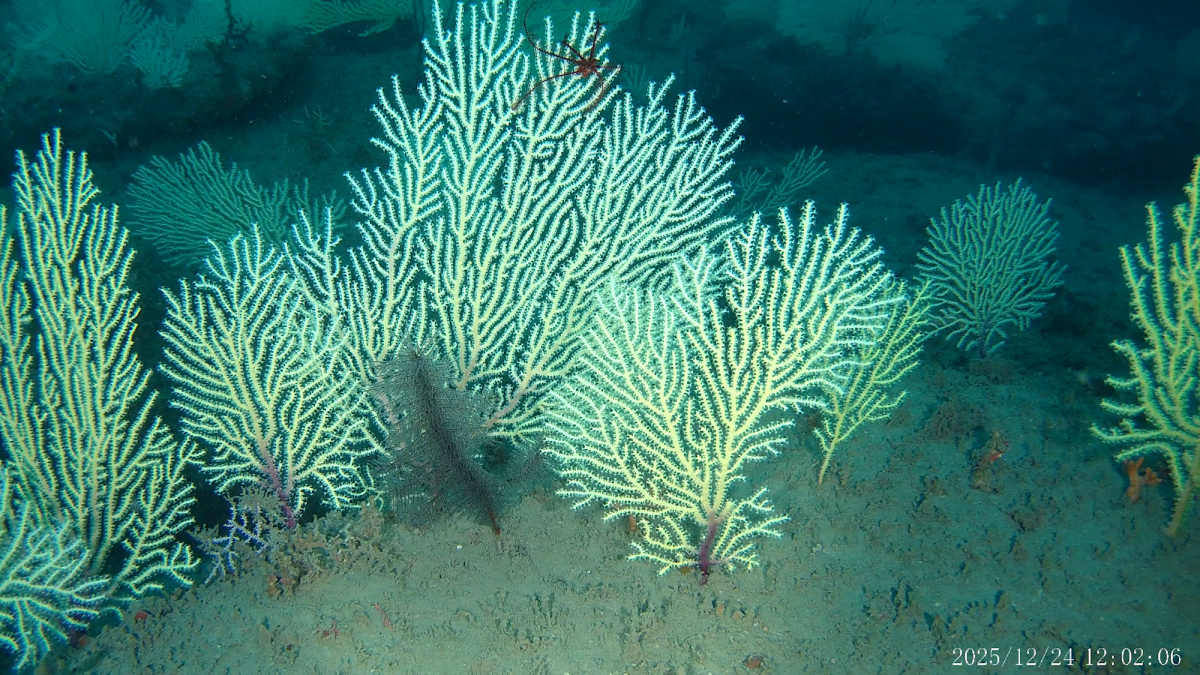
A deep-ocean coral reef presumed dead for nearly 60 years off the coast of Benin has been rediscovered and found to be teeming with life, according to a study published in *Frontiers in Marine Science*. The discovery, led by Gérard Zinzindohoué of the Institut de Recherches Halieutiques et Océanologiques du Bénin, marks the first confirmed living mesophotic coral ecosystem on the Gulf of Guinea continental shelf. The reef, located more than 50 metres below the surface, was initially identified in the 1960s but dismissed as nonviable due to the limitations of early oceanographic tools.
During the 1960s, surveys aimed at assessing potential fishing areas detected hard structures on the seafloor but lacked the technology to directly observe their condition. Researchers assumed the formations were dead, a conclusion that persisted for decades. In 2025, Zinzindohoué’s team revisited the site using side-scan sonar to map the seafloor, identifying two promising targets. They then deployed an underwater drone and the National Geographic Exploration Technology Lab’s Deep Sea Camera System to investigate. The footage revealed a structured reef dominated by octocorals, hosting at least eight coral types and eight fish species, including golden African snappers and Guinean angelfish.
The reef’s survival highlights the limitations of mid-20th-century marine science. Mesophotic coral ecosystems — found in the “twilight zone” between 30 and 150 metres — were historically overlooked due to their inaccessibility. Traditional methods like trawl nets and rudimentary cameras could not capture their complexity, often leading to misclassification. “It was a mix of long days at sea, technical problems, and a lot of uncertainty,” Zinzindohoué recalled, describing the challenges of the 2025 expedition. The use of modern underwater drones and passive camera systems allowed the team to overcome these barriers, producing visual evidence that met the scientific standard for confirming ecological viability.
The discovery has sparked discussions about the broader implications for marine conservation. Scientists emphasize that the reef’s survival does not necessarily mean it is thriving, its health, biodiversity, and historical context remain under investigation. “We’ve confirmed it’s alive, but we haven’t confirmed it’s thriving,” said Zinzindohoué, noting the need for follow-up sampling and baseline data. The lack of historical records for the site complicates efforts to assess its ecological status, though the presence of diverse species suggests resilience.
The reef’s rediscovery also underscores the role of technological advancements in marine exploration. Underwater drones, once prohibitively expensive, have become more accessible, enabling deeper and more detailed surveys. This shift has revealed gaps in global ocean knowledge: NOAA estimates that over 80% of the ocean remains unmapped or unexplored. The Benin reef, situated in a region historically underfunded for marine research, exemplifies how technological and financial constraints can lead to “functional forgetting” of ecosystems. “It’s not an anomaly,” said *sciencesensei.com*, noting that similar sites may exist along under-surveyed coastal margins worldwide.
Conservationists warn that the reef faces ongoing threats, including bottom trawling, deep-sea mining, and climate change. While its depth may have shielded it from some pressures, the Gulf of Guinea’s industrial activity and coastal development pose risks. Zinzindohoué advocates for targeted research programs to better understand the reef’s ecology and advocate for its protection. “Every additional piece of information matters,” he said, stressing the importance of systematic study.
The find has reignited debates about the value of revisiting historical data. Marine biologists describe the reef as a “Lazarus taxon”, a species or ecosystem that reemerges after being presumed lost. Such discoveries challenge assumptions about biodiversity and highlight the need for updated survey methods. As *scienceblog.com* noted, the Benin reef’s case illustrates how affordable imaging technologies could transform deep-sea exploration, potentially uncovering other hidden ecosystems. For now, the reef stands as proof of the ocean’s capacity to surprise, and to the evolving tools that allow scientists to listen to its secrets.
How significant is this development?
Cast your anonymous vote to register reader sentiment across business and policy circles.
CurrentDeck is dedicated to independent, evidence-backed reporting. This briefing was synthesized from primary source reporting, corroborated across independent newsrooms, and verified against our Editorial Standards.


