German police search for the suspect in Berlin Pride attack that killed …
German police are hunting for Abdul Ballout, a 21-year-old suspect with ties to ISIS, following a deadly van and machete attack at Berlin's Pride festival.
- Development: German police search for the suspect in Berlin Pride attack that killed …
- Core Takeaway: German police are hunting for Abdul Ballout, a 21-year-old suspect with ties to ISIS, following a deadly van and machete attack at Berlin's Pride festival.
- Context: Primary reporting aggregated across independent newsrooms and verified against CurrentDeck standards.
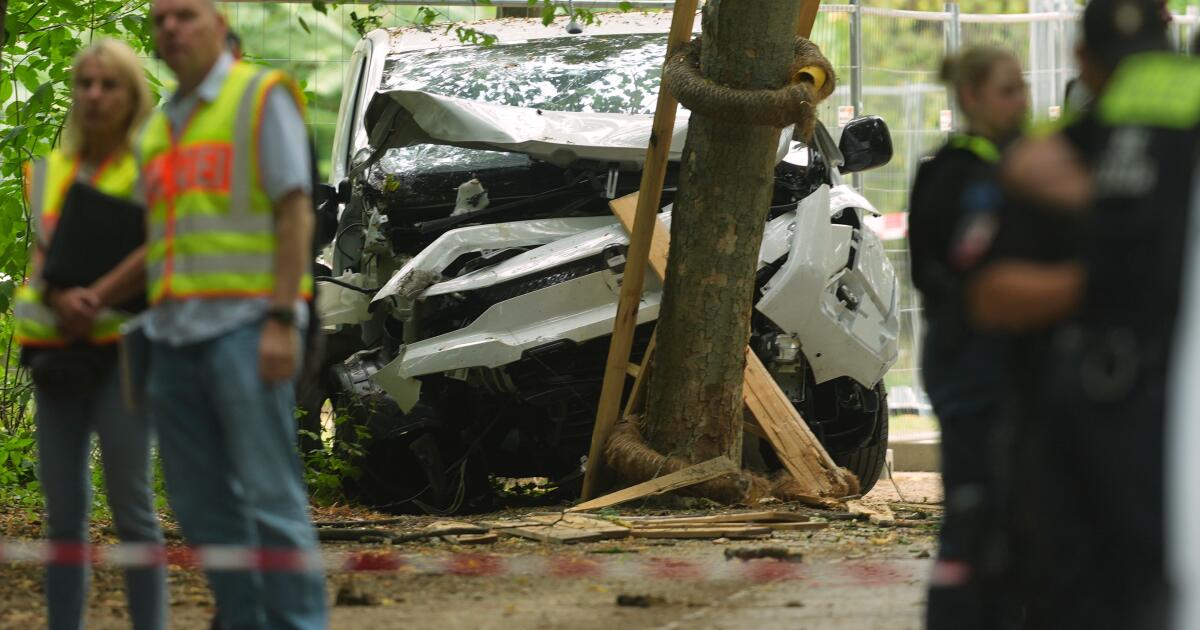
German police are intensifying their search for Abdul Ballout, a 21-year-old suspect linked to a van attack during Berlin’s Pride festival that killed one person and injured at least 29, with authorities labeling the incident an Islamist extremist terror attack. The assault, which occurred near the Brandenburg Gate on Saturday, has left the LGBTQ+ community and the nation reeling, as investigators piece together the suspect’s radicalization and potential ties to extremist networks.
The attack unfolded in the Tiergarten park, a few hundred meters from the closing party of the Christopher Street Day celebrations. A white van struck a crowd, then collided with a tree before the driver, identified as Ballout, allegedly used a machete to stab others. Police confirmed the victim was a woman, with three people sustaining life-threatening injuries and eight others seriously hurt. The incident prompted the immediate cancellation of the festival’s closing events, as attendees were urged to leave the area.
Ballout, a German citizen of Lebanese descent, has a documented history of criminal activity and radicalization. Interior Minister Alexander Dobrindt stated that Ballout had previously sought to join the Islamic State group, traveling to Lebanon in 2025 with the intent of reaching Syria. There, he contacted individuals presumed to be ISIS affiliates before being arrested and sentenced to three months in a Lebanese military court for inciting religious conflict. Upon his return to Germany, he was convicted in 2025 of preparing a “serious act of subversive violence” and distributing ISIS propaganda on social media, though his 1-year, 10-month suspended sentence was later appealed by prosecutors.
Authorities describe Ballout as part of Berlin’s “Islamist scene” and note his association with radical networks. Police have issued a wanted notice, warning the public not to approach him, as he is believed to be armed and dangerous. A search of an apartment in the Schoeneberg district on Sunday yielded no results, while the damaged van remained at the attack site. Investigators are also examining whether others were involved, as some victims suffered stab wounds, though no additional suspects have been identified.
The attack has reignited debates over security at public events, particularly LGBTQ+ gatherings, which have increasingly become targets of extremist violence. Berlin Mayor Kai Wegner called the incident an “attack on our way of living together, on our liberal democracy, on our openness and our freedom.” Chancellor Friedrich Merz vowed to intensify efforts to locate Ballout, emphasizing that such acts aim to “divide our society” and “take away our openness and freedom.”
Mourners gathered at the Brandenburg Gate on Sunday, laying flowers, candles, and rainbow flags in tribute. Ashley Jump, a U.K. Resident who attended the parade, expressed solidarity with the community, stating, “They’ll never erase us, we’ll never be gone.” Andre Lehmann of the LSVD+ LGBTQ+ association called the attack a “blow to the heart of the queer community.”
Germany’s history of Islamist extremism includes the 2016 Christmas market attack in Berlin, which killed 13 people, and a 2025 stabbing at the Holocaust Memorial. The current case has prompted calls for heightened security at upcoming events, including Amsterdam’s World Pride, where organizers pledged to maintain “freedom and love” despite the threat. Meanwhile, the suspect’s alleged ties to ISIS and his criminal past underscore the challenges of preventing radicalized individuals from carrying out attacks.
How significant is this development?
Cast your anonymous vote to register reader sentiment across business and policy circles.
CurrentDeck is dedicated to independent, evidence-backed reporting. This briefing was synthesized from primary source reporting, corroborated across independent newsrooms, and verified against our Editorial Standards.