Climate change made Spanish and French wildfires much more likely, studi…
Two new scientific studies reveal that human-caused climate change has drastically increased the likelihood and intensity of devastating wildfires in Spain and France.
- Development: Climate change made Spanish and French wildfires much more likely, studi…
- Core Takeaway: Two new scientific studies reveal that human-caused climate change has drastically increased the likelihood and intensity of devastating wildfires in Spain and France.
- Context: Primary reporting aggregated across independent newsrooms and verified against CurrentDeck standards.
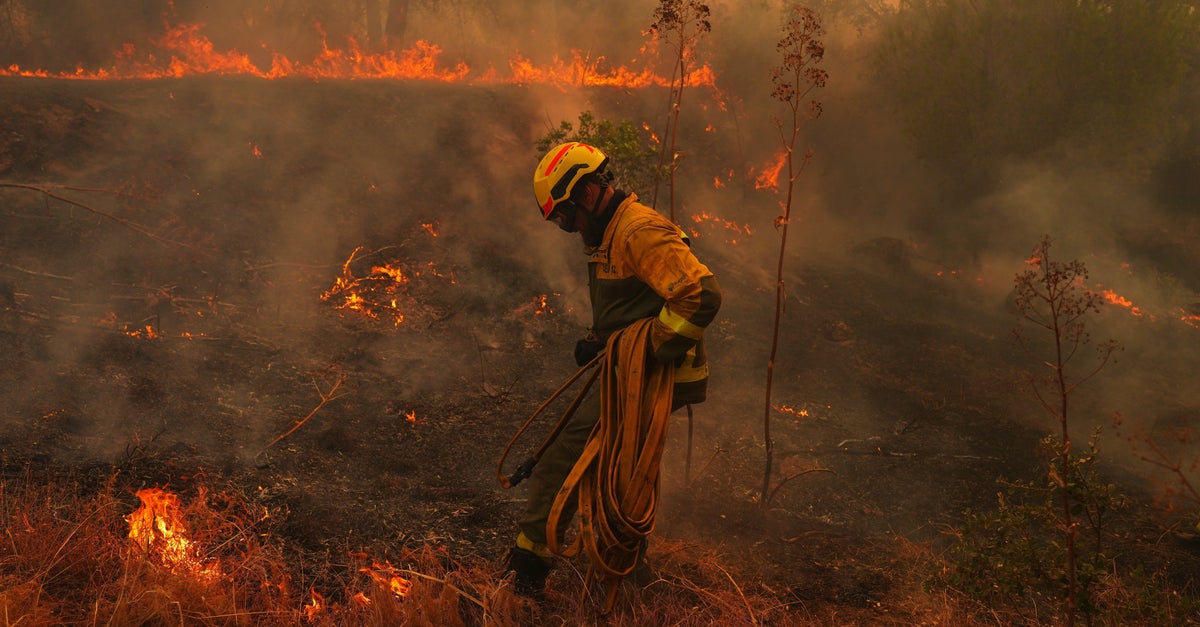
Human-caused climate change has dramatically increased the likelihood of the devastating wildfires currently ravaging Spain and France, according to two new studies released on Thursday. Scientists from the World Weather Attribution initiative found that extreme fire conditions in Spain are 20 times more probable now than in a world without climate change, while in France, such conditions are double what they would be without global warming. The research, conducted amid ongoing blazes, underscores a stark acceleration in the frequency and intensity of fire-prone weather across Southern Europe.
The studies analyzed the interplay of temperature, drought, humidity, and wind to determine how climate change has altered the risk of extreme fire weather. In Spain, the combination of a record-breaking summer and a wet January that spurred excessive vegetation growth followed by a severe drought created ideal conditions for wildfires, said Friederike Otto, a climate scientist at Imperial College London and coordinator of World Weather Attribution. “The change in these fire weather conditions in Spain is really extremely strong and is, I think, one of the largest changes that I’ve seen,” she said.
Spain’s wildfires have been exacerbated by land abandonment, which has left vegetation unchecked and fueling fires, while France’s Bordeaux region faces risks from dense pine forests that burn readily. The World Weather Attribution report, though not peer-reviewed, used accepted scientific methods to compare current fire weather conditions to those of a pre-industrial world 2.5 degrees Celsius cooler. The findings align with a separate study published in *Scientific Reports*, which found that the number of extreme fire weather days in Southern Europe has more than doubled since the 1980s, with each day now 50% more intense than in the past.
“We need to stop burning fossil fuels,” Otto said. “Because as long as we keep burning fossil fuels, temperatures will increase globally. And that will mean that these fire weather conditions will get worse and worse and worse.”
Friederike Otto, climate scientist, via huffpost.com
Researchers noted that while fire suppression efforts in the 1980s and 1990s reduced the number of fires and land burned, climate change has now overwhelmed those gains. “It doesn’t matter how many resources or how much money you have, you just cannot stop the propagation of a fire when the weather is so extreme,” said Raúl Cordero, a climate scientist at the University of Groningen and author of the *Scientific Reports* study. “The climate forcing is so extreme nowadays that it’s just amazing.”
Experts outside the studies echoed these conclusions. Jacob Bendix, a fire scientist at Syracuse University, called the findings “tragically predictable,” citing decades of evidence linking rising temperatures and drought to more frequent and severe wildfires. “We have always known that fires ignite more easily and spread more explosively under conditions of extreme heat and drought,” he said. “And we’ve known for decades that extreme heat and drought are becoming more common due to anthropogenic climate change.”
The research comes as Southern Europe grapples with a surge in extreme weather. Spain’s fires have consumed vast areas, while France faces similar threats. The studies highlight a broader trend: climate change is no longer a distant threat but a present reality, with consequences already outpacing mitigation efforts. John Abatzaglou, a fire scientist at the University of California Merced, emphasized the urgency. “These findings make clear that climate change is not just a future problem, it’s already here,” he said.
Despite the rapid analysis, scientists stress that the long-term trajectory of fire risk depends on global efforts to curb emissions. “As temperatures rise, fire weather conditions will worsen,” Otto said. “There are hard limits to what we can adapt to.” The studies serve as a stark reminder of the escalating stakes, with Southern Europe poised to face even more severe wildfires unless action is taken to address the root causes of climate change.
How significant is this development?
Cast your anonymous vote to register reader sentiment across business and policy circles.
CurrentDeck is dedicated to independent, evidence-backed reporting. This briefing was synthesized from primary source reporting, corroborated across independent newsrooms, and verified against our Editorial Standards.