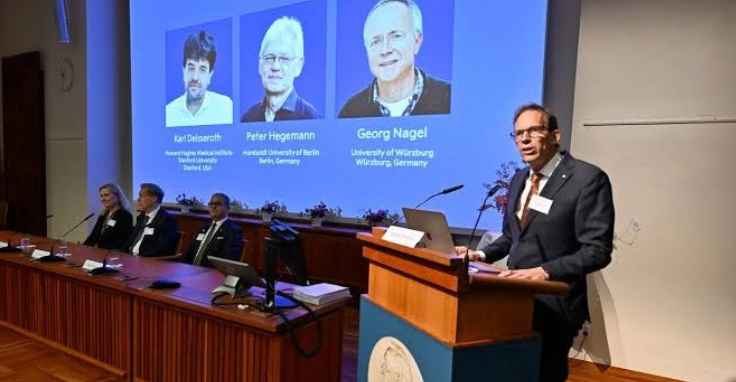
Karl Deisseroth wins Nobel Prize
Karl Deisseroth wins Nobel Prize
- Development: Karl Deisseroth wins Nobel Prize
- Core Takeaway: Karl Deisseroth wins Nobel Prize
- Context: Primary reporting aggregated across independent newsrooms and verified against CurrentDeck standards.
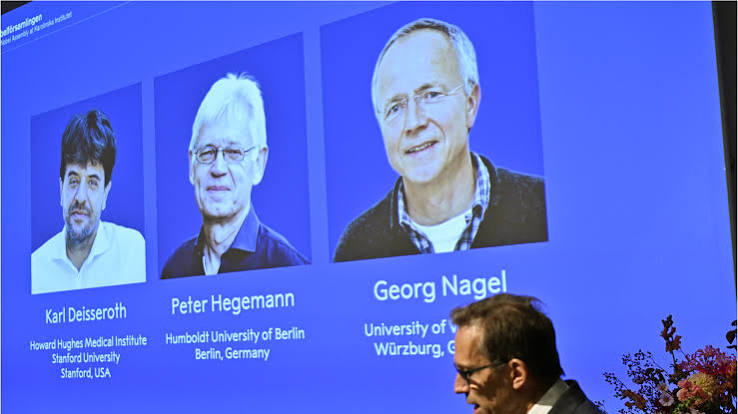
Karl Deisseroth and the Development of Optogenetics
Karl Deisseroth, a US psychiatrist and neurologist, has been awarded the Nobel Prize in Physiology or Medicine, alongside his German colleagues Peter Hegemann and Georg Nagel, for their work in the field of optogenetics. Their research has helped scientists learn more about the inner workings of the brain and has opened new avenues for investigating the mechanisms underlying brain function. The Nobel Committee praised the trio for laying the foundation of a new era in neuroscience by revealing how to switch on and off neural circuits behind specific memories, feelings, and behaviors relevant for neurological and psychiatric disorders, as stated by Per Svenningsson, chair of the Nobel Committee for Physiology or Medicine.How Optogenetics Works
Optogenetics is a technique that uses light-sensitive proteins to influence the activity of nerve cells. The technology has allowed scientists to identify and study neural circuits with a level of precision that was previously difficult to achieve. The process involves inserting a special protein into the brain, which can be controlled using light. By shining light on specific cells, researchers can activate or deactivate them, allowing for a deeper understanding of how the brain works. The discovery of channelrhodopsin, a protein found in algae, was a key breakthrough in the development of optogenetics. When blue light hits the protein, it opens a channel that allows charged particles to pass through and produces an electrical signal, as explained by Deisseroth in a 2010 article published in Scientific American.Applications of Optogenetics
The applications of optogenetics are vast and have the potential to revolutionize the field of neuroscience. Researchers are using the technique to study the neural circuits that underlie various behaviors and diseases, including neurological and psychiatric disorders. Optogenetics may also eventually contribute to clinical applications, including restoring vision in people with certain types of visual impairment. In ongoing clinical trials, scientists have been working to restore vision in people who have become blind due to retinitis pigmentosa, a disease that destroys the eye's rods and cones. By inserting a special protein in the damaged region of the eye, the patient regained some vision when wearing special glasses emitting light, as reported by the Nobel Committee.| Detail | Information |
|---|---|
| Prize Money | £900,000 (12 million Swedish kronor) |
| Year of Discovery | 2005 (channelrhodopsin discovery) |
| Year of Optogenetics Development | 2005 (Deisseroth's introduction of channelrhodopsin into rat nerve cells) |
Reaction to the Nobel Prize
The winners said it was "absolutely wonderful" to get the award, and that it was an honor to share the accolade with friends. Deisseroth himself explained that he was "quite surprised" when he received the news of his award, and that he had a hard time speaking for about 30 seconds after hearing the news. "I couldn't be happier because the trio that the committee picked spans the progression from the early algal explorations all the way to advanced neuroscience experiments, and so this prize really captures the full journey of discovery," said Deisseroth in a press release from Stanford University.Frequently Asked Questions
What is optogenetics?
Optogenetics is a technique that uses light-sensitive proteins to influence the activity of nerve cells, allowing scientists to identify and study neural circuits with a level of precision that was previously difficult to achieve, as explained by the Nobel Committee.
What are the potential applications of optogenetics?
Optogenetics has the potential to reveal neurological diseases and behaviors, and may eventually contribute to clinical applications, including restoring vision in people with certain types of visual impairment, as stated by the Nobel Committee.
Who are the winners of the Nobel Prize in Physiology or Medicine?
The winners of the Nobel Prize in Physiology or Medicine are Karl Deisseroth, Peter Hegemann, and Georg Nagel, who were awarded the prize for their work in the field of optogenetics, as announced by the Nobel Assembly at Karolinska Institutet.
How significant is this development?
Cast your anonymous vote to register reader sentiment across business and policy circles.
CurrentDeck is dedicated to independent, evidence-backed reporting. This briefing was synthesized from primary source reporting, corroborated across independent newsrooms, and verified against our Editorial Standards.