Israel rejects Trump 15-point Gaza plan, says no withdrawal until Hamas …
Israeli Prime Minister Benjamin Netanyahu has formally rejected Donald Trump's 15-point Gaza peace plan, vowing that the IDF will maintain its position until Hamas is completely disarmed.
- Development: Israel rejects Trump 15-point Gaza plan, says no withdrawal until Hamas …
- Core Takeaway: Israeli Prime Minister Benjamin Netanyahu has formally rejected Donald Trump's 15-point Gaza peace plan, vowing that the IDF will maintain its position until Hamas is completely disarmed.
- Context: Primary reporting aggregated across independent newsrooms and verified against CurrentDeck standards.
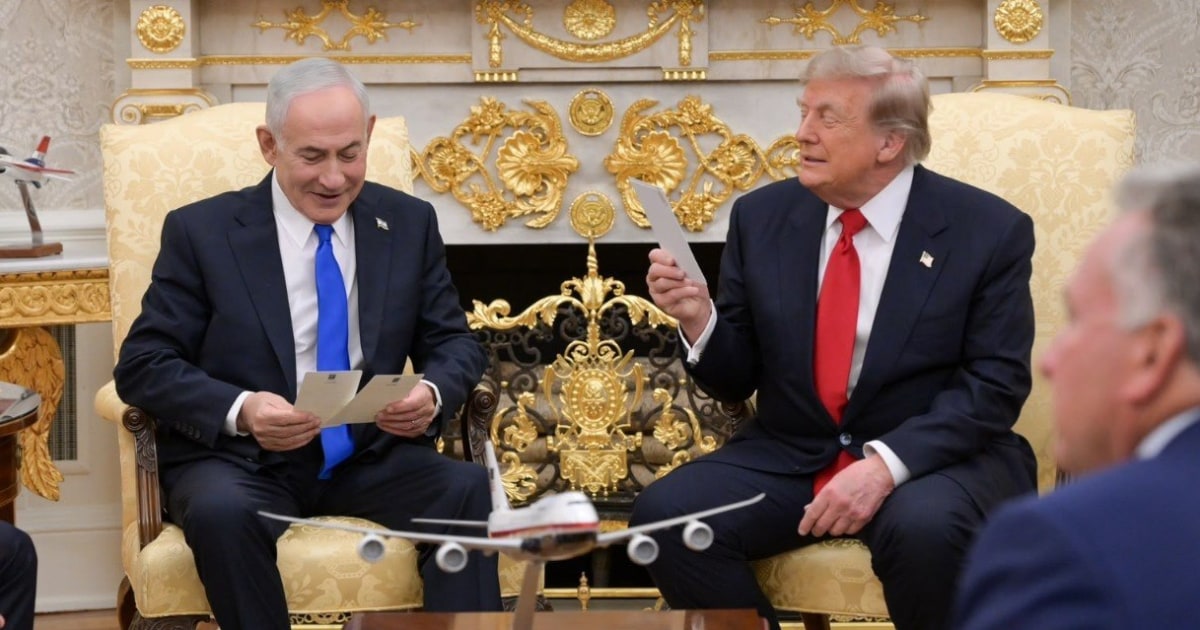
Israel Rejects Trump's 15-Point Gaza Plan
Israeli Prime Minister Benjamin Netanyahu has rejected US President Donald Trump's 15-point plan for Gaza, stating that Israeli forces will not withdraw from the territory until Hamas is fully disarmed. The plan, proposed by Trump's Board of Peace, aimed to end the war in Gaza through a phased withdrawal of Israeli troops and the disarmament of Hamas.
Netanyahu's rejection of the plan comes as he faces a tough national election in October, with his right-wing base pressuring him to take a harder stance on Gaza. The Israeli leader has emphasized that Hamas must give up all its weapons, including heavy and light arms, before any withdrawal can take place. As Netanyahu said, "I want to clarify this: Israel rejects the 15-point document. I have heard people saying, 'You didn’t say that.' So here I am saying it again," and "The IDF will not carry out any withdrawal until Hamas is disarmed."
The 15-point plan, announced last month, called for a phased withdrawal of Israeli troops from Gaza alongside the disarmament of Hamas. However, Hamas has insisted that it will not implement any part of the plan unless Israel meets its obligations, including a full, phased withdrawal from the territory it still controls in Gaza.
Despite agreeing to a ceasefire last October, Israel has continued to carry out strikes on Gaza, killing over 1,200 Palestinians, according to Gaza health officials. The ceasefire has been repeatedly violated, with reports of at least 3795 instances of Israeli aggression between October 10, 2025, and July 19, 2026.
The UN's children's agency, Unicef, has reported that at least 300 children have been killed since the ceasefire was called. Hundreds more have been wounded, and the humanitarian situation in Gaza remains dire.
Netanyahu's rejection of the plan has been met with criticism from Palestinian officials, who accuse him of obstructing the peace process for domestic political gain. Senior Hamas official Basim Naeem has called on the US and other mediators to exert pressure on Netanyahu to abide by the roadmap and prevent him from hindering the process. Naeem said, "We expect the mediators and the U.S. To exert pressure on Netanyahu and his government to abide by the roadmap and prevent him from obstructing the process for domestic political and electoral considerations."
Former Israeli diplomat Alon Pinkas has suggested that Netanyahu's rejection of the plan is a calculated move to appease his right-wing base ahead of the election. Pinkas said, "This Israeli rejection of the Gaza plan should be viewed entirely in the context of the upcoming Israeli election on October 27," and "Netanyahu needs 'a forever war'."
The US has not commented on Netanyahu's rejection of the plan, but Trump has previously touted the agreement as a key foreign policy achievement. The Board of Peace, led by the US government, has been working to implement the plan, which includes the establishment of an international stabilization force and a new Palestinian police force to secure Gaza.
As the situation in Gaza remains uncertain, the international community is calling for a renewed commitment to the peace process. Egyptian Foreign Minister Badr Abdelatty has emphasized the necessity for all parties to fulfill their commitments and refrain from taking any actions that could hinder the implementation process or undermine the progress achieved. Abdelatty said, "We emphasize the necessity for all parties to fulfill their commitments and refrain from taking any actions that could hinder the implementation process or undermine the progress achieved."
The rejection of the 15-point plan has significant implications for the future of the Gaza peace process. With Netanyahu's government insisting on Hamas's disarmament before any withdrawal, the prospects for a peaceful resolution to the conflict appear increasingly unlikely. As the situation continues to unfold, the international community will be watching closely to see how the US and other mediators respond to Netanyahu's rejection of the plan.
How significant is this development?
Cast your anonymous vote to register reader sentiment across business and policy circles.
CurrentDeck is dedicated to independent, evidence-backed reporting. This briefing was synthesized from primary source reporting, corroborated across independent newsrooms, and verified against our Editorial Standards.