Netanyahu rejects US-led 15-point Gaza peace plan in rare public break w…
Israeli Prime Minister Benjamin Netanyahu has openly rejected a US-led 15-point peace plan for Gaza, creating a rare public rift with President Trump.
- Development: Netanyahu rejects US-led 15-point Gaza peace plan in rare public break w…
- Core Takeaway: Israeli Prime Minister Benjamin Netanyahu has openly rejected a US-led 15-point peace plan for Gaza, creating a rare public rift with President Trump.
- Context: Primary reporting aggregated across independent newsrooms and verified against CurrentDeck standards.
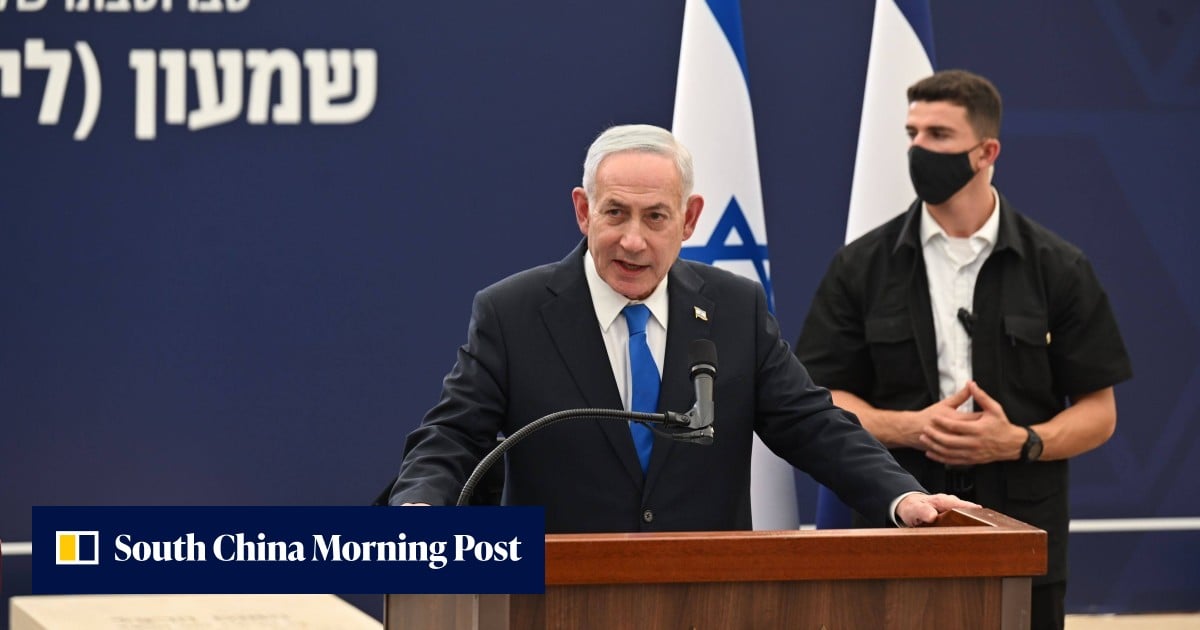
Netanyahu Rejects US-Led 15-Point Gaza Peace Plan
Israeli Prime Minister Benjamin Netanyahu has rejected a US-led 15-point peace plan for Gaza, putting distance between himself and President Donald Trump. The plan, which was endorsed by Hamas, aimed to achieve a comprehensive peace process between Israel and Hamas. However, Netanyahu explicitly opposed the deal, citing concerns over Hamas's disarmament.According to Netanyahu, Israel will not withdraw from Gaza until Hamas is "genuinely disarmed." He emphasized that any disarmament by the militant group must not be "fictitious." The Israeli military will continue to thwart threats against its forces and citizens, and no withdrawal will be carried out until Hamas is disarmed. As Netanyahu stated, "The IDF will not carry out any withdrawal until Hamas is disarmed. And when I say the disarming of Hamas, it means heavy weaponry, lighter weaponry, all weaponry. And we are talking about genuine disarmament, not fictitious disarmament."
The 15-point plan, which was published by Trump's Board of Peace, envisioned a phased process of Israeli withdrawal from Gaza and Hamas's disarmament. The plan included the establishment of a new technocratic body to govern Gaza, the decommissioning of heavy weapons, and the deployment of an international stabilization force. As outlined in the plan, "All parties reaffirm their commitment to President Trump’s Comprehensive Plan to achieve peace in Gaza... The parties aim at ending the cycle of destruction, securing the complete Israeli withdrawal from Gaza Strip, restoring normal life, enabling Palestinian governance, reconstruction, security, recovery and economic development."
Netanyahu's rejection of the plan has been met with criticism from the US. The head of Trump's Board of Peace, Nickolay Mladenov, said that the plan remains the "only way forward" to ensure that the tragedy in Gaza does not happen again. Mladenov's comments suggest that the US is committed to finding a peaceful solution to the conflict, despite Netanyahu's opposition.
The dispute over the peace plan comes amid a complex web of regional conflicts and alliances. Trump has been seeking to negotiate a peace deal in Iran, which has been impacted by the conflict in Gaza. In a recent interview, Trump stated, "We are low keying it... We are only semi-negotiating with them. We are just watching Iran with its huge inflation and the fact they have no money." The US has also been involved in efforts to bring peace to Lebanon, where Israel has occupied land in what it says is a buffer zone against Hezbollah.
Netanyahu's decision to reject the peace plan has significant implications for the US-Israel relationship. The Israeli prime minister has found a natural ally in Trump, but his rejection of the plan may test their relationship. As Netanyahu stated, "They have ideas; some of them are acceptable to us and some are not, and we know how to stand our ground on these matters." Trump will have to decide whether to increase pressure on Netanyahu or allow his efforts for a Gaza peace plan to stall.
The situation in Gaza remains dire, with Israel controlling roughly 70% of the territory. Hamas has stated that it remains committed to the roadmap agreed upon in the agreement, but the group's willingness to disarm is contingent on Israel's withdrawal from Palestinian territory and the cessation of its attacks in Gaza. The stalemate over the peace plan has created uncertainty about the future of the conflict, and it remains to be seen how the situation will unfold.
As the US and Israel prepare for elections, the situation in Gaza is likely to remain a major point of contention. The US-Israel relationship is being tested, and the outcome of the elections may have significant implications for the conflict. The international community will be watching closely as the situation develops, hoping for a peaceful resolution to the conflict.
How significant is this development?
Cast your anonymous vote to register reader sentiment across business and policy circles.
CurrentDeck is dedicated to independent, evidence-backed reporting. This briefing was synthesized from primary source reporting, corroborated across independent newsrooms, and verified against our Editorial Standards.