Four bodies found after avalanche hits 10 climbers on Pakistan's Broad Peak
Pakistani rescuers have located four bodies from a 10-member international climbing team missing after an avalanche struck Broad Peak in the Karakoram range.
- Development: Four bodies found after avalanche hits 10 climbers on Pakistan's Broad Peak
- Core Takeaway: Pakistani rescuers have located four bodies from a 10-member international climbing team missing after an avalanche struck Broad Peak in the Karakoram range.
- Context: Primary reporting aggregated across independent newsrooms and verified against CurrentDeck standards.
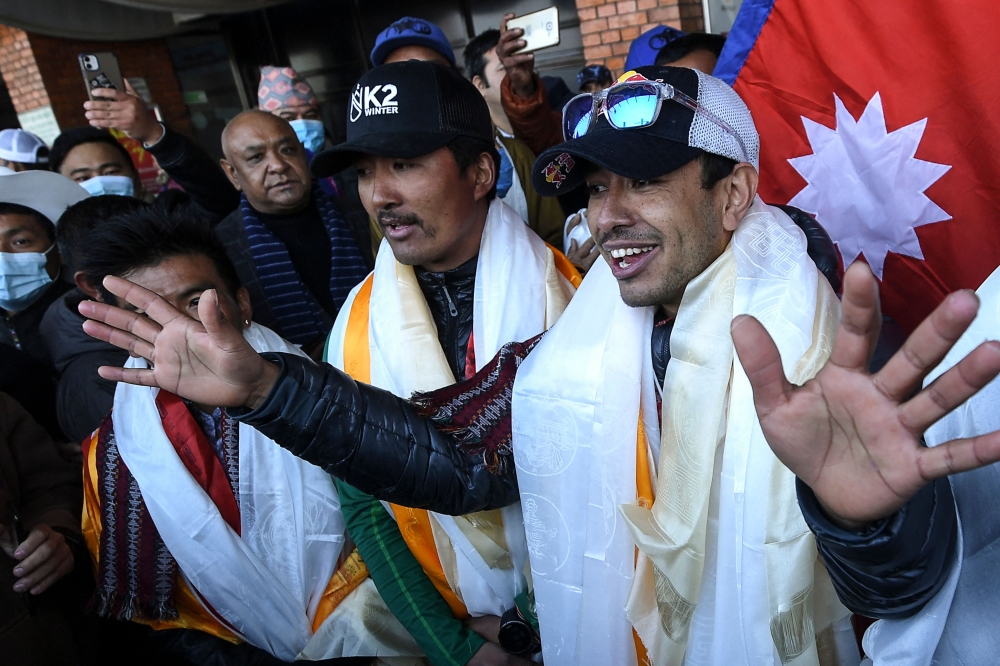
Pakistani rescuers located four bodies of a 10-member climbing team missing after an avalanche struck Broad Peak on Thursday, with efforts ongoing to find the remaining six climbers, officials said Friday. The incident, which occurred in the Karakoram range, has drawn international attention due to the expedition’s high-profile leader, mountaineer Nirmal Purja, and the challenging conditions hindering the search.
Four bodies located after avalanche on Broad Peak
Search teams in Pakistan’s Gilgit-Baltistan region recovered four bodies from the site of an avalanche that severed communication with a 10-climber expedition on Broad Peak, a mountain standing 8,047 meters (26,401 feet) tall, according to multiple reports. The climbers, including five Nepalis, a Pakistani, an Omani, an American, and a Chinese national, were part of a team led by Purja, a British-Nepali mountaineer known for scaling all 14 of the world’s 8,000-meter peaks in 189 days in 2019. The avalanche struck around midday on Thursday, cutting off contact with the group, as reported by the Alpine Club of Pakistan.
Despite the discovery of four bodies, the fate of the remaining six climbers remains uncertain. Pakistani officials described the search as “extremely challenging” due to adverse weather, which has grounded helicopters and limited aerial operations. The Chief Minister of Gilgit-Baltistan, Amjad Hussain, stated that bad weather continued to hamper rescue efforts, while the Alpine Club of Pakistan confirmed that ground teams and drones were deployed to locate survivors.
Timeline of the avalanche and search efforts
The avalanche occurred on Thursday, July 30, during the climbers’ attempt to ascend Broad Peak. The team had been in communication with base camp until the incident, according to Karrar Haidri, vice president of the Alpine Club of Pakistan. The group included Purja, who had previously announced plans to become the first person to climb all 14 “eight-thousanders” twice without oxygen. His tracking device showed a sudden descent of 543 meters (1,784 feet) during the avalanche, while an Omani climber’s GPS data recorded a drop of 1,651 meters (5,417 feet), as reported by the Express.
On Friday, July 31, rescuers located four bodies, though their identities were not immediately disclosed. The Alpine Club of Pakistan’s general secretary, Ayaz Shigri, stated that GPS data had traced the locations of four climbers, while military helicopters and ground teams worked to expand the search. However, the search for the remaining six was described as “remote and difficult” by Sajid Hussain, a deputy director in Pakistan’s tourism department.
Official responses and international involvement
Pakistani authorities confirmed the recovery of four bodies but emphasized the urgency of locating the remaining climbers. The Chinese Foreign Ministry said it was verifying whether any of its nationals were among the missing, offering assistance to Pakistan. A Chinese spokesperson stated, “We will provide assistance to Chinese citizens in need and are also willing to offer help in accordance with the needs of the Pakistani side.”
Nepal’s Tourism Department confirmed that six Nepali climbers were missing, though some local officials reported conflicting information. Rajendra Bahadur Lama, general secretary of Nepal’s Mountaineering Association, noted that Pakistani authorities had shared reports of four bodies, while Nepal’s officials had only officially confirmed two. The Nepali Embassy in Islamabad has been coordinating with Pakistani authorities to support the search, according to Rita Dhital, Nepal’s ambassador to Pakistan.
Purja’s team also included Sohail Sakhi, a Pakistani guide and high-altitude photographer, and Mallory Geis, an American climber who had left her Pilates studio to pursue the expedition. The Alpine Club of Pakistan identified the climbers as five Nepalis, Sakhi, Omani climber Nathira, American Mallory Geis, Chinese climber Wang, and another foreign national whose identity remains undisclosed.
Discrepancies in body counts and ongoing search
Reports of the number of bodies recovered varied across outlets. While some sources, including usnews.com and malaymail.com, cited four bodies, express.co.uk mentioned that Nepal’s authorities had confirmed only two. The Alpine Club of Pakistan’s head, Irfan Arshad, stated that ground teams had found four bodies, but the organization’s statement did not clarify whether these were the same as those reported by Nepali officials.
Rescue operations face additional hurdles due to Pakistan’s military-managed procedures, which differ from Nepal’s more streamlined aerial rescue systems. Thaneshwar Guragain, general manager of Seven Summit Treks, noted that helicopter deployments in Pakistan require complex coordination, limiting the speed of response. “Immediate helicopter rescue, as in Nepal, is not possible in Pakistan,” he said, adding that “the chances of finding survivors are extremely slim.”
What comes next in the rescue operation
Search efforts are expected to continue despite the challenges. The Alpine Club of Pakistan stated that helicopters would be deployed from Skardu once weather conditions improve, while ground teams and drones remain active. Purja’s tracking device showed a shift in location after the avalanche, raising cautious hope that some climbers may still be alive. However, experts warn that the likelihood of survival diminishes with each passing hour.
The expedition’s original goal was to complete Purja’s “Hat Trick Campaign,” aiming to climb all 14 eight-thousanders three times. His recent ascents, including an oxygenless climb of Gasherbrum II on July 21, had positioned him close to this milestone. The avalanche has now disrupted the mission, leaving the fate of the team in limbo as searchers work under extreme conditions.
How significant is this development?
Cast your anonymous vote to register reader sentiment across business and policy circles.
CurrentDeck is dedicated to independent, evidence-backed reporting. This briefing was synthesized from primary source reporting, corroborated across independent newsrooms, and verified against our Editorial Standards.