Russian warship Merkury hit by suspected Ukrainian sea drones in Benghazi
A Russian warship docked in Benghazi was severely damaged after being struck by suspected Ukrainian sea drones.
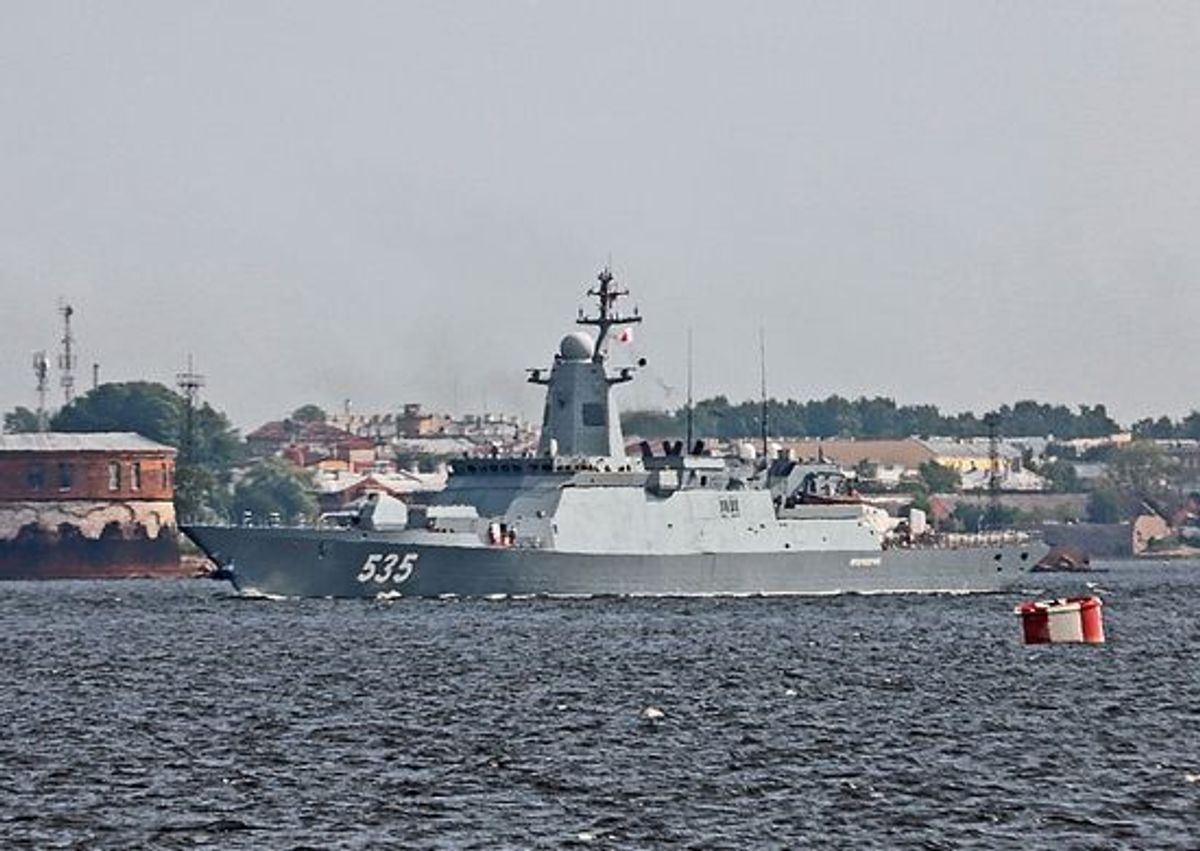
A Russian warship docked in the Libyan port of Benghazi was severely damaged after being struck by suspected Ukrainian sea drones on Sunday, 22 November 2026.
General Khalifa Haftar’s administration confirms explosion on Russian corvette Merkury
An explosion rocked the naval base in eastern Libya on Sunday, 22 November 2026, triggering a massive fire and sending a thick column of smoke into the air. According to two Libyan military officials speaking to the Associated Press, the targeted vessel was the Russian Navy corvette Merkury, which belongs to Russia's Black Sea Fleet but has been operating out of Northern Fleet bases. The administration of General Khalifa Haftar, the de facto military dictator controlling eastern Libya, stated that initial investigations showed the blast occurred directly on board the docked Russian warship.
The eastern administration explained that the Merkury had stopped at the Benghazi port to refuel and resupply on its journey back to Russia, operating under established maritime cooperation agreements between Moscow and eastern Libyan authorities. While local civil defense teams deployed rapidly to contain and extinguish the resulting blaze at the military facility, authorities reported no immediate casualties from the blast. Satellite imagery later indicated that the warship appeared severely damaged and partially submerged in the port.
| Detail | Information |
|---|---|
| Date of Attack | Sunday, 22 November 2026 |
| Location | Benghazi Naval Base, eastern Libya |
| Target Vessel | Russian Navy corvette Merkury |
| Reported Attack Method | Suspected Ukrainian sea drones launched from western Libya |
| Casualties | None reported |
Conflicting accounts of sea drone trajectories and secondary strikes off Benghazi
Accounts from military officials and local media outlets outlined a complex engagement involving multiple unmanned vessels. Libyan military officials claimed that Ukrainian forces launched a swarm of sea drones from a base in western Libya, where a covert presence has allegedly been established under previous arrangements with the UN-recognized government in Tripoli. According to these sources, defenders intercepted at least four incoming drones, but two successfully penetrated the defenses and struck the Merkury.
Later on Sunday, 22 November 2026, local media reported a second wave of activity off the coast of Benghazi. Open-source intelligence analysts and social media posts identified the sanctioned Russian bulk carrier Ascalon as the possible target of a subsequent naval drone strike during daylight hours. Meanwhile, the Al Masar satellite television channel cited naval and air forces claiming to have destroyed at least a dozen other naval drones near the Mediterranean city, though these wider claims remained difficult to verify independently.
Tripoli government and international reactions to widening proxy warfare in North Africa
The incident highlighted the deep political fracture in Libya, which has remained divided between the eastern military regime and the internationally recognized government in Tripoli since the overthrow of Muammar al-Gaddafi in 2011. The Tripoli administration issued a sharp condemnation following the blast, warning against the transformation of Libyan territory and territorial waters into an arena for foreign powers to settle scores.
The strike in Benghazi closely followed a similar maritime incident on Saturday, 21 November 2026, when a Russian cargo ship linked to military supply operations, the Sparta 2, caught fire in international waters near Finland after a suspected drone strike. Kyiv has not formally claimed responsibility for either the Baltic Sea strike or the Benghazi attack, maintaining a posture of strategic ambiguity regarding long-range operations targeting Russian logistics far beyond the primary front lines.
As eastern Libyan authorities announced plans to launch a joint investigation alongside Russian representatives, the exact operational status of the remaining naval assets in the region and the full extent of the damage to the Merkury await formal verification from Moscow.
CurrentDeck is dedicated to independent, evidence-backed reporting. This briefing was synthesized from primary source reporting, corroborated across independent newsrooms, and verified against our Editorial Standards.


