Sonam Wangchuk ends 26-day hunger strike as student protests continue
Indian activist Sonam Wangchuk has concluded his 26-day fast following government assurances, but the nationwide student movement remains firm in its demand for the education minister's resignation.
- Development: Sonam Wangchuk ends 26-day hunger strike as student protests continue
- Core Takeaway: Indian activist Sonam Wangchuk has concluded his 26-day fast following government assurances, but the nationwide student movement remains firm in its demand for the education minister's resignation.
- Context: Primary reporting aggregated across independent newsrooms and verified against CurrentDeck standards.
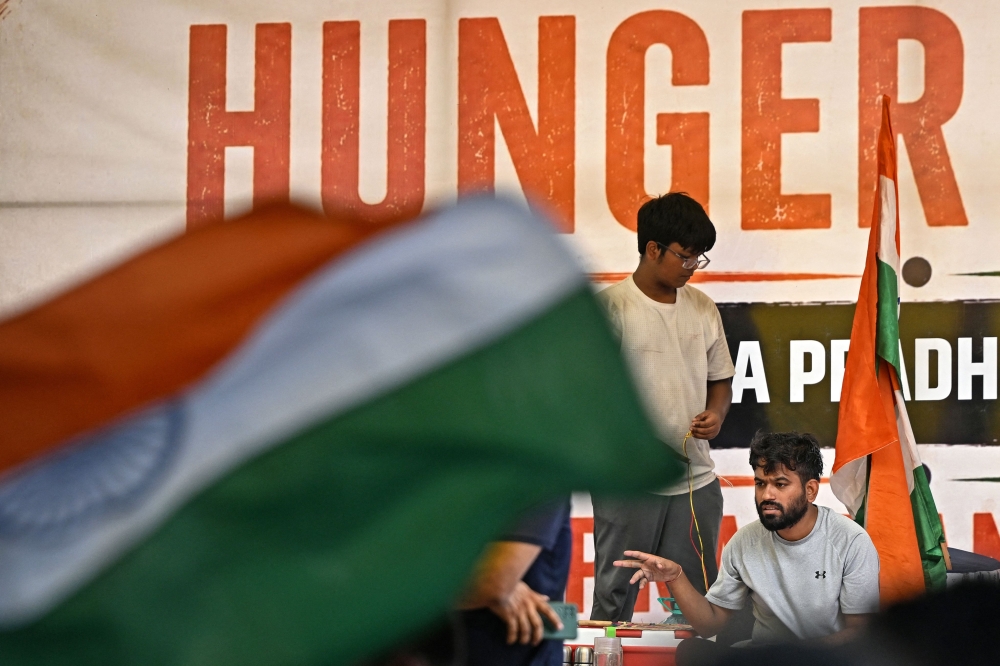
Indian activist Sonam Wangchuk ended a 26-day hunger strike on July 24, 2026, after meeting government ministers, even as student-led protests demanding the resignation of Education Minister Dharmendra Pradhan continued across India. The demonstrations, fueled by allegations of exam paper leaks and linked to student suicides, have become a significant challenge to Prime Minister Narendra Modi’s government, according to reports from Malaymail and AsiaOne.
Wangchuk, a climate and education rights advocate, concluded his fast at Medanta Hospital in Gurugram following meetings with Union Ministers JP Nadda and Jitendra Singh, who conveyed written commitments from the government. The assurances included pledges to address exam leak vulnerabilities, compensate families of students who died by suicide following the National Eligibility cum Entrance Test (NEET) scandal, and refrain from legal action against peaceful protesters, according to NewsBytes and Mid-Day. Wangchuk, who lost approximately 11 kg during his fast, stated in a social media post that the negotiations aimed to prevent violence and ensure the movement’s sustainability.
The Cockroach Janta Party (CJP), which originated as an online satirical project, has grown into a nationwide movement demanding accountability for exam paper leaks, systemic education reforms, and the resignation of Pradhan. Despite Wangchuk’s decision to end his hunger strike, the group vowed to continue its protests at Jantar Mantar in Delhi until Pradhan steps down. CJP founder Abhijeet Dipke praised Wangchuk’s “extraordinary courage and sacrifice,” vowing that the movement would not “let his sacrifice go in vain,” as reported by Malaymail and TBS News.
The government’s response to the crisis has included both concessions and measures to curb dissent. While ministers emphasized that no cases would be filed against peaceful protesters, authorities imposed internet shutdowns and closed 16 metro stations in central Delhi to disrupt gatherings. Businesses in Connaught Place, a major commercial hub, were also ordered to close early. Human rights groups condemned these actions as attempts to suppress the protests, citing a pattern of escalating restrictions since the movement gained momentum in late June, according to Malaymail and AsiaOne.
Protesters have faced heightened police presence, with clashes reported during a July 20 march to Parliament, where officers used tear gas and batons to disperse demonstrators. At least one protester was injured during a subsequent night of unrest, according to Delhi Police. Modi addressed the crisis in a social media post, vowing to establish special courts to prosecute those responsible for exam leaks and emphasizing youth welfare as a priority. However, CJP spokesperson Ashutosh Ranka dismissed the proposal, questioning the efficacy of fast-track courts and highlighting the recurring nature of exam leaks, as noted by Malaymail and AsiaOne.
The movement has drawn broad public support, including endorsements from Bollywood celebrities like Salman Khan and Alia Bhatt, who praised students for advocating for systemic change. Opposition parties have also echoed protest demands, disrupting parliamentary sessions with walkouts. The CJP’s demands extend beyond exam reforms, reflecting deeper frustrations over job scarcity and perceived governmental neglect of youth concerns, according to AsiaOne.
Wangchuk’s hunger strike, which began in solidarity with the CJP, drew attention to the human cost of the crisis. His wife, Gitanjali Angmo, challenged his transfer to a government hospital in mid-July, leading to his relocation to Medanta. During his fast, he repeatedly urged protesters to maintain nonviolence, even as security forces cracked down on demonstrations. The government’s assurances, while significant, have not resolved the underlying tensions, with the CJP insisting that Pradhan’s resignation remains a non-negotiable condition for halting the protests, as reported by TBS News and Malaymail.
As the movement enters its next phase, the interplay between government concessions and grassroots demands will shape the trajectory of a movement that has already tested the resilience of India’s political and institutional frameworks. For now, the call for accountability echoes through streets from Delhi to cities like Pune and Kolkata, underscoring the growing influence of youth activism in a nation grappling with economic and social challenges, according to Malaymail and AsiaOne.
How significant is this development?
Cast your anonymous vote to register reader sentiment across business and policy circles.
CurrentDeck is dedicated to independent, evidence-backed reporting. This briefing was synthesized from primary source reporting, corroborated across independent newsrooms, and verified against our Editorial Standards.