Trump orders Pentagon to scale back joint military drills with South Korea
US President Donald Trump has ordered the Pentagon to substantially reduce planned joint military exercises with South Korea, citing his relationship with North Korean leader Kim Jong Un.
- Development: Trump orders Pentagon to scale back joint military drills with South Korea
- Core Takeaway: US President Donald Trump has ordered the Pentagon to substantially reduce planned joint military exercises with South Korea, citing his relationship with North Korean leader Kim Jong Un.
- Context: Primary reporting aggregated across independent newsrooms and verified against CurrentDeck standards.
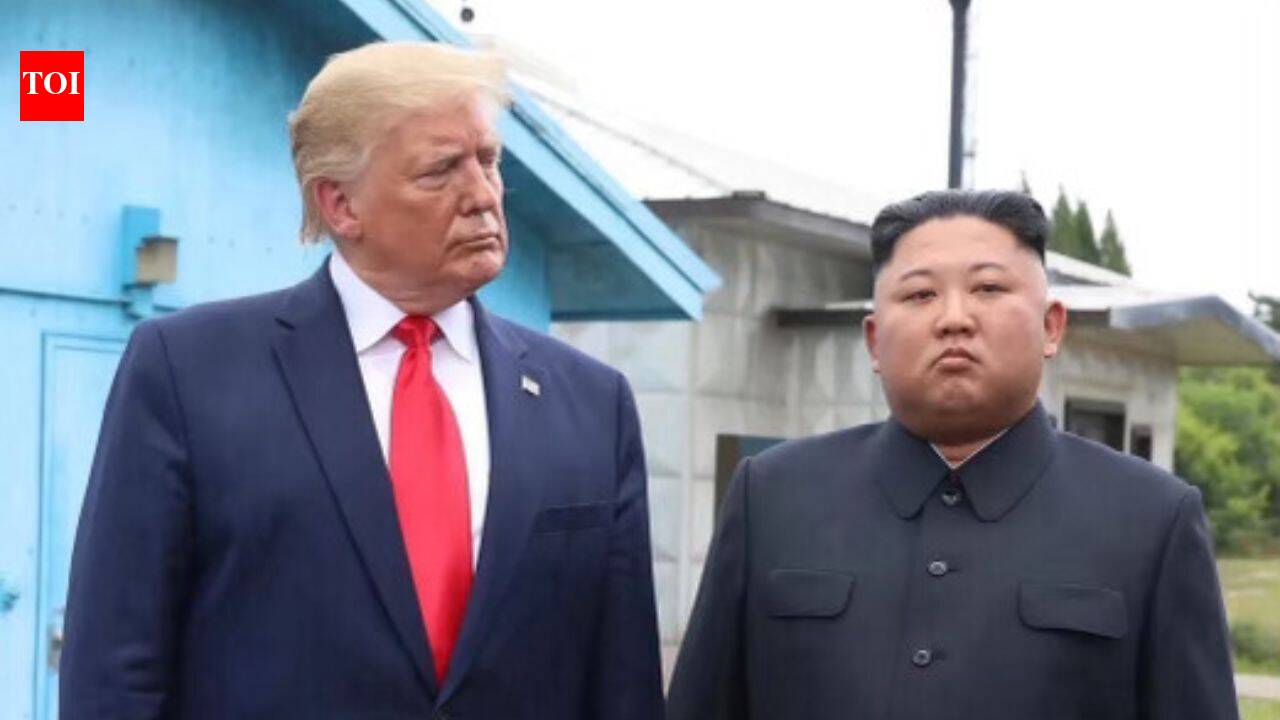
Trump's Decision to Scale Back Joint Military Drills with South Korea
US President Donald Trump has ordered the Pentagon to substantially reduce planned joint military exercises with South Korea, citing his "very good relationship" with North Korean leader Kim Jong Un and Seoul's refusal to join US efforts to denuclearize Iran. The decision, announced on Sunday, is a notable shift in the US approach to military cooperation with its ally in the region.According to Trump, the joint military exercises, which were scheduled to begin on Monday, would send an "inappropriate and hostile" signal to North Korea, which he claimed had remained "unthreatening and respectful" during his presidency. The exercises, known as the Ulchi Freedom Shield, were designed to strengthen the allies' readiness against potential threats from North Korea and involve around 18,000 South Korean troops. As Trump stated in a social media post, "Based on my very good relationship with Kim Jong Un, of North Korea, I am not happy with the fact that the United States has, long ago, agreed to participate in Joint Military Exercises with South Korea. These exercises are not only costly, with much of these costs paid for by the United States of America (as usual!), but send a signal that is totally inappropriate and hostile, to a Country that, as long as Donald J. Trump has been President, has been unthreatening and respectful."
Trump's decision was motivated, in part, by South Korea's refusal to join the US in its efforts to denuclearize Iran. In a post on social media, Trump said he had asked South Korea's president whether Seoul wanted to join the US in the "denuclearization" of Iran, and they said, "No thanks!" As Trump noted, "While somewhat unrelated (?), I recently asked the President of South Korea if they would like to join us in the Denuclearization of the Islamic Republic of Iran, and they said, 'No thanks!' Thank you for your attention to this matter. President DONALD J. TRUMP"
The reduction in joint military exercises is not the first time Trump has sought to end or scale back the drills. During his first term, he also issued a surprise announcement that called the war games "provocative" and said they would be stopped unless and until he saw progress in negotiations with North Korea. The latest decision has been criticized by Democratic Senator Mark Kelly, who said that "hollowing out these joint exercises is shortsighted and a mistake."
In a separate development, Trump welcomed a newly signed defense agreement between Saudi Arabia, Turkey, and Pakistan, describing it as a "big, bold" first step towards greater regional security cooperation. As Trump stated, "Very happy to see that Saudi Arabia, Turkey, and Pakistan have recently, and finally, signed the Mecca Joint Defence Agreement." "It shows how the Middle East is coming together, and how Countries will finally be able to defend themselves in a more meaningful way," he said. "This is a big, bold, and important first step — wow!"
Meanwhile, Jared Kushner, Trump's son-in-law and a key figure in the administration's Middle East policy, met with Hamas chief Khalil al-Hayya on Sunday to discuss a Gaza road map. The meeting is part of a fresh diplomatic push to advance the stalled Gaza ceasefire and salvage a plan for Hamas to disarm and Israel to withdraw from Palestinian territory.
The developments in the region highlight the complex and often conflicting priorities of the US and its allies. While Trump's decision to scale back joint military exercises with South Korea may be seen as a gesture of goodwill towards North Korea, it also raises concerns about the impact on regional security and the US-South Korea alliance. As the situation continues to evolve, it remains to be seen how the US and its allies will navigate the challenges and opportunities in the region.
How significant is this development?
Cast your anonymous vote to register reader sentiment across business and policy circles.
CurrentDeck is dedicated to independent, evidence-backed reporting. This briefing was synthesized from primary source reporting, corroborated across independent newsrooms, and verified against our Editorial Standards.