US Navy can maintain blockade on Iranian ports indefinitely, says Hegseth
US Defense Secretary Pete Hegseth stated that the US Navy has the rotational capability to maintain its blockade on Iranian ports indefinitely amid ongoing tensions.
- Development: US Navy can maintain blockade on Iranian ports indefinitely, says Hegseth
- Core Takeaway: US Defense Secretary Pete Hegseth stated that the US Navy has the rotational capability to maintain its blockade on Iranian ports indefinitely amid ongoing tensions.
- Context: Primary reporting aggregated across independent newsrooms and verified against CurrentDeck standards.
US Navy Blockade of Iranian Ports
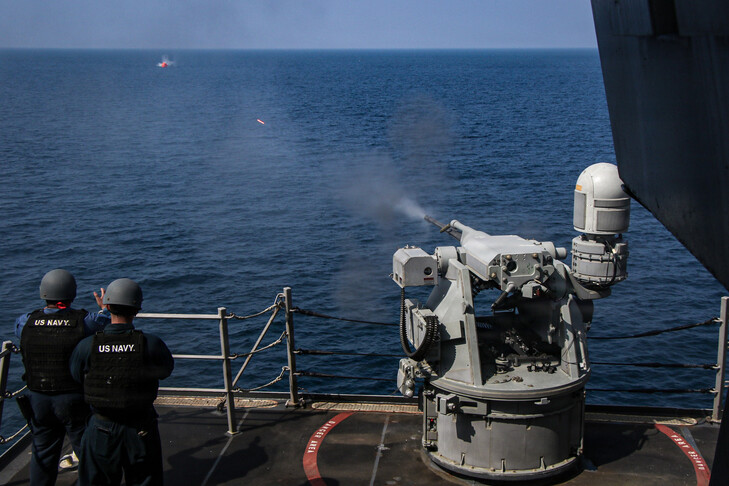
The US Navy can maintain a blockade of Iranian ports "indefinitely," according to US Defense Secretary Pete Hegseth. Hegseth made this statement while addressing reporters in Panama, where he traveled for a closing ceremony for a multinational drill. He emphasized that the US Navy has the capability to rotate ships in and out of the region as needed, allowing it to sustain the blockade for as long as necessary. As Hegseth stated, "Indefinitely, the United States Navy can maintain a blockade like that because we'll rotate ships in and out, as we have, and we'll continue to."The blockade was imposed after the start of the war between the US and Iran, which began with US-Israeli strikes on Iran in February. Since then, the US has redirected more than 55 commercial vessels that were attempting to run the blockade, including disabling three ships and boarding two. The US military has also poured tens of thousands of troops into the Middle East, including more than 20 warships.
Iranian military officials have disputed US control over the Strait of Hormuz, with Iran's central military command calling the claims "baseless lies and fabrications." The Strait of Hormuz is a critical waterway for global energy supplies and trade, with a fifth of the world's oil and liquefied natural gas previously shipped through it. However, since the start of the war, Tehran has effectively shut the strait, and the US has imposed a naval blockade on Iranian shipping and ports.
US President Donald Trump has claimed that the US has "total control" over the Strait of Hormuz and vowed to maintain the naval blockade. As Trump stated, "The U.S.A. Has total control over the Strait of Hormuz. I THINK WE WILL KEEP IT! Our Naval Blockade is being called, by everyone, 'A WALL OF STEEL,' and there is nothing Iran can do about it." However, Iranian military officials have disputed this claim, with Iran's central military command calling it "baseless lies and fabrications."
The US and Iran agreed to a Pakistan-brokered ceasefire in April and later signed a deal on June 17, launching negotiations toward a final agreement. However, the talks later stalled over disagreements on security guarantees and freedom of navigation through the Strait of Hormuz.
US Treasury Secretary Scott Bessent has warned that Washington will apply measures on Iran that have "never been seen" in the history of economic isolation on a country. As Bessent stated, "Watch this space for more announcements coming next week because we are going to apply measures like have never been seen in the history of economic isolation on a country." US Vice President JD Vance has stated that Washington's top priority in the Tehran war is keeping oil and gas prices low for Americans, while preventing Iran from acquiring a nuclear weapon ranks second.
The situation aboard the USS Abraham Lincoln, a US aircraft carrier deployed to the Middle East, has also been a subject of concern. US Central Command has pushed back on reports about conditions aboard the carrier, denying claims that sailors had died in a brawl or that the carrier had experienced a spike in suicidal ideation. As US Central Command stated, "The Sailors and Marines of the Abraham Lincoln Carrier Strike Group remain resilient and resolved after more than 260 days at sea, 10,000 aircraft flights, and 1.5 million pounds of ordnance expended."
Pentagon Chief's Remarks
Pentagon Chief Pete Hegseth's remarks that the US can maintain a naval blockade of Iranian ports "indefinitely" have significant implications for the conflict. Hegseth's statement suggests that the US is prepared to sustain the blockade for as long as necessary, which could have a devastating impact on Iran's economy. As Hegseth stated, "No other nation on earth, no other navy on earth has the capability to have a wall of steel like the US Navy, and then the willingness to use it as we have."The blockade has already had significant consequences, with Iran's oil exports plummeting and the country's economy struggling to cope with the sanctions. The US has also been redirecting commercial vessels that attempt to run the blockade, which has raised concerns about the impact on global trade. The situation in the Strait of Hormuz remains volatile, with both sides engaging in a war of words and escalating tensions.
US-Iran Conflict
The conflict between the US and Iran has been ongoing for several months, with both sides engaging in a series of military strikes and diplomatic maneuvers. The US has imposed economic sanctions on Iran, which have had a devastating impact on the country's economy. Iran has responded by striking back with missiles and drones against Washington's allies in the region.The conflict has significant implications for the global economy and the region's stability. The Strait of Hormuz is a critical waterway for global energy supplies and trade, and any disruption to the flow of oil through the strait could have significant consequences for the global economy. The international community is watching the situation closely, with many calling for a peaceful resolution to the conflict.
The US and Iran have been in talks to resolve the conflict, but the negotiations have stalled over disagreements on security guarantees and freedom of navigation through the Strait of Hormuz. The US has been pushing for Iran to agree to a series of security guarantees, including the dismantling of its nuclear program and the withdrawal of its forces from the region. Iran has refused to agree to these demands, citing its right to self-defense and its opposition to US interference in the region.
How significant is this development?
Cast your anonymous vote to register reader sentiment across business and policy circles.
CurrentDeck is dedicated to independent, evidence-backed reporting. This briefing was synthesized from primary source reporting, corroborated across independent newsrooms, and verified against our Editorial Standards.