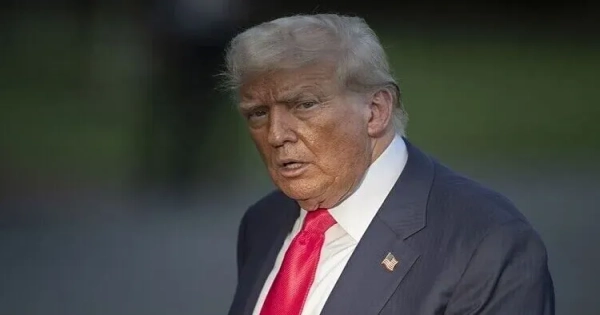
Anthony Fauci pleads the Fifth during contentious Senate COVID hearing
Dr. Anthony Fauci invoked the Fifth Amendment multiple times during a contentious Senate hearing on Wednesday, refusing to answer questions about the origins of the COVID-19 pandemic.
- Development: Anthony Fauci pleads the Fifth during contentious Senate COVID hearing
- Core Takeaway: Dr. Anthony Fauci invoked the Fifth Amendment multiple times during a contentious Senate hearing on Wednesday, refusing to answer questions about the origins of the COVID-19 pandemic.
- Context: Primary reporting aggregated across independent newsrooms and verified against CurrentDeck standards.
Dr. Anthony Fauci, the former director of the National Institute of Allergy and Infectious Diseases, invoked the Fifth Amendment multiple times during a contentious Senate hearing on Wednesday, refusing to answer questions about the origins of the COVID-19 pandemic and his role in federal health policies. The hearing, chaired by Republican Senator Rand Paul, centered on allegations of misconduct, including Fauci’s handling of gain-of-function research and his public statements on the virus’s origins. Fauci’s decision to remain silent, accompanied by the ejection of one of his attorneys, sparked sharp divisions among lawmakers and raised questions about the limits of the Fifth Amendment and congressional oversight.
Fauci, 85, repeatedly stated that he would not answer questions “on the advice of counsel,” citing fears that his testimony could be used against him in a potential prosecution. He accused Paul of orchestrating the hearing to “trap” him into incriminating himself, a claim the Kentucky senator denied. “The only conclusion I can reach is that the sole reason he is calling me before this committee is to get me to say something, anything, that could vindicate his repeated public pledges that I end up, in his words, ‘behind bars,’” Fauci said, referencing Paul’s longstanding criticism of his pandemic response.
The hearing unfolded amid a broader political battle over the origins of the virus, with Paul and other Republicans pushing the theory that COVID-19 emerged from a laboratory in Wuhan, China. Fauci, who has consistently supported the natural-origin hypothesis, faced repeated questions about his 2020 diary entries, which revealed early openness to the lab-leak theory. One entry described “no total agreement” among scientists about the virus’s origins, while another noted his “almost certain” belief in a natural spillover. Paul argued that Fauci’s public statements contradicted his private views, though Fauci maintained that his testimony had always aligned with the scientific consensus.
Fauci’s legal team faced direct confrontation during the hearing. His attorney, David Schertler, was escorted from the room after attempting to interject during Paul’s questioning. The senator accused Schertler of disrupting proceedings, stating, “In no courtroom in America can you have your witness plead the Fifth Amendment, then your attorney gets to testify.” Schertler later called the ejection “outrageous,” asserting that the hearing was biased and lacked legitimacy.
Paul, who subpoenaed Fauci for the hearing, accused the former health official of obstructing justice. “The committee will have to consider after this hearing what appropriate action should be taken against you for the failure to testify after being directed to do so,” he said. The senator also highlighted a separate controversy involving Fauci’s former adviser, David Morens, who was indicted for allegedly destroying federal records. Paul questioned Fauci about his knowledge of the deletions, though the former director denied any wrongdoing.
The hearing drew sharp partisan reactions. Democrats defended Fauci, with Senator Maggie Hassan condemning the session as “designed to entrap” him. “It must be enormously frustrating for your attorneys to hear the chair’s mischaracterization of the legal issues and posture that impact your decisions at the witness table today,” she said. Meanwhile, Republicans like Senator Ron Johnson criticized Fauci for refusing to address “legitimate questions” about his policies, including vaccine mandates and public health guidelines.
Fauci’s refusal to testify followed a pre-emptive pardon issued by former President Joe Biden in 2025, which was intended to shield him from potential legal action. Paul argued that the pardon did not absolve Fauci of obligations to Congress, stating, “The chairman has denied your assertion of privilege and directed you to answer, but you nonetheless refuse and stand on privilege despite the existence of the pardon.” The Senate Homeland Security Committee announced plans to vote on holding Fauci in contempt of Congress, a move that could escalate the conflict.
The hearing underscored deepening tensions between federal health officials and lawmakers over pandemic governance, with Fauci’s actions symbolizing broader debates about transparency, accountability, and the role of science in public policy. As the political fallout continued, the outcome of the contempt vote and the fate of Fauci’s legal protections remained uncertain, leaving the dispute unresolved.
How significant is this development?
Cast your anonymous vote to register reader sentiment across business and policy circles.
CurrentDeck is dedicated to independent, evidence-backed reporting. This briefing was synthesized from primary source reporting, corroborated across independent newsrooms, and verified against our Editorial Standards.