Megaspeed faces potential U.S. blacklist amid unverified Jensen Huang sc…
The U.S. Commerce Department added Megaspeed to its Entity List, barring U.S. semiconductors over export control concerns tied to the Nvidia scandal.

Commerce Department acts after months of pressure
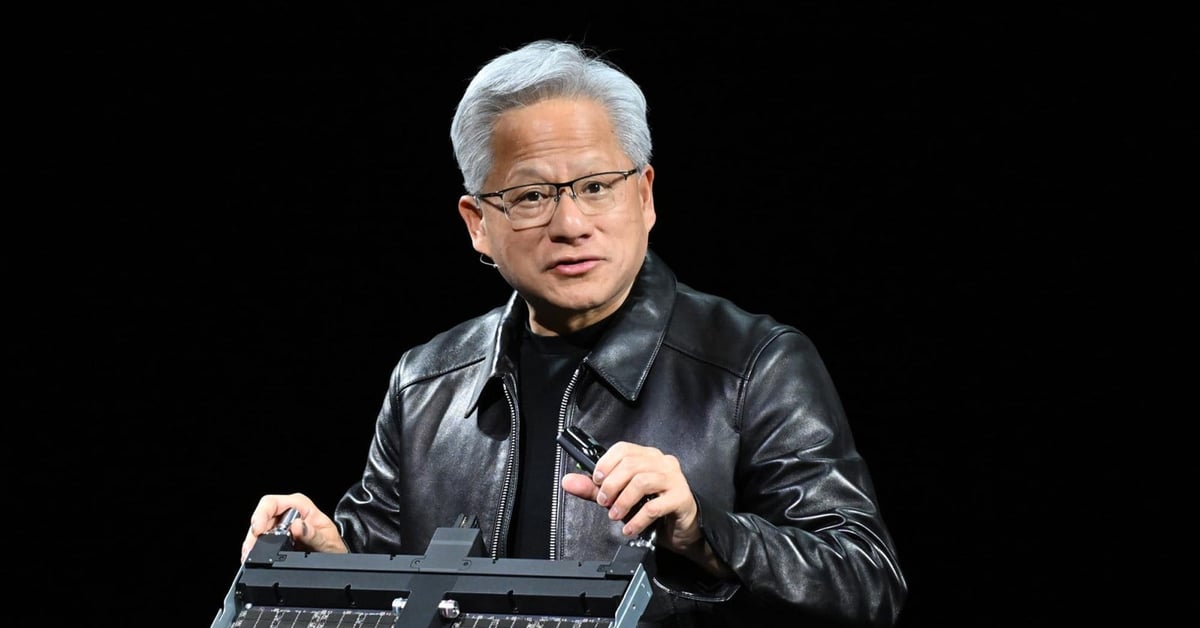
The U.S. Commerce Department added Megaspeed to its Entity List, barring U.S. Semiconductors over export control concerns tied to the Nvidia scandal, according to Fox Business coverage of the story. The designation bars Megaspeed from purchasing sensitive U.S. Technologies — including advanced AI chips — without a federal license. The move came hours after Nvidia's board unanimously reinstated Jensen Huang as CEO, reversing his November 12 resignation. President Donald Trump said he personally intervened with the board, providing "assurances" on national security grounds.
Treasury Secretary Scott Bessent had publicly pressed for the blacklist for months, stating on CNBC that "other federal agencies were in favor of putting Megaspeed on the Entity List for months, but Commerce has the pen." The Commerce Department opened its investigation into Megaspeed in 2024, requested Nvidia sales records in May 2025, and conducted an on-site check with Singaporean agents in June 2025, interviewing Alice Huang, then Megaspeed's CEO. The Justice Department subsequently assumed lead on a criminal probe.
| Detail | Information |
|---|---|
| Entity Listed | Megaspeed Ltd (Singapore) and subsidiary Speedmatrix |
| Listing Authority | U.S. Commerce Department, Bureau of Industry and Security |
| Effective Date | Announced Monday, November 23, 2026; exact effective date unspecified |
| Primary Restriction | Requires BIS license for exports, reexports, or transfers of specified U.S.-origin items |
| Prior Nvidia Action | Placed on Nvidia "no sell" list in June 2025 |
| Key Figure | Alice Huang, former Megaspeed CEO, left August 30, 2025 |
| Alleged Link | Romantic relationship with Nvidia CEO Jensen Huang; U.S. Intelligence suspects Chinese intelligence ties |
Scandal timeline spans years
The controversy traces back to March 2023, when 7Road International renamed itself Megaspeed International to expand its AI-focused cloud-computing business. By June 2024, Jensen Huang and Alice Huang were photographed together at Computex in Taiwan. Reuters-reviewed video showed them at a private dinner in Taipei in May 2025. The New York Times reported in October 2025 that federal investigators were examining Megaspeed's activities and potential exports of advanced chips to China.
In spring 2026, Secretary of State Marco Rubio oversaw a classified memo warning senior Trump administration officials of Jensen Huang's close relationship with Alice Huang, according to the Times. The situation escalated in November 2026: on November 5, top House Republicans sought a closed-door briefing from Huang; on November 8, Huang admitted to Nvidia employees he had been unfaithful; on November 11, the Times reported an affair with Nvidia VP Kimberly Powell; and on November 12, Huang resigned as CEO and board member. CFO Colette Kress became interim CEO, and former Synopsys CEO Harvey Jones was named board chair.
Attorney General Todd Blanche stated on November 12 that the Justice Department had not concluded whether Alice Huang is a Chinese spy, but confirmed the FBI is investigating. Singapore said she left in February and was barred from re-entry after an investigation that "did not concern espionage." Megaspeed stated on November 15 that Alice Huang officially departed August 30, 2025, and has no current role.
Export control rule tightened alongside blacklist
On November 16, the Trump administration issued a rule restricting China's access to advanced AI chips, requiring U.S. Export licenses for shipments to Singapore, Thailand, Malaysia, Indonesia, and Brazil. Overseas data centers serving China-based AI firms have 90 days to obtain licenses. The rule formally rescinds the Biden-era global AI chip rule. Commerce said the Treasury Department and National Security Council wrote the rule.
China responded on November 17, warning of countermeasures if the U.S. Imposes new chip curbs. The same day, Nvidia created a board-level National Security and Export Control Oversight Committee chaired by director Suzanne Nora Johnson, with directors Stephen Neal and John Dabiri. Nvidia's 2026 proxy statement noted the company had no chief compliance officer.
Congressional and regulatory scrutiny intensifies
House Speaker Mike Johnson said November 12 there is "growing consensus in Congress on limiting chip exports to China." Senate Banking Chair Tim Scott called on Huang and Commerce Secretary Howard Lutnick to testify. On November 17, the House Foreign Affairs Committee said Huang agreed to transcribed interviews with three House committees on December 1; Nvidia General Counsel Tim Teter will appear December 2.
California Attorney General Rob Bonta served Nvidia with an investigative subpoena on November 19, stating his office is investigating "whether Nvidia or Jensen Huang's actions resulted in China obtaining advanced chips or confidential information, and if Nvidia misled investors and the public about this risk." Reuters reported November 20 that the SEC is examining Nvidia's accounting practices. The House Foreign Affairs Committee also said the Trump administration approved shipments of nearly 900,000 advanced Nvidia and AMD AI chips to Chinese companies between December 2025 and May 2026.
Nvidia shares surge on reinstatement
Nvidia reported third-quarter revenue of $115.84 billion on November 17, above the $109.11 billion analysts expected, and forecast fourth-quarter revenue of $130 billion, plus or minus 3%, assuming no data-center chip sales to China. After the board's November 23 vote to reinstate Huang, citing satisfaction with his "candor and leadership" and seeing "no national security risk after input from senior US officials", shares jumped 33%. Trump called the reinstatement the "correct and proper decision" on Truth Social, urging Nvidia to keep reviewing export-control compliance.
Former deputy national cyber director Jake Braun, now at the University of Chicago, told NBC 5 Investigates: "They don't actually specifically say there's zero national security threat. What influence is the Chinese government going to have over the CEO? Are there other (spy) plants in the organization? Presumably there must be." Federal indictments over the past year have charged at least a half-dozen Nvidia customers with smuggling chips to China, including American businessman Greg Lui, accused of routing more than $300 million in Nvidia servers through Malaysia and Singapore.
Megaspeed has denied wrongdoing, stating it "conducts legitimate and lawful business" and complies with U.S. Export controls. Alibaba has been reported as one of its largest customers. The company's next steps, and whether the Entity List designation expands to additional entities, will test the administration's resolve to close supply-chain loopholes while Huang resumes leadership of the world's most valuable AI chipmaker.
CurrentDeck is dedicated to independent, evidence-backed reporting. This briefing was synthesized from primary source reporting, corroborated across independent newsrooms, and verified against our Editorial Standards.