Delhi Government Exempts Peaceful NEET Protesters From Legal Action
The Delhi government has announced it will withhold adverse legal action against peaceful NEET protesters without criminal records following a Supreme Court directive. However, critics argue the order stops short of fully withdrawing existing FIRs.
- Development: Delhi Government Exempts Peaceful NEET Protesters From Legal Action
- Core Takeaway: The Delhi government has announced it will withhold adverse legal action against peaceful NEET protesters without criminal records following a Supreme Court directive. However, critics argue the order stops short of fully withdrawing existing FIRs.
- Context: Primary reporting aggregated across independent newsrooms and verified against CurrentDeck standards.
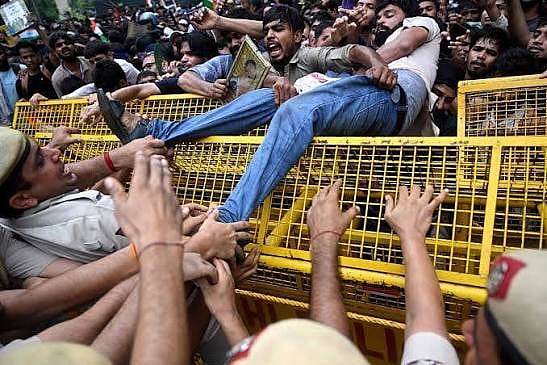
The Delhi government on Thursday (July 30, 2026) announced a decision to withhold adverse legal action against individuals involved in the recent protests against the NEET UG paper leak, but explicitly excluded those with criminal records or those who engaged in violence or vandalism. The move, outlined in an order from the Home Department, came amid tensions between the protesting groups and authorities, with the Central Coordination Project (CJP) accusing the central government of failing to honor commitments made during the resolution of the 36-day protest.
The order, citing a Supreme Court directive dated July 28, stated that “no adverse legal action will be taken against people involved in the protests” provided they had no prior criminal antecedents. However, it emphasized that individuals already facing criminal cases or those who “indulged in violence, vandalism, or any other unlawful activities under the guise of the protest” would not be exempt. Delhi Home Minister Ashish Sood reiterated this stance, clarifying that the relief applied only to “peaceful expression” and not to those who disrupted public order.
The CJP, which led the protests demanding the resignation of Education Minister Dharmendra Pradhan, the withdrawal of cases against protesters, and compensation for families affected by the NEET leak, had called off its demonstration on July 25 after the central government agreed to its three main demands. However, the group later warned of renewed protests, alleging that the Centre had violated its assurance of no punitive action. The Delhi government’s order, while welcomed by some, was criticized by CJP spokesperson Saurav Das for its wording. He argued that the notification should have explicitly stated the withdrawal of FIRs rather than framing the decision as a temporary exemption, and accused the government of misrepresenting the Supreme Court’s position.
Delhi Police reported 13 FIRs registered in connection with violence during the CJP’s “Chalo Sansad” march on July 20, with over 2,800 protesters identified as having criminal backgrounds. The Home Department’s order also mandated the “expeditious” review of existing arrests and the release of detained individuals. Sood emphasized that the decision aimed to reassure “innocent students” while maintaining strict enforcement against those involved in unlawful acts. “The government fully respects the democratic right to peaceful expression, but no leniency will be shown towards those who disrupt law and order,” he said.
The CJP’s demands had included the resignation of Pradhan, the withdrawal of cases against protesters, and financial compensation for families of students who died by suicide following the paper leak. While the central government reportedly agreed to these terms, the CJP alleged that the promise of no future legal action was not upheld. Das warned that failure to honor these commitments would “force the country’s youth to return to the streets.”
The Delhi government’s decision also intersected with broader political developments. On the same day, BJP MP Anurag Thakur submitted a privilege notice against Congress leader Rahul Gandhi for allegedly using “derogatory language” in Parliament, highlighting the polarized political climate. Meanwhile, the Rajya Sabha passed an anti-paper leak bill, though the House was adjourned amid ongoing debates. These developments underscored the complex interplay between student protests, legal responses, and political maneuvering.
The Supreme Court’s July 28 order, referenced in the Delhi government’s statement, remains a focal point of contention. While the court’s directive was cited as a basis for the exemption, CJP leaders argued that the government was leveraging it to avoid fulfilling its promises. The standoff reflects deeper tensions over the balance between free expression, legal accountability, and political accountability in India’s democratic framework.
How significant is this development?
Cast your anonymous vote to register reader sentiment across business and policy circles.
CurrentDeck is dedicated to independent, evidence-backed reporting. This briefing was synthesized from primary source reporting, corroborated across independent newsrooms, and verified against our Editorial Standards.