Tahir Hussain and four others sentenced to life for IB staffer's murder
Former AAP councillor Tahir Hussain and four co-accused have been sentenced to life imprisonment for the 2020 murder of IB officer Ankit Sharma.
- Development: Tahir Hussain and four others sentenced to life for IB staffer's murder
- Core Takeaway: Former AAP councillor Tahir Hussain and four co-accused have been sentenced to life imprisonment for the 2020 murder of IB officer Ankit Sharma.
- Context: Primary reporting aggregated across independent newsrooms and verified against CurrentDeck standards.
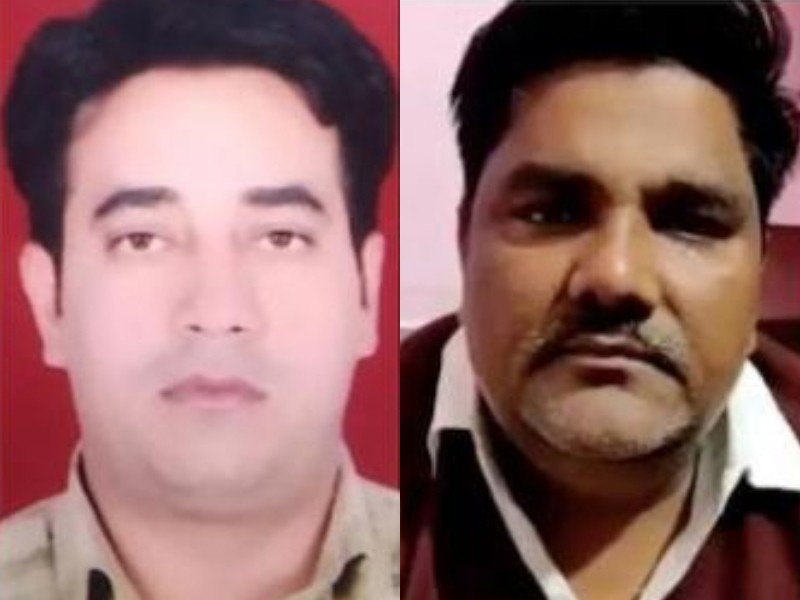
A Delhi court on Friday sentenced former Aam Aadmi Party (AAP) councillor Tahir Hussain and four others to life imprisonment for the murder of Intelligence Bureau (IB) officer Ankit Sharma during the 2020 communal riots in northeast Delhi. The ruling marked the culmination of a trial that scrutinized the brutal killing of Sharma, a 26-year-old security assistant, whose body was found with 51 injuries after being dragged into a drain by a mob.
The Karkardooma Court rejected the Delhi Police’s request for the death penalty, describing the crime as an act of “utmost brutality” but concluding that the accused were not beyond redemption. The court noted that the prosecution failed to prove the convicts had a history of violent behavior or posed an irreversible threat to society. It emphasized that participation in an unlawful assembly and the commission of offenses, by themselves, did not justify capital punishment.
Hussain, along with Nazim, Qasim, Javed, and Anas, was convicted of murder, criminal conspiracy, rioting with deadly weapons, and promoting enmity between groups. However, Hussain was acquitted on charges of hatching a criminal conspiracy and abetting mutiny. The court also cleared six other accused individuals who had faced trial in the case.
The prosecution had argued that Sharma’s killing, marked by 51 ante-mortem injuries from sharp and blunt force trauma, constituted a “rarest of rare” offense. The victim’s father, Ravinder Kumar, had accused Hussain and others of orchestrating the attack, which occurred on February 25, 2020, as Sharma attempted to mediate a conflict near Hussain’s residence. The court acknowledged the “savagery” of the crime, including the desecration of Sharma’s body, which was dragged into a drain “as if the hatred was still not satiated.”
Hussain’s defense lawyers, including Tara Narula and Abdul Gaffar Khan, contested the verdict, asserting that none of the five accused used weapons directly. They announced plans to appeal, with Narula stating the court had imposed a “vicarious liability” sentence. Hussain, who has denied involvement, called the proceedings a “fixed match” and vowed to seek justice through the Delhi High Court.
The case, one of the most prominent prosecutions arising from the 2020 riots that left over 50 people dead and hundreds injured, drew sharp political reactions. Delhi Law Minister Kapil Mishra welcomed the life sentence but urged the High Court to escalate it to the death penalty, calling the crime a “rarest of rare” case. AAP leaders faced scrutiny for alleged ties to Hussain, with Delhi Chief Minister Rekha Gupta emphasizing the verdict’s reinforcement of judicial integrity.
The court’s decision highlighted the tension between punitive justice and rehabilitative principles. While acknowledging the “nauseating and sickening” nature of the crime, the judge stressed that the convicts’ lack of prior criminal records and “satisfactory” conduct in custody warranted a life sentence. The ruling also underscored the challenges of prosecuting crimes linked to communal violence, where evidence of direct involvement often remains contested.
The case has reignited debates over accountability for the 2020 riots, which were marked by targeted violence against Muslim communities. Sharma’s murder, in particular, became a symbol of the era’s sectarian tensions, with his family and supporters demanding justice. The life sentence, while final in the lower court, leaves open the possibility of appeal, reflecting the complex interplay of legal, political, and social factors in Delhi’s ongoing reckoning with its past.
How significant is this development?
Cast your anonymous vote to register reader sentiment across business and policy circles.
CurrentDeck is dedicated to independent, evidence-backed reporting. This briefing was synthesized from primary source reporting, corroborated across independent newsrooms, and verified against our Editorial Standards.