Total solar eclipse brings rare darkness to Europe and parts of the Arctic
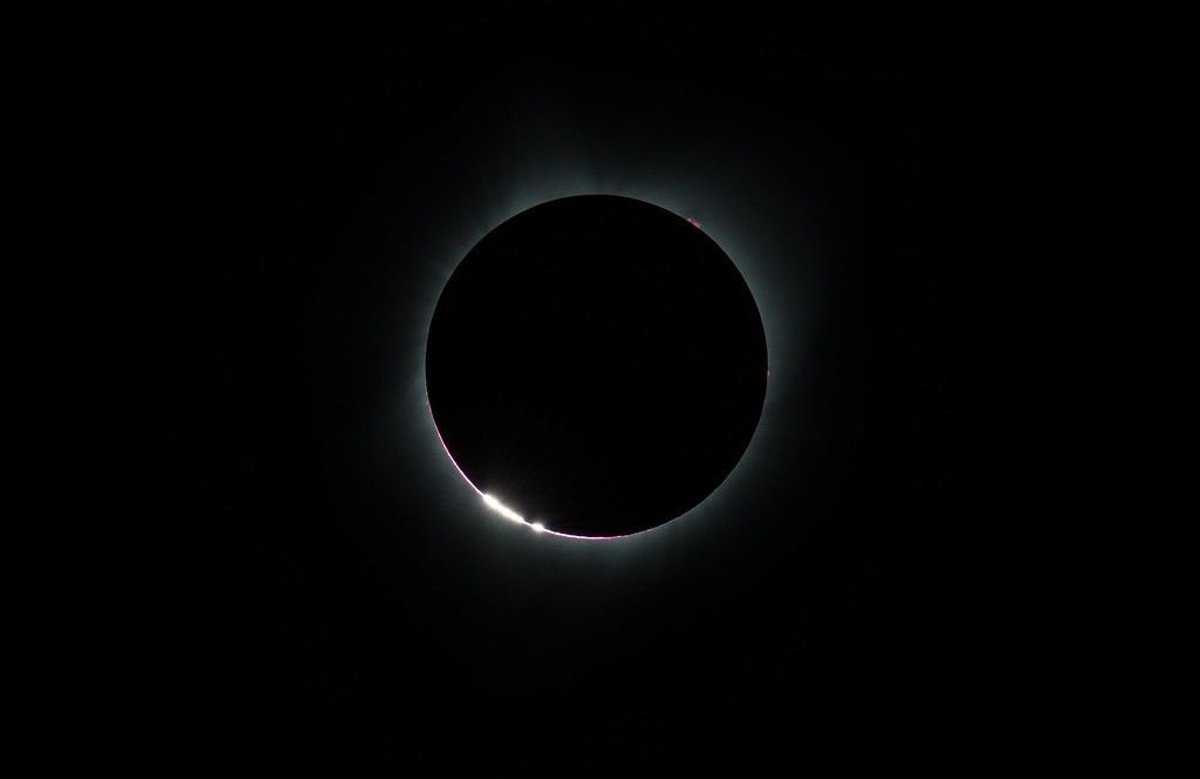
A total solar eclipse brings rare darkness to parts of Europe and the Arctic as the Moon passes directly in front of the Sun.
Total Solar Eclipse Brings Rare Darkness to Europe and Parts of the Arctic
A total solar eclipse is set to captivate millions of people across Europe and parts of the Arctic, as the Moon passes directly in front of the Sun, casting a temporary shadow on the Earth. The path of totality, where the eclipse will be visible in its entirety, stretches from northern Russia to Spain, passing over Greenland and Iceland, according to Scientific American.
The eclipse is expected to be best viewed from the Arctic Circle, Iceland, Spain, and parts of Portugal, with mainland Europe experiencing its first total eclipse in decades. The event will begin at approximately 12:08 p.m. U.S. Eastern Time, with the path of totality sweeping over northern Russia, Greenland, Iceland, and Spain, as reported by en.protothema.gr.
In Spain, where the total eclipse will be most visible, the shadow will cross the country diagonally from the northern Atlantic coast to the Mediterranean Sea. The total eclipse will last less than two minutes, just before sunset, with the partial eclipse lasting around one hour and 45 minutes. According to César González, an astronomer and science communicator at the Madrid Planetarium, a total solar eclipse is one of the best spectacles in nature.
The eclipse has generated significant excitement, with millions of people expected to witness the event. In Spain, officials have estimated that as many as six million people could flock to the eclipse path, with tens of millions more watching across western Europe, as stated in The Irish Times.
Eclipse chasers have been flocking to Spain, with many traveling from around the world to witness the event. Angela Jones Rieksts, from the eastern Canadian city of Halifax, spoke to the Guardian about her experience, saying it felt almost like God's eye was staring back at me from heaven.
She has become a self-professed eclipse chaser, seeking to experience the phenomenon again, as reported by The Irish Times.
For those unable to witness the eclipse in person, NASA and the European Space Agency will be livestreaming the event. The eclipse will also be visible online, with many organizations offering live broadcasts. It is essential to remember that looking directly at the Sun during an eclipse can cause permanent eye damage, and special protective equipment is necessary to view the event safely, as noted by en.tempo.co.
The total solar eclipse is a rare and awe-inspiring event, with the Moon's shadow creating a strange twilight during which temperatures drop, shadows appear at strange angles, and some animals go to sleep. The phenomenon will present scientists with a rare opportunity to study the Sun's atmosphere and its outermost layer, as explained by en.protothema.gr.
As the eclipse approaches, European electricity grid operators have assured that the event will not cause problems with electricity supply, despite the temporary reduction in photovoltaic generation. The decline in photovoltaic generation will be offset by increased generation from other sources, such as natural-gas plants and battery energy-storage systems, according to en.protothema.gr.
The total solar eclipse is a significant astronomical event, with the path of totality offering a unique opportunity to witness the Moon's shadow on the Earth. As millions of people prepare to witness the event, the excitement and anticipation are palpable, with many seeking to experience the rare and awe-inspiring phenomenon.