Japan executes man convicted of killing five in 2009 Osaka pachinko parl…
Japan has carried out its first execution under Prime Minister Sanae Takaichi, hanging a man convicted of a deadly 2009 pachinko parlor arson attack in Osaka.
- Development: Japan executes man convicted of killing five in 2009 Osaka pachinko parl…
- Core Takeaway: Japan has carried out its first execution under Prime Minister Sanae Takaichi, hanging a man convicted of a deadly 2009 pachinko parlor arson attack in Osaka.
- Context: Primary reporting aggregated across independent newsrooms and verified against CurrentDeck standards.
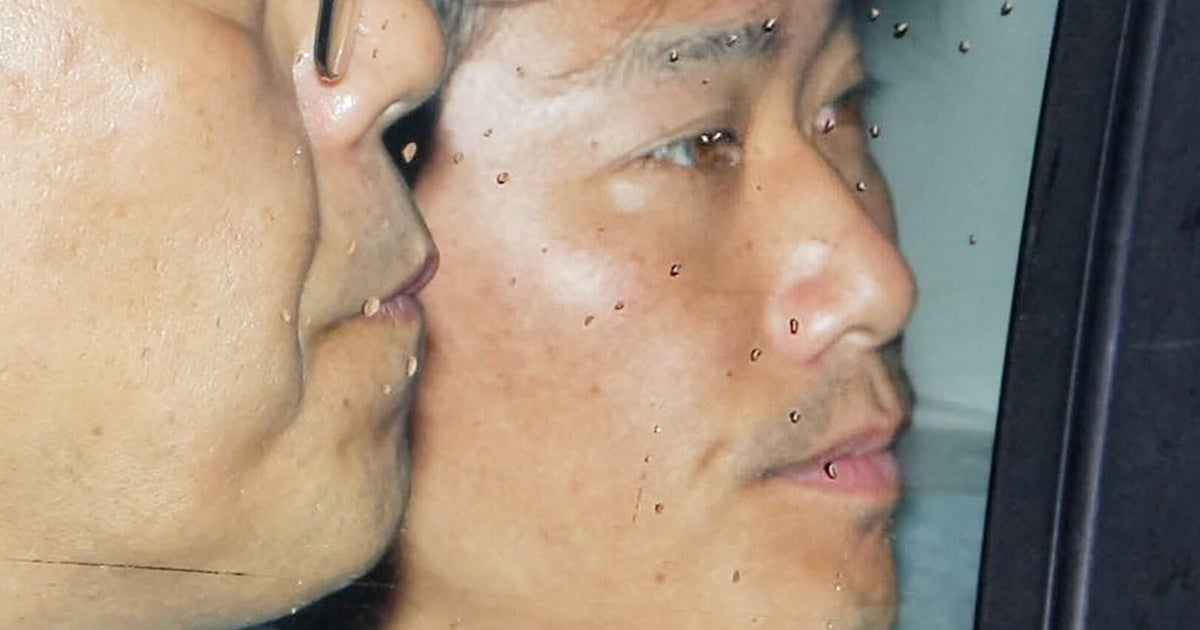
Japan's First Execution Under Prime Minister Sanae Takaichi's Government
Japan has executed a man convicted of killing five people in a 2009 arson attack on a pachinko parlor in Osaka. The execution, carried out on Friday, was the country's first under Prime Minister Sanae Takaichi's government. According to Justice Minister Hiroshi Hiraguchi, the man, identified as 58-year-old Sunao Takami, was hanged after his appeals were rejected in 2016 by a Supreme Court decision upholding the death penalty.Takami was convicted of murder, attempted murder, and arson in a 2011 Osaka District Court ruling. He had set fire to the crowded pachinko parlor by spreading gasoline and throwing a lit match, engulfing the building and killing five people, including four customers and one employee. Ten others were injured in the attack. Hiraguchi described the incident as causing "extremely serious outcomes" and dealing a "major shock and fear to the society." As Hiraguchi told a news conference, "the victims whose lives were taken away must have felt unimaginable pain and fear, and those who suffered injuries ... Were forced to live with long-term effects."
The execution has sparked renewed debate over Japan's use of capital punishment. Japan and the United States are the only two G7 countries that still use the death penalty, and surveys suggest that there is strong support for it among the Japanese public. A 2024 government survey found that 83% of respondents considered the death penalty "unavoidable," although support for abolition rose to 17% from 9% five years earlier.
However, human rights groups have criticized Japan's death penalty system, citing a lack of transparency and the practice of informing prisoners of their impending execution only on the morning of their last day. This practice, according to Hiraguchi, is intended to avoid destabilizing the prisoner's emotional state, but critics argue that it can cause undue suffering. As Hiraguchi said, "notifying the prisoner before the execution date could destabilise their emotional state, and it is believed that doing so might actually cause them undue suffering."
The justice ministry has also been accused of a lack of transparency, as it only began disclosing the names of executed inmates in 2007. Additionally, most inmates are left on death row for years, and sometimes decades, with severe consequences for their mental health. The case of Iwao Hakamada, who spent decades on death row for a 1966 quadruple murder before being released and exonerated in 2024, has highlighted the need for greater transparency and accountability in Japan's justice system. A court ruled that investigators had tampered with evidence and said Hakamada had suffered "inhumane interrogations meant to force a statement."
Amnesty International has reported that recorded executions worldwide rose by 78% in 2025 to 2,707, the highest number documented by the rights group since 1981. Iran put at least 2,159 to death, more than double the 2024 number, a minimum of 356 in Saudi Arabia, 47 in the United States and 17 in Singapore, according to Amnesty. Japan carried out one execution in 2022, three in 2021, three in 2019, and 15 in 2018, including the execution of guru Shoko Asahara and 12 former members of the Aum Shinrikyo doomsday cult.
The execution of Sunao Takami has also raised concerns about the use of capital punishment in Japan, particularly in light of the country's history of wrongful convictions. Campaigners have highlighted the issue of "hostage justice," where suspects are held for lengthy periods in pre-trial detention and pressured to confess. The case of Iwao Hakamada, who was granted a retrial and exonerated after decades on death row, has underscored the need for greater scrutiny of Japan's justice system and the use of capital punishment. Japan now has 100 people on death row, including 43 seeking retrials, according to Hiraguchi.
As Japan continues to grapple with the issue of capital punishment, the execution of Sunao Takami serves as a reminder of the need for greater transparency, accountability, and scrutiny of the country's justice system. With around 100 people currently on death row in Japan, the debate over the use of capital punishment is likely to continue, with human rights groups and critics calling for greater reform and abolition of the death penalty.
How significant is this development?
Cast your anonymous vote to register reader sentiment across business and policy circles.
CurrentDeck is dedicated to independent, evidence-backed reporting. This briefing was synthesized from primary source reporting, corroborated across independent newsrooms, and verified against our Editorial Standards.