Henri Kagan and Kenso Soai win 2026 Nobel Prize in Chemistry
Henri B. Kagan and Kenso Soai won the 2026 Nobel Prize in Chemistry for breakthroughs in asymmetric organic synthesis and solving a mystery of homochirality.
- Development: Henri Kagan and Kenso Soai win 2026 Nobel Prize in Chemistry
- Core Takeaway: Henri B. Kagan and Kenso Soai won the 2026 Nobel Prize in Chemistry for breakthroughs in asymmetric organic synthesis and solving a mystery of homochirality.
- Context: Primary reporting aggregated across independent newsrooms and verified against CurrentDeck standards.
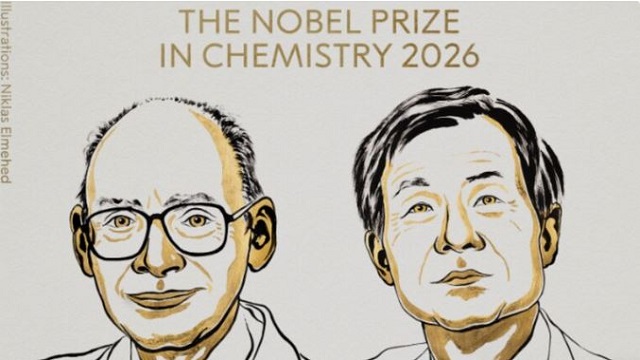
The Royal Swedish Academy of Sciences awarded the 2026 Nobel Prize in Chemistry to French scientist Henri B. Kagan and Japanese researcher Kenso Soai. Announced in Stockholm, the prestigious honor recognizes the pair for the discovery of non-linear effects and autocatalysis in asymmetric organic synthesis. Their foundational research solved a long-standing scientific puzzle regarding how biological systems select a single mirrored molecular orientation.
| Detail | Information |
|---|---|
| Laureates | Henri B. Kagan and Kenso Soai |
| Prize Amount | 12 million Swedish kronor (about $1.2 million) |
| Scientific Focus | Non-linear effects and autocatalysis in asymmetric organic synthesis |
| Ceremony Date | December 10 (Source 1) / December 19, 2026 (Source 2) |
The Mystery of Molecular Mirror Images
Many essential molecules, including amino acids, exist in two distinct variants that act as mirror images of each other, much like human hands. Chemists refer to this state as chiral. Although laboratory test tubes traditionally yield an equal mix of both mirrored forms, living organisms predominantly utilize only one variant in their cellular proteins—a biological condition known as homochirality. For over a century, the spontaneous emergence of this asymmetry remained an unexplained phenomenon.
Henri Kagan and Kenso Soai have provided a solution to a chemical mystery that is over a century old: how homochirality can emerge spontaneously. The chemical reactions they have developed are spectacular,
said Heiner Linke, chair of the Nobel Committee for Chemistry, in a press release.
Breakthroughs by Henri Kagan and Kenso Soai
Henri B. Kagan, an emeritus professor at Université Paris-Sud in France, developed novel ways to manipulate chemical reactions. His discovery of non-linear effects allowed researchers to generate a much greater excess of one specific mirror image than previously deemed possible.
Building upon Kagan's foundation, Japanese organic chemist Kenso Soai designed chemical reactions in which only one of the potential mirror images was formed. The Nobel announcement characterized the Soai reaction as one of the most spectacular chemical experiments ever conducted.
These developments transformed the manufacturing of pharmaceuticals, flavors, scents, and new materials. Because human biology reacts differently to different mirror-image molecules, chemical engineers rely on Kagan's and Soai's insights to isolate pure single-form components for medicinal use.
Nobel Week Schedule and Historical Context
The chemistry prize followed the announcements for medicine and physics earlier in the week. The medicine prize honored a trio of scientists (Karl Deisseroth, Peter Hegemann and Georg Nagel), while the physics award recognized University of Wisconsin professor Francis Halzen as the sole winner. The literature, peace, and economics prizes follow later in the week.
Sources report differing dates for the upcoming award ceremony in Stockholm. While some accounts state the medals will be presented on December 10, the anniversary of Alfred Nobel's death, other reports cite December 19, 2026. The laureates will split the total award money equally.
Frequently Asked Questions
Who won the 2026 Nobel Prize in Chemistry?
Henri B. Kagan and Kenso Soai were awarded the prize for their work on non-linear effects and autocatalysis in asymmetric organic synthesis.
What is the monetary value of the prize?
The laureates share a prize sum of 12 million Swedish kronor, which equals approximately $1.2 million.
As Nobel week proceeds toward the remaining prize announcements for literature, peace, and economics, preparations continue in Stockholm for the formal presentation of medals and diplomas to the chemistry laureates.
How significant is this development?
Cast your anonymous vote to register reader sentiment across business and policy circles.
CurrentDeck is dedicated to independent, evidence-backed reporting. This briefing was synthesized from primary source reporting, corroborated across independent newsrooms, and verified against our Editorial Standards.

