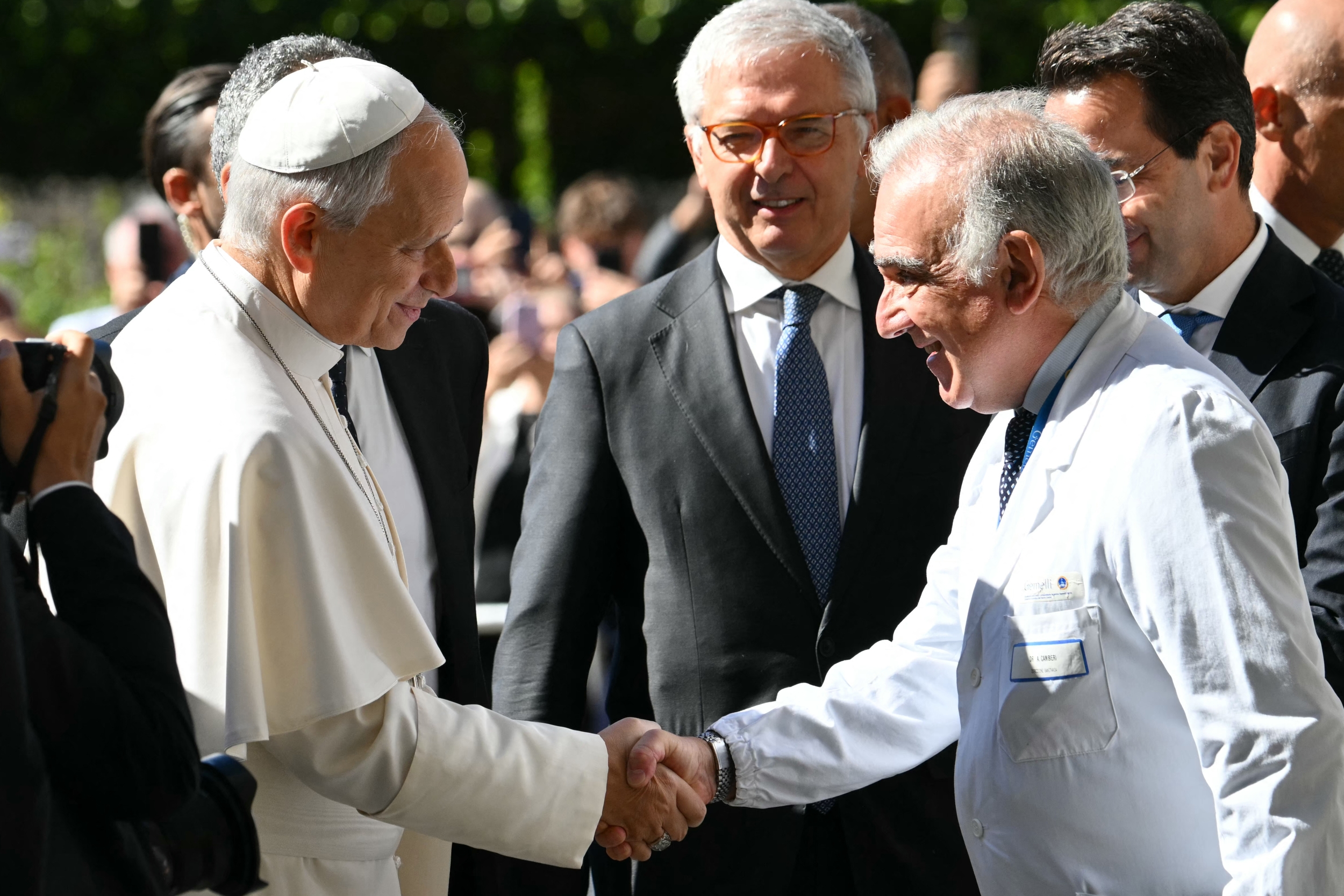
Pope Leo XIV undergoes successful lung surgery for pulmonary adenocarcinoma
Pope Leo XIV undergoes successful lung surgery for pulmonary adenocarcinoma
- Development: Pope Leo XIV undergoes successful lung surgery for pulmonary adenocarcinoma
- Core Takeaway: Pope Leo XIV undergoes successful lung surgery for pulmonary adenocarcinoma
- Context: Primary reporting aggregated across independent newsrooms and verified against CurrentDeck standards.

Pope Leo XIV’s Successful Lobectomy and Immediate Outcome
The Vatican announced that Pope Leo XIV, aged 71, was taken to Rome’s Gemelli University Hospital on October 13 for surgery after a routine scan identified a nodule in his right lung. Surgeons removed the lower lobe of the right lung using a video‑assisted technique. The procedure itself lasted 90 minutes, while the pope spent about three hours in the operating theatre.
"The operation was successful, and there were no complications. After the operation, the Pope awoke normally and returned after a brief period of observation to his room," the Vatican said.
Vatican press office, via CBS News
Post‑operative reports state that the pontiff regained consciousness normally and was transferred back to his room on the 10th floor of the hospital. A Vatican source said the pope will stay in the hospital for roughly a week while further examinations assess whether the cancer has spread.
Medical Context: Pulmonary Adenocarcinoma and Lung Nodules
Pulmonary adenocarcinoma, the diagnosis confirmed during the intra‑operative histological examination, is the most common type of lung cancer in the United States, accounting for about 40 percent of all cases, according to the Lung Cancer Foundation of America (cited by NPR).
Medical definitions describe a lung nodule as a small growth no larger than 3 centimetres; larger lesions are termed masses. The Vatican has not disclosed the exact size of the Pope’s nodule.
Studies cited by The Independent show that up to 47.5 percent of men and 37.7 percent of women in a Dutch cohort had at least one lung nodule, although the vast majority are benign. When a nodule is identified, clinicians assess size, density, location, the patient’s age, smoking status and family history to estimate malignancy risk. In the pope’s case, pre‑operative tests already suspected adenocarcinoma, prompting the decision for surgical removal.
Implications for the Pope’s Duties and Travel Plans
The Vatican cancelled all public audiences for Pope Leo XIV through October 20. His upcoming South American pilgrimage, scheduled to begin on November 6, now faces uncertainty because standard post‑lobectomy guidance recommends avoiding air travel for about three weeks, a recommendation noted in the CBS report.
Secretary of State Marco Rubio posted a message of prayer for the pope, emphasizing solidarity during the recovery period. The Vatican has not announced any immediate chemotherapy or radiation; further pathology reports—including assessment of lymph‑node involvement and molecular markers—will determine whether additional therapy is required.
Family Health Background and Personal Lifestyle
Leo, who was born in Chicago, is known for an active lifestyle that includes swimming and tennis, habits that likely helped him go into surgery in good shape. His older brother, Louis Prevost, resides in Florida and is undergoing treatment for multiple myeloma, a blood cancer, according to his wife Deborah Prevost.
Despite the family’s health challenges, Pope Leo communicated openly with his brother about the lung surgery, underscoring the personal dimension of the medical episode.
| Detail | Information |
|---|---|
| Pope’s Age | 71 |
| Hospital | Gemelli University Hospital, Rome |
| Surgery Type | Lobectomy (lower lobe of right lung) |
| Procedure Duration | 90 minutes (operation), ~3 hours total in OR |
| Diagnosis Confirmed | Pulmonary adenocarcinoma |
| Post‑op Hospital Stay | Approximately one week (expected) |
Frequently Asked Questions
What type of lung cancer was diagnosed?
The intra‑operative histological examination confirmed pulmonary adenocarcinoma, the most common subtype of lung cancer.
What surgical procedure was performed?
Surgeons removed the lower lobe of the pope’s right lung using a video‑assisted lobectomy that lasted 90 minutes.
Will the pope need additional treatment?
Further pathology tests are underway to determine if the cancer has spread; the Vatican has not announced any immediate chemotherapy or radiation.
As the Vatican awaits detailed pathology results, the next public update is expected once the pope’s recovery assessment is complete, leaving open the question of whether his South American pilgrimage will proceed as planned.
How significant is this development?
Cast your anonymous vote to register reader sentiment across business and policy circles.
CurrentDeck is dedicated to independent, evidence-backed reporting. This briefing was synthesized from primary source reporting, corroborated across independent newsrooms, and verified against our Editorial Standards.