US and Saudi forces launch joint airstrikes on Iran-backed groups in Iraq
US and Saudi fighter jets conducted their first joint airstrikes on Iran-backed militia targets in Iraq, resulting in at least 20 deaths and drawing sharp condemnation.
- Development: US and Saudi forces launch joint airstrikes on Iran-backed groups in Iraq
- Core Takeaway: US and Saudi fighter jets conducted their first joint airstrikes on Iran-backed militia targets in Iraq, resulting in at least 20 deaths and drawing sharp condemnation.
- Context: Primary reporting aggregated across independent newsrooms and verified against CurrentDeck standards.
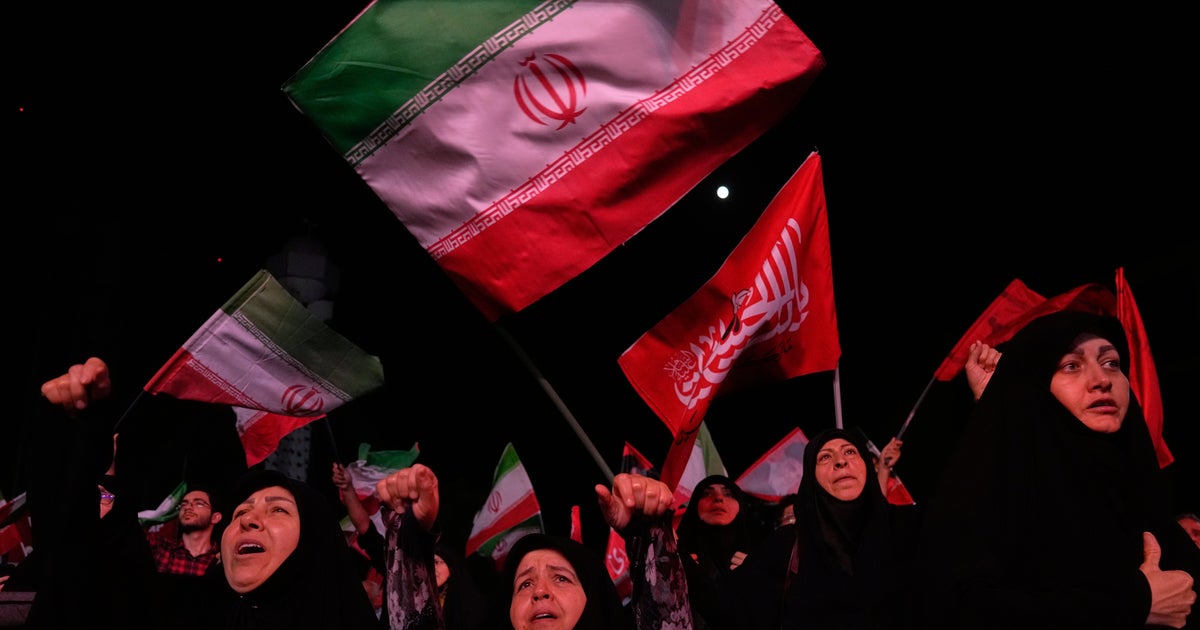
The United States and Saudi Arabia conducted their first joint airstrikes on Iran-backed groups in Iraq on Wednesday, marking a significant escalation in the ongoing regional conflict and drawing sharp condemnation from Baghdad and Tehran. The strikes, which targeted the Popular Mobilization Forces (PMF), a Shi’ite paramilitary alliance integrated into Iraq’s security apparatus, killed at least 20 members and wounded 32, according to the group’s statement. The operation, described by U.S. Central Command (CENTCOM) as a response to drone attacks on Saudi oil facilities, represents the first public collaboration between Washington and Riyadh in the war that began in February 2026, according to the *huffpost.com* report.
The strikes occurred amid a fragile diplomatic landscape. Iraqi Prime Minister Ali al-Zaidi ordered an emergency meeting of the Ministerial Council for National Security following the attacks, as reported by *tribune.com.pk*. Just days earlier, Iraqi Foreign Minister Fuad Hussein had met with U.S. President Donald Trump in Washington before traveling to Iran to mediate a ceasefire. The bombing campaign, which had been paused by Trump last week after 13 days of intense strikes, resumed with the Saudi participation, signaling a shift in strategy. CENTCOM stated that U.S. And Saudi fighter jets struck logistics and weapons facilities in eastern Iraq, citing “more than 30 drone attacks” linked to Iran’s Islamic Revolutionary Guard Corps (IRGC) over the preceding 72 hours, as detailed in the *huffpost.com* article.
The PMF, a coalition of Shi’ite militias with deep ties to Iran, condemned the strikes as a violation of Iraqi sovereignty. In a statement, the group called the operation a “dangerous escalation” and warned of “full alert” against further attacks. The PMF, which includes factions like Kataib Hezbollah and Asa’ib Ahl al-Haq, has long been a focal point of U.S. Pressure to curb Iran’s influence in Iraq. However, its integration into the Iraqi military has complicated efforts to dismantle its networks, as seen in the aftermath of the 2020 U.S. Assassination of PMF leader Abu Mahdi al-Muhandis and Iranian General Qassem Soleimani, according to *tribune.com.pk* and *timeslive.co.za*.
Saudi Arabia framed the strikes as a defensive measure under international law, citing Article 51 of the UN Charter. The kingdom’s Foreign Ministry accused Iran-backed groups of “irresponsible escalation” and vowed to act against future threats. The move comes as Riyadh faces additional pressure from the Iran-aligned Houthi movement in Yemen, which recently announced a blockade of Saudi oil exports in the Red Sea. The Houthis, part of Iran’s broader “Axis of Resistance,” have also targeted Saudi energy infrastructure, further straining regional stability, as reported by *vox.com*.
The conflict’s ripple effects are evident in global markets. Oil prices surged over $3 per barrel following the strikes, with Brent crude surpassing $87 as tensions flared. The escalation also complicates efforts to manage the Strait of Hormuz, a critical energy shipping route. Iran has rejected an Omani proposal for joint regional control of the strait, insisting on unilateral authority over its waters. Meanwhile, the Houthis’ attacks on Saudi oil tankers in the Red Sea have created a “double chokehold” on global energy flows, according to shipping analysts, as noted in *vox.com*.
Iraqi Prime Minister Ali al-Zaidi convened an emergency security council meeting to address the strikes, reflecting the country’s precarious balancing act between its U.S. And Iranian allies. The PMF’s dominance in Iraq’s political and military spheres has long made it a flashpoint for U.S.-Iran rivalry, with successive governments struggling to enforce neutrality. The recent attacks risk further destabilizing a nation already grappling with sectarian divisions and economic strain, according to *tribune.com.pk*.
Regional reactions underscore the conflict’s widening scope. The Gulf Cooperation Council (GCC) condemned the strikes as a threat to security, while Kuwait, Bahrain, and Qatar reaffirmed their solidarity with Saudi Arabia. The U.S. Has also faced criticism for its role in escalating tensions, with Iran accusing Washington of “aggression” and vowing retaliation. As the war enters its sixth month, the convergence of multiple fronts—from the Strait of Hormuz to the Red Sea—raises concerns about a prolonged and unpredictable conflict with global implications, as highlighted in the *huffpost.com* and *tribune.com.pk* reports.
How significant is this development?
Cast your anonymous vote to register reader sentiment across business and policy circles.
CurrentDeck is dedicated to independent, evidence-backed reporting. This briefing was synthesized from primary source reporting, corroborated across independent newsrooms, and verified against our Editorial Standards.