Capital One says it closed Trump Organization's accounts after anti-mone…
Capital One has formally linked its decision to close hundreds of Trump Organization bank accounts to anti-money laundering concerns, rejecting claims of political bias in a new court filing.
- Development: Capital One says it closed Trump Organization's accounts after anti-mone…
- Core Takeaway: Capital One has formally linked its decision to close hundreds of Trump Organization bank accounts to anti-money laundering concerns, rejecting claims of political bias in a new court filing.
- Context: Primary reporting aggregated across independent newsrooms and verified against CurrentDeck standards.
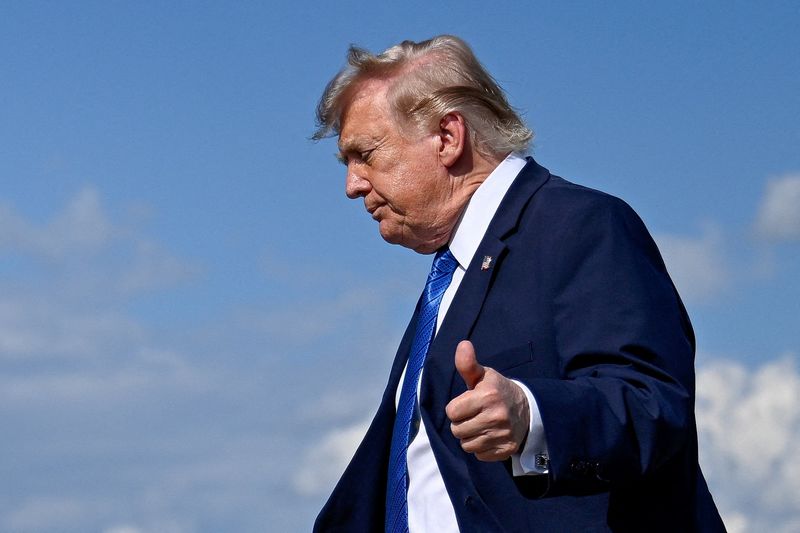
Capital One Financial has formally linked its decision to close more than 300 bank accounts tied to the Trump Organization to anti-money laundering (AML) concerns, marking the first time a major U.S. Bank has explicitly cited such issues in connection with the former president’s business operations. The revelation emerged as part of a legal battle with the Trump Organization, which alleges the closures were politically motivated, a claim the bank has consistently denied.
The bank’s stance was detailed in a filing submitted to a Florida federal court in late July 2026, responding to a lawsuit initiated by the Trump Organization and Eric Trump, Donald Trump’s son. The plaintiffs contend that Capital One’s actions were driven by “woke” ideological beliefs and an attempt to capitalize on the political climate following the January 6, 2021, U.S. Capitol riot. However, Capital One’s filing asserts that the account closures resulted from a “careful review” by its AML team, in line with regulatory guidelines and internal policies.
Capital One notified the Trump Organization of its intent to terminate the accounts in March 2021, citing “suspicious transaction patterns” identified during an internal investigation. The bank emphasized that it had not directly accused the Trump Organization of money laundering but maintained that the account activity fell within categories flagged by federal banking authorities. The filing also criticized the plaintiffs’ legal arguments as “misguided,” alleging they relied on “cherry-picked quotations” to support claims of political bias.
The Trump Organization’s lawsuit, filed in March 2025, has faced repeated setbacks in court. A federal judge in Miami dismissed two initial complaints but allowed the plaintiffs to refile amended versions. Capital One argues that the latest iteration of the lawsuit, submitted in July 2026, fails to address fundamental flaws in the plaintiffs’ allegations. The bank’s legal team has sought to shift focus to the AML review process, framing the closures as a routine compliance measure rather than a politically driven action.
The dispute unfolds against a backdrop of heightened tensions between the Trump administration and major financial institutions. Since the start of Trump’s second term, his administration has criticized banks for allegedly targeting conservative interests, a narrative echoed by Republican lawmakers. In August 2025, Trump signed an executive order banning “discriminatory debanking,” a move seen as a direct response to perceived biases in the banking sector. Earlier in 2026, the president filed a separate lawsuit against JPMorgan Chase, alleging similar politically motivated actions.
The legal conflict also reflects broader scrutiny of AML practices in the wake of past controversies. In 2019, during Trump’s first term, he sued Capital One and Deutsche Bank to block the sharing of financial records with Congress as part of a Democratic-led investigation. At the time, anti-money laundering professionals at Deutsche Bank reportedly flagged suspicious transactions, though executives reportedly ignored the alerts. Deutsche Bank denied the allegations at the time.
Capital One’s recent filing underscores the complexities of balancing regulatory compliance with political pressures. The bank’s decision to close the accounts—initially announced in 2021—has become a focal point in a wider debate over the role of financial institutions in enforcing AML standards. While the Trump Organization continues to challenge the closures in court, the case highlights the challenges banks face in navigating legal, regulatory, and political landscapes simultaneously.
How significant is this development?
Cast your anonymous vote to register reader sentiment across business and policy circles.
CurrentDeck is dedicated to independent, evidence-backed reporting. This briefing was synthesized from primary source reporting, corroborated across independent newsrooms, and verified against our Editorial Standards.