Ketamine triggers sex-specific brain recovery driven by female microglia
New research reveals that female mice undergo a unique form of synaptic remodeling driven by microglia and stress hormones during recovery from ketamine anesthesia.
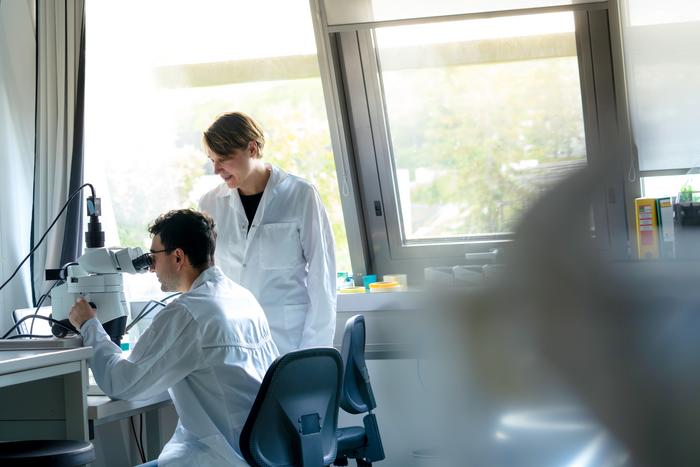
Researchers at the Institute of Science and Technology Austria (ISTA) and the Allen Institute for Brain Science have uncovered a sex-specific mechanism by which the brain recovers from ketamine anesthesia, revealing that female mice experience a unique form of synaptic remodeling driven by microglia. The findings, published in *Science Advances*, highlight the critical role of immune cells in neural recovery and underscore significant differences between male and female brain responses to the anesthetic.
Study Reveals Microglia-Driven Sex-Specific Recovery Mechanism
The research focused on the brain’s return to functional connectivity after ketamine-induced unconsciousness. Using a cranial window technique combined with fluorescence microscopy, scientists observed microglia — brain-resident immune cells — forming prolonged interactions with neurons in female mice during recovery. This process, linked to synaptic plasticity, was absent in male mice. The study found that microglia in females initiated structural changes in neural networks, a phenomenon not seen in males. “This plasticity, the brain’s ability to change, adapt, and recover, only occurred in females,” said Alessandro Venturino, lead author of the study. The team discovered that this recovery mechanism depends on corticosterone, a stress hormone that rises during anesthesia. In female mice, corticosterone activated the *Fkbp5* gene in microglia, producing the protein FKBP51, which facilitates microglia-neuron communication. Removing adrenal glands, which produce corticosterone, eliminated the observed synaptic remodeling, confirming the hormone’s role.Evolutionary Hypotheses and Implications for Human Health
The study’s authors speculated that evolutionary pressures may have shaped this sex-specific response. Sandra Siegert, senior author and ISTA professor, proposed that female brains evolved to prioritize rapid adaptability for tasks like childcare and social coordination. “The female brain had to respond more swiftly,” she noted, though she warned that excessive plasticity could heighten risks of depression, a condition more prevalent in women. The findings challenge assumptions about ketamine as a universally reversible anesthetic. While the drug is used for pain management and depression treatment, the study suggests its effects vary between sexes. “It’s astonishing how readily people assume men and women respond to drugs in the same way, when clearly they do not,” Siegert said. The research also highlights a gap in medical studies, as few ketamine trials have focused on females, despite anecdotal reports of higher post-anesthesia nausea in women.The team’s work has already inspired practical applications. Siegert and Venturino co-founded Syntropic Medical, a startup exploring how 60 Hz flickering light might modulate neural networks. Their findings also call for reevaluating sex-specific differences in drug development and clinical practice. “Our results identify a link between microglia-specific *Fkbp5* expression and ketamine action, warranting a reevaluation of assumptions about its effects,” the study concluded.
Methodology and Key Findings
The experiments involved tracking brain activity in mice using advanced imaging techniques. After ketamine administration, female mice exhibited increased synaptic remodeling and electrical activity in the visual cortex, while males showed no such changes. When microglia were depleted, the female-specific responses vanished, confirming their central role. Genomic analysis revealed that *Fkbp5* and its protein FKBP51 were upregulated in females, linking corticosterone to microglial activity. The study also found that adrenalectomy, removal of the adrenal glands, blocked these effects, further solidifying the hormone’s involvement. “Stress is not always harmful,” Siegert said. “Stress hormones are essential for certain brain processes.”The research underscores the need for sex-inclusive studies in neuroscience and pharmacology. As ketamine’s use expands, understanding these differences could improve patient outcomes and address disparities in treatment responses. The study’s authors emphasized that while the findings are based on mouse models, they provide a foundation for investigating human neuropharmacology and the broader role of microglia in brain health.
CurrentDeck is dedicated to independent, evidence-backed reporting. This briefing was synthesized from primary source reporting, corroborated across independent newsrooms, and verified against our Editorial Standards.