NASA's curiosity rover discovers mysterious honeycomb patterns on Mars s…
Curiosity rover has uncovered unexplained geometric patterns and nickel-rich stones at Ghost Mountain, sparking debate over Martian geological history.
- Development: NASA's curiosity rover discovers mysterious honeycomb patterns on Mars s…
- Core Takeaway: Curiosity rover has uncovered unexplained geometric patterns and nickel-rich stones at Ghost Mountain, sparking debate over Martian geological history.
- Context: Primary reporting aggregated across independent newsrooms and verified against CurrentDeck standards.
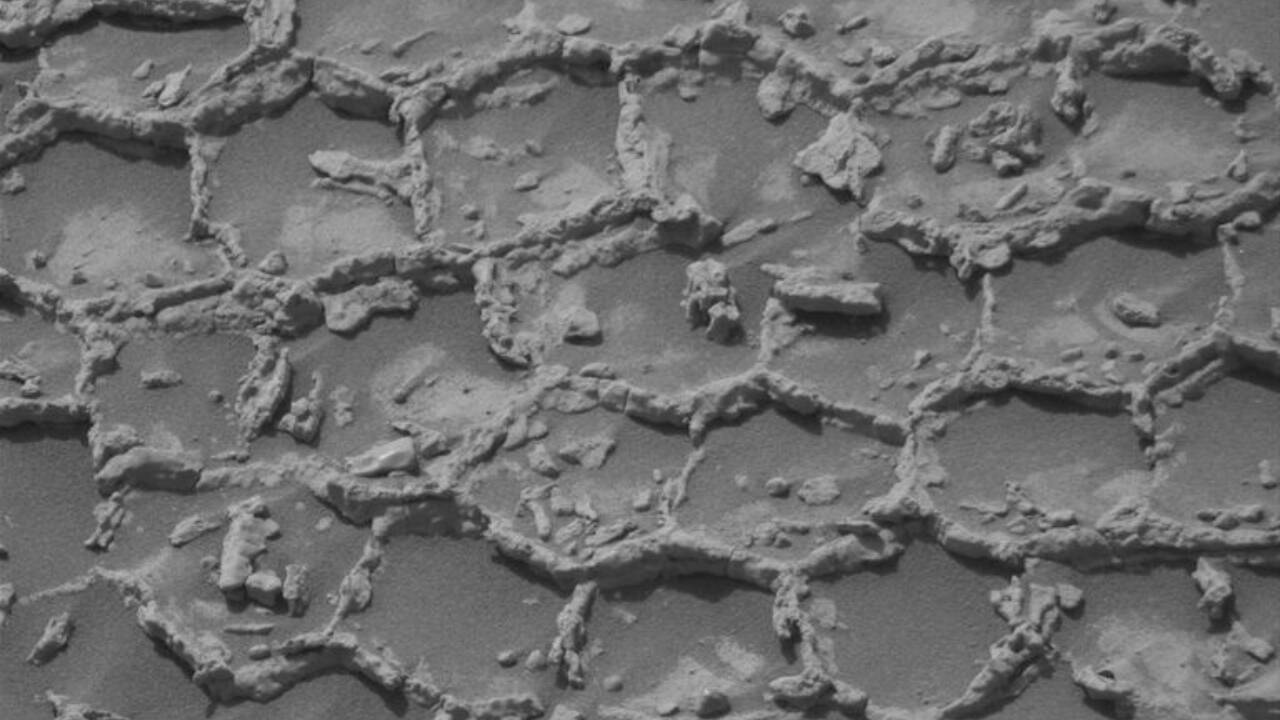
NASA’s Curiosity rover has encountered a series of polygonal structures on Mars, described by planetary geologist Catherine O’Connell-Cooper as “amazingly well preserved polygonal shaped fractures, with raised ridges (about 1 centimeter, or about 0.39 inches, high), looking like a patchwork of honeycombs, or maybe a patch of waffles.” These features, observed in an area dubbed “Ghost Mountain butte,” were first documented by multiple outlets, including *The Debrief* and *The Times of India*. The structures, which stretch up to 30 meters in some instances, have prompted researchers to investigate their origin, with some speculating about natural processes or extraterrestrial influences.
The rover’s Mastcam and Mars Hand Lens Imager (MAHLI) captured detailed images of the formations, while the Alpha Particle X-Ray Spectrometer (APXS) and ChemCam analyzed their composition. William Farrand, a senior research scientist at the Space Science Institute, noted the presence of nickel in some darker rocks, a mineral rare in Martian bedrock but common in meteorites. This has led to speculation that the dark stones could be fragments of extraterrestrial material, possibly ejected from impacts or delivered by space debris. However, the Curiosity team has not ruled out natural processes, such as ancient water activity or thermal cracking, which could explain the polygonal formations. “Further investigations should help answer this question,” Farrand wrote in a NASA blog post.
The rover’s exploration of the area, including “Miraflores butte” and “Ghost Mountain,” is part of a broader campaign to study Martian geology. O’Connell-Cooper emphasized the complexity of the terrain, where fractures appear to interact with preexisting rock layers. “We could stay here for a week and still find things to look at,” she noted, underscoring the site’s scientific value. The team plans to use the ChemCam’s laser-induced breakdown spectroscopy (LIBS) to probe the ridges’ composition, while Mastcam will capture mosaics of the surrounding features.
Contextualizing the discovery, the Curiosity team referenced Earth’s geological analogs, such as the Giant’s Causeway in Northern Ireland, where similar polygonal basalt columns form. However, the Martian structures differ in their apparent uniformity and lack of clear water-related indicators. Some researchers have also drawn comparisons to “waffle” patterns observed in previous missions, though the current findings represent the most detailed examination yet. The presence of dark, pebble-sized rocks scattered across the area has further fueled debate. Farrand noted that these could be “bits of Mars that ‘floated’ down from higher in the stratigraphy, were ejected from distant impacts, or are meteorites.” The nickel detection in some stones adds weight to the meteorite hypothesis, though no definitive evidence has been confirmed.
The discovery highlights the ongoing role of Curiosity in unraveling Mars’ secrets. Since its arrival on the planet, the rover has provided critical data on the planet’s past habitability, including evidence of ancient lakes and organic molecules. The honeycomb structures, while not directly linked to life, offer new insights into Mars’ dynamic history and the forces shaping its surface. As the Curiosity team prepares to investigate the “boxwork fracture structures” near Ghost Mountain, the scientific community awaits further findings. The rover’s ability to adapt its mission to unexpected discoveries underscores the value of long-term exploration, even as the Martian honeycombs remain an enigma.
How significant is this development?
Cast your anonymous vote to register reader sentiment across business and policy circles.
CurrentDeck is dedicated to independent, evidence-backed reporting. This briefing was synthesized from primary source reporting, corroborated across independent newsrooms, and verified against our Editorial Standards.


