NASA study confirms asteroid 1998 SH2 is actually a comet
NASA researchers have reclassified the near-Earth object 1998 SH2 as a comet after detecting faint outgassing and orbital shifts. This discovery highlights the growing importance of identifying 'dark comets' in planetary defense efforts.
- Development: NASA study confirms asteroid 1998 SH2 is actually a comet
- Core Takeaway: NASA researchers have reclassified the near-Earth object 1998 SH2 as a comet after detecting faint outgassing and orbital shifts. This discovery highlights the growing importance of identifying 'dark comets' in planetary defense efforts.
- Context: Primary reporting aggregated across independent newsrooms and verified against CurrentDeck standards.
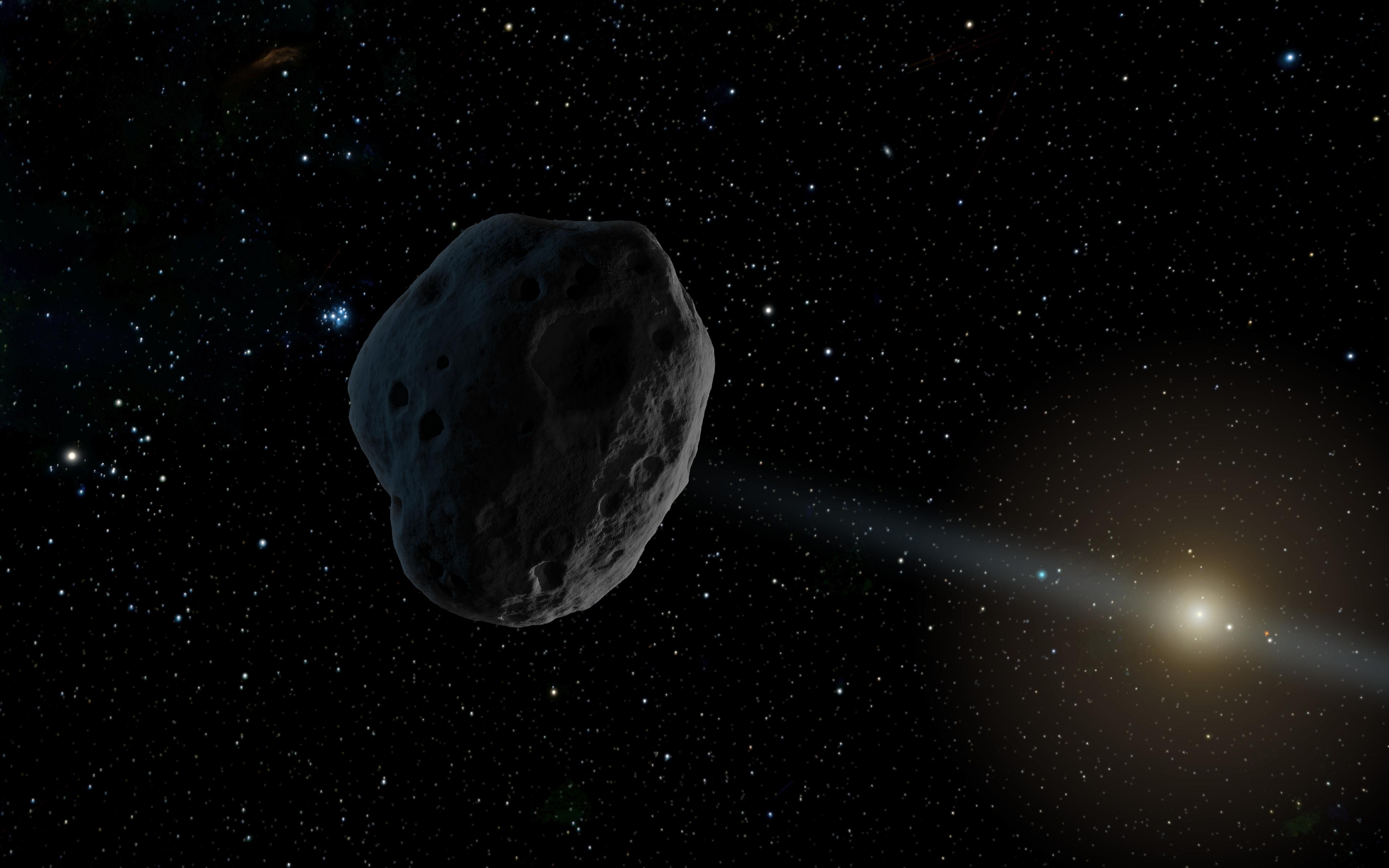
A NASA study has reclassified a near-Earth object initially identified as an asteroid as a comet, shedding light on the elusive category of "dark comets" and enhancing efforts to track potentially hazardous space objects. The object, designated 1998 SH2, was first discovered in 1998 and had long been categorized as an asteroid due to the absence of visible cometary activity. However, its unpredictable orbital shifts during a close approach to Earth in August 2025 prompted a reevaluation, revealing it to be a comet with a faint, detectable tail.
The breakthrough came after researchers at NASA’s Jet Propulsion Laboratory (JPL) analyzed decades of observations, including data from the Deep Space Network’s planetary radar system. When 1998 SH2 failed to appear where predicted, scientists suspected non-gravitational forces at play. Using optical astrometry, they measured the object’s position with precision and identified irregularities in its motion consistent with cometary activity. This led to a hypothesis that the object was venting gas as solar heat melted ice embedded in its rocky composition, a process that typically produces a comet’s tail and coma. However, the gas and dust emissions were too minimal to be detected by most telescopes, earning it the label of a "dark comet."
To confirm their findings, researchers collaborated with astronomers at the Canada-France-Hawaii Telescope, the European Southern Observatory’s Danish Telescope, and the 8.2-meter Very Large Telescope. These observatories captured images of a weak but distinct tail, providing conclusive evidence that 1998 SH2 is a comet. The object has since been assigned the additional designation P/1998 SH2. "This work shows the importance of continuously tracking near-Earth objects," said Davide Farnocchia, a JPL navigation engineer and lead author of the study. "Detecting these perturbations can be an important diagnostic tool for planetary defense."
The discovery also deepens understanding of dark comets, a rare class of objects that exhibit irregular orbital trajectories but lack visible signs of outgassing or tails. These objects are divided into two groups: larger ones with orbits similar to Jupiter-family comets and smaller ones closer to the Sun. Since the 2016 identification of the first dark comet, about a dozen more have been found, though their origins remain mysterious. Researchers suggest that some larger dark comets could transition into typical comets if observed with advanced telescopes capable of detecting faint emissions. By analyzing motion data, scientists may also uncover more comets previously misclassified as asteroids.
The findings underscore the challenges of planetary defense. Comets, unlike asteroids, experience greater nongravitational perturbations due to outgassing, making their orbits harder to predict. This study highlights the need for improved tracking systems, such as NASA’s upcoming Near-Earth Object (NEO) Surveyor mission. Scheduled for launch, the telescope will focus on detecting dark asteroids and comets that evade traditional optical surveys due to their low reflectivity. "This mission will help us find objects that are harder to spot, like dark comets, and improve our ability to assess impact risks," said Farnocchia.
The research also intersects with broader questions about the Solar System’s formation. Dark comets, which may contain ice trapped beneath rocky surfaces, could provide clues about how water reached Earth. Some theories suggest that such objects, if common, might have contributed to the planet’s early hydration. However, their unpredictable paths pose a potential threat. "If we can’t detect these objects correctly, we will not be able to know if they’re going to hit us," said Aster Taylor, an astrophysicist involved in dark comet studies.
While the reclassification of 1998 SH2 is a notable step in planetary science, it also highlights the complexity of distinguishing between asteroids and comets. As technology advances, missions like Japan’s Hayabusa2, which is set to study a dark comet in 2031, will further unravel the mysteries of these enigmatic objects. For now, the study reaffirms the value of persistent observation and the shifting nature of our understanding of the cosmos.
How significant is this development?
Cast your anonymous vote to register reader sentiment across business and policy circles.
CurrentDeck is dedicated to independent, evidence-backed reporting. This briefing was synthesized from primary source reporting, corroborated across independent newsrooms, and verified against our Editorial Standards.


