Astronauts perform first medical X-rays in orbit during SpaceX mission
The all-civilian Fram2 crew successfully utilized a portable X-ray generator to perform medical imaging in microgravity. This milestone demonstrates a new capability for health monitoring and hardware diagnostics on future space missions.
- Development: Astronauts perform first medical X-rays in orbit during SpaceX mission
- Core Takeaway: The all-civilian Fram2 crew successfully utilized a portable X-ray generator to perform medical imaging in microgravity. This milestone demonstrates a new capability for health monitoring and hardware diagnostics on future space missions.
- Context: Primary reporting aggregated across independent newsrooms and verified against CurrentDeck standards.
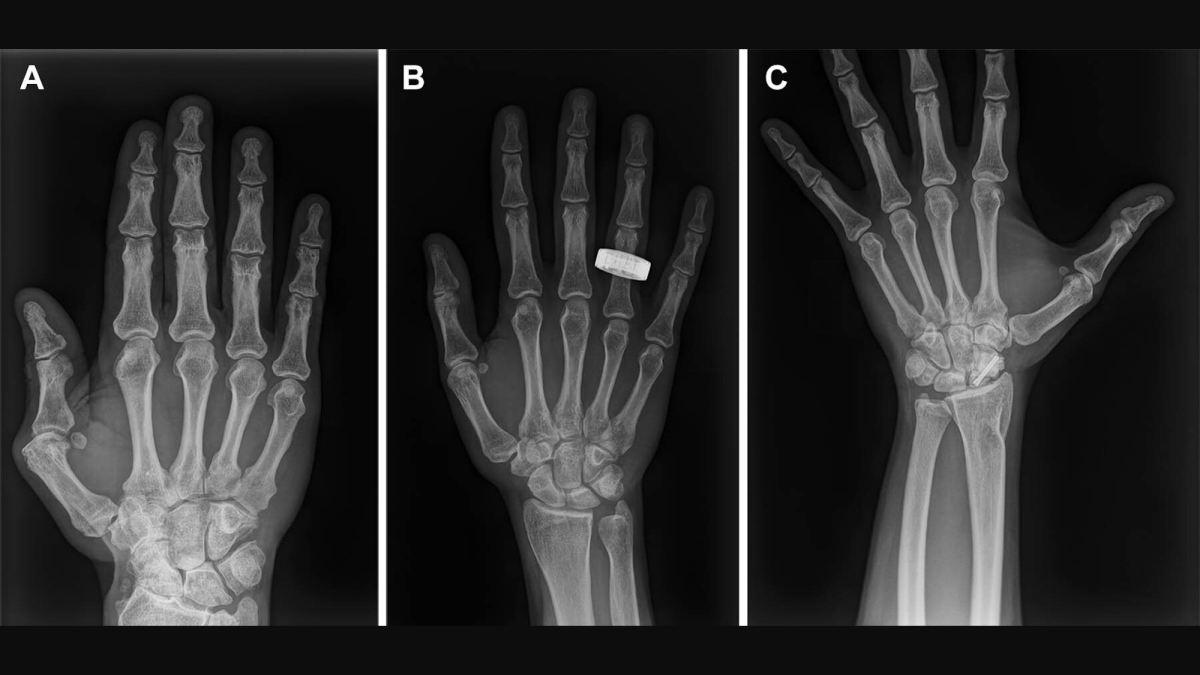
Astronauts aboard the SpaceX Fram2 mission achieved a milestone in aerospace medicine by successfully capturing the first medical X-ray images in orbit. The demonstration, conducted during a polar orbital flight that began on March 31, 2025, represents the first time diagnostic-quality radiography has been performed in microgravity.
Fram2 mission objectives and technological demonstration
The Fram2 mission, an all-civilian flight launched aboard a SpaceX Falcon 9 rocket, utilized a Crew Dragon capsule to reach a polar orbit, traveling at speeds of 17,500 miles per hour. During the 3.5-day mission, the four-person crew executed 22 scientific experiments. Central to this research was the SpaceXray project, which aimed to validate the viability of mobile radiography in the unique environment of space.
For over 40 years, ultrasound has served as the primary medical imaging tool for spaceflight. While effective, ultrasound requires significant operator training and relies on sound wave transmission, which is difficult in loud, confined spacecraft environments. According to Mayo Clinic researcher Sheyna Gifford, the lack of alternative imaging has long been a hurdle for space medicine. It’s been a dream for aerospace medicine to have more than one imaging modality for diagnosing illnesses and injuries in space,
Gifford explained.
The crew utilized an ultraportable, battery-operated X-ray generator and detector, including a MinXray TR90BH. The setup was chosen for its portability and ability to produce images in a challenging environment. Before the mission, the crew underwent four hours of training, employing a train-the-trainer model to learn positioning and equipment operation.
Performance and diagnostic results
The first image successfully captured in space was a scan of a hand wearing a ring, a nod to the first X-ray image taken 130 years ago by physicist Wilhelm Roentgen. Over the course of the mission, the crew obtained additional images of forearms, chests, abdomens, and pelvises, as well as non-medical objects including a smartwatch to test the equipment's use in non-destructive hardware diagnostics.
Following the return of the mission on April 4, 2025, independent radiologists evaluated the images. The findings, published in the journal Radiology, indicated that the scans were of high quality and suitable for diagnostic purposes. While some minor differences in positioning were noted—particularly in images of the torso compared to the extremities—the overall scan quality was found to be comparable to Earth-based radiography. The crew reported the machine was easy to use despite minimal prior coaching.
The equipment remained functional throughout the mission, although it sustained minor exterior damage during the return to Earth. Researchers, including Lonnie Petersen of MIT, noted that while the crew did not face significant health impacts during the short 3.5-day flight, the capability to perform X-rays allows for future monitoring of bone health and other physiological changes during longer-duration missions.
Future implications for space exploration
The success of the SpaceXray project provides a pathway for managing medical emergencies on future missions to the Moon and Mars, where Earth-based support and evacuation are not feasible. Beyond medical diagnostics, the technology is expected to assist in hardware maintenance. For sustained human presence in space, X-rays are critical not just for crew members but also for other mission components like electronics and spacesuits,
Gifford noted. The only way to look inside these objects without taking them apart is to X-ray them.
Researchers hope to conduct further X-ray tests during orbital missions, while continuing to reduce the overall size of equipment. Because of the potential for injuries and falls in future exploration, Gifford stated, The odds that in the next phase of human exploration we will be bumping, bruising, falling, and fracturing ourselves is effectively 100%.
How significant is this development?
Cast your anonymous vote to register reader sentiment across business and policy circles.
CurrentDeck is dedicated to independent, evidence-backed reporting. This briefing was synthesized from primary source reporting, corroborated across independent newsrooms, and verified against our Editorial Standards.


