Stable boron graphene created by Tohoku University researchers
Researchers have successfully synthesized a stable form of boron graphene by leveraging a 3D crystal structure, overcoming historical stability challenges. This breakthrough paves the way for advanced developments in quantum computing and energy-efficient electronics.
- Development: Stable boron graphene created by Tohoku University researchers
- Core Takeaway: Researchers have successfully synthesized a stable form of boron graphene by leveraging a 3D crystal structure, overcoming historical stability challenges. This breakthrough paves the way for advanced developments in quantum computing and energy-efficient electronics.
- Context: Primary reporting aggregated across independent newsrooms and verified against CurrentDeck standards.
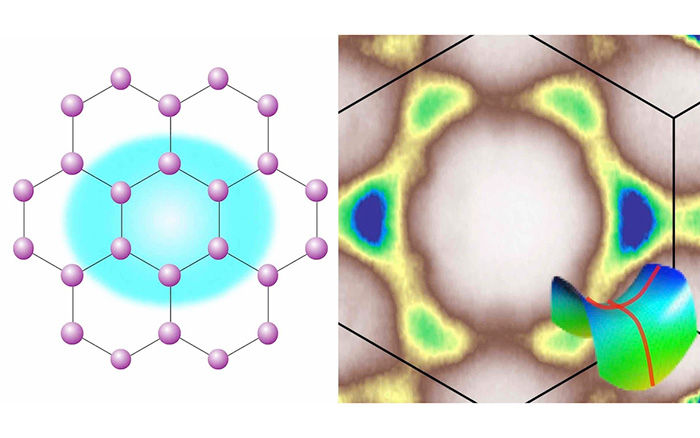
Researchers at Tohoku University have developed a stable form of "boron graphene," a two-dimensional material with a honeycomb structure, by leveraging a naturally occurring boron layer within a three-dimensional crystal. The breakthrough, published in *Science Advances* on July 2, 2026, addresses long-standing challenges in synthesizing borophene, a material with potential for advanced quantum technologies. Some sources, however, note the publication date as July 3, 2026, indicating a discrepancy in the reported timing.
The team, led by Takafumi Sato of Tohoku University’s Advanced Institute for Materials Research (WPI-AIMR), bypassed the need to create an unstable free-standing boron sheet. Instead, they exposed a pre-existing honeycomb boron layer within the stable crystal LaRh₃B₂. This approach avoided the fragility of direct borophene synthesis, which has hindered practical applications due to its structural instability, as noted in multiple sources.
Using angle-resolved photoemission spectroscopy (ARPES) and scanning tunneling microscopy (STM), the researchers identified a "van Hove singularity"—a concentration of electrons near the material’s Fermi level—that amplifies electron interactions. This phenomenon, combined with real-space observations, revealed an "electronic nematic state," where electrons align in a preferred direction, breaking the crystal’s six-fold symmetry. This quantum state resembles the behavior of liquid crystals, offering new pathways for designing materials with tailored electronic properties, as described in the sources.
"By combining momentum-space and real-space imaging techniques, we connected electronic instability with the emergence of this nematic state," said Kosuke Nakayama, an assistant professor at the Graduate School of Science. The synergy between ARPES and STM allowed the team to map both the energy bands and spatial distribution of electrons, providing a comprehensive understanding of the material’s behavior, as detailed in the research.
The study’s methodology highlights the flexibility of the LaRh₃B₂ crystal family. Its structure permits substitution of chemical elements, enabling researchers to fine-tune electron density and interactions. This adaptability positions the material as a platform for developing next-generation superconductors and energy-efficient quantum devices, as emphasized in the sources.
The findings build on decades of interest in borophene, a material theorized to exhibit stronger electron interactions than graphene. However, its ideal honeycomb structure has proven too unstable for large-scale production. Tohoku University’s approach circumvents this limitation by exploiting the inherent stability of a 3D crystal while retaining the desirable properties of a 2D boron lattice, as reported in the sources.
The research team included 20 co-authors, spanning institutions in Japan and international collaborators. Their work was supported by synchrotron radiation facilities, which provided the high-resolution data necessary to observe the electronic nematic state. The study’s authors emphasized that the combination of techniques was critical to unraveling the material’s quantum behavior, as outlined in the sources.
While the immediate applications of the discovery remain under exploration, the team suggests that the material’s unique electronic properties could inspire innovations in quantum computing and low-energy electronics. The ability to manipulate electron alignment and interactions within a stable framework opens new avenues for material design, potentially accelerating the development of technologies reliant on quantum phenomena, as noted in the coverage.
Tohoku University’s findings have drawn attention from the broader scientific community, with multiple outlets reporting the breakthrough. The research shows how much interdisciplinary approaches in materials science, bridging theoretical predictions with experimental validation. As the team continues to analyze the implications of their work, the stable boron graphene may serve as a cornerstone for future advancements in quantum materials, according to the sources.
How significant is this development?
Cast your anonymous vote to register reader sentiment across business and policy circles.
CurrentDeck is dedicated to independent, evidence-backed reporting. This briefing was synthesized from primary source reporting, corroborated across independent newsrooms, and verified against our Editorial Standards.