Vantablack satellite coating could reduce orbital light pollution
A new carbon nanotube coating, Vantablack 310, could solve the growing crisis of orbital light pollution by significantly dimming satellites for telescopes. The material will face its first major orbital test during the upcoming Jovian-1 mission.
- Development: Vantablack satellite coating could reduce orbital light pollution
- Core Takeaway: A new carbon nanotube coating, Vantablack 310, could solve the growing crisis of orbital light pollution by significantly dimming satellites for telescopes. The material will face its first major orbital test during the upcoming Jovian-1 mission.
- Context: Primary reporting aggregated across independent newsrooms and verified against CurrentDeck standards.
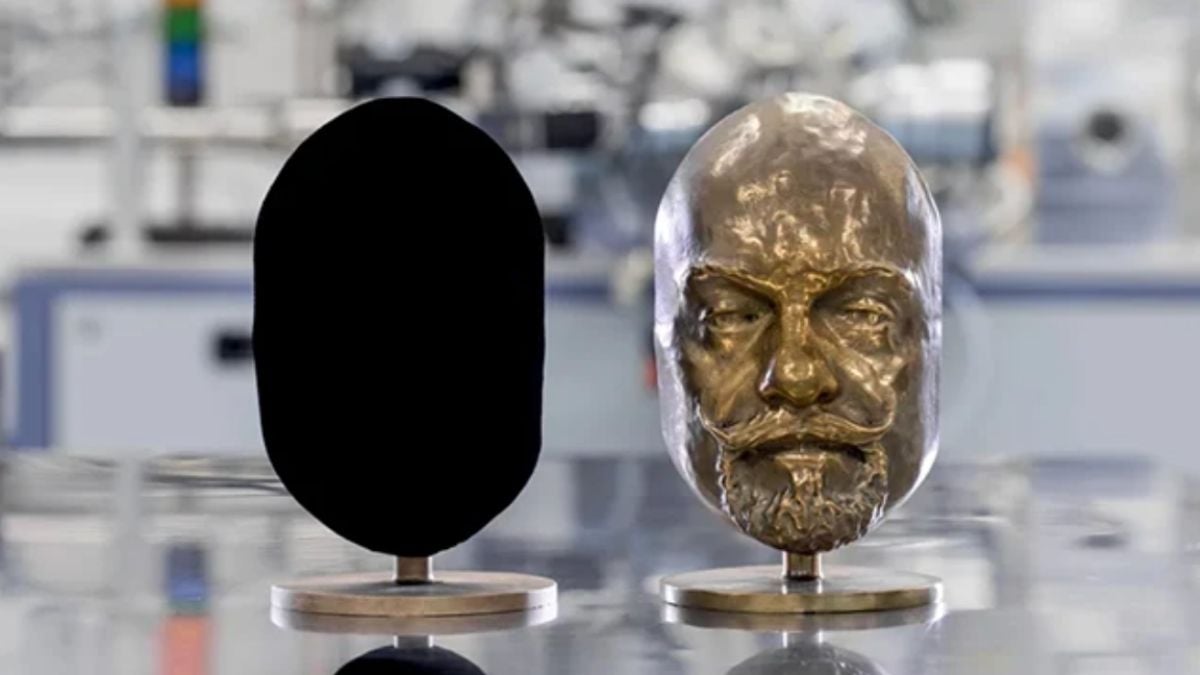
As the number of satellites orbiting Earth surges, astronomers are confronting a growing challenge: the dimming of the night sky by artificial light pollution. A novel solution is emerging from the University of Surrey and its spinoff company Surrey NanoSystems, where researchers have developed a material called Vantablack 310. This ultra-black coating, designed to reflect only 2% of incoming light, could significantly reduce the brightness of satellites, mitigating their impact on astronomical observations.
Currently, more than 14,000 satellites orbit Earth, with projections suggesting this number could exceed 100,000 by 2030. Megaconstellations like SpaceX’s Starlink, which already comprises nearly half of all operational satellites, contribute to this problem. These satellites reflect sunlight, creating bright streaks in telescope images and brightening the overall night sky. The Vera Rubin Observatory, set to begin operations in 2026, estimates that up to 30% of its twilight images could be contaminated by satellite trails if current trends continue.
Vantablack 310, a modified version of the original Vantablack material, was developed to address these concerns. Unlike its predecessor, which required delicate handling, the new formulation is more durable and easier to apply. Laboratory tests show that it reflects only 2% of incoming light, far less than uncoated satellites, which can reflect up to 5% of light. This reduction in reflectivity could bring satellite brightness below thresholds set by the International Astronomical Union, minimizing interference with astronomical research.
Researchers at the University of Surrey conducted simulations to assess the coating’s performance under various orbital conditions. They found that a Vantablack 310-coated satellite would score between 6.7 and 7.0 on the AB magnitude scale, which measures brightness. This is well within the recommended limit for protecting astronomical observations. In comparison, an uncoated SpaceX satellite tested by the team scored a magnitude of 3.7, highlighting the material’s potential.
The coating’s effectiveness stems from its unique structure. Composed of vertically aligned carbon nanotubes, Vantablack 310 traps light between the nanotubes, preventing it from reflecting back. This “forest-like” design ensures that minimal light escapes, creating a surface that appears almost like a void. The material’s durability was tested under simulated space conditions, including temperature fluctuations and radiation, with minimal degradation observed.
A critical test of Vantablack 310 will occur in 2026 when the Jovian-1 CubeSat, a student-led mission, launches with one side coated in the material. The satellite, developed as part of the UK’s JUPITER program, will allow researchers to measure its performance in orbit and assess its ability to reduce satellite brightness. If successful, the coating could become a practical tool for future satellite design, ensuring that technological advancements do not come at the cost of astronomical clarity.
While Vantablack 310 addresses light pollution, it does not resolve other challenges posed by satellite megaconstellations. Issues such as radio interference, space debris, and atmospheric pollution from satellite reentries remain unresolved. However, the material represents a significant step toward balancing technological progress with the preservation of the night sky.
The initiative has garnered attention from both the scientific community and policymakers. Dr. Noelia Noël, an astrophysicist at the University of Surrey, emphasized the importance of equitable access to the night sky, noting that publicly funded observatories in lower-income countries are disproportionately affected by satellite pollution. “The night sky is a shared resource,” she said, “and solutions must prioritize inclusivity and sustainability.”
As the Jovian-1 mission prepares for launch, the success of Vantablack 310 could mark a turning point in space sustainability. By reducing the brightness of satellites, the coating offers a practical solution to a pressing problem, ensuring that future generations can continue to explore the cosmos without the glare of artificial light.
How significant is this development?
Cast your anonymous vote to register reader sentiment across business and policy circles.
CurrentDeck is dedicated to independent, evidence-backed reporting. This briefing was synthesized from primary source reporting, corroborated across independent newsrooms, and verified against our Editorial Standards.


