FIFA investigates Argentina over political Falklands banner at World Cup
Following a controversial display of a pro-Argentina banner after their World Cup semi-final win, FIFA has launched an investigation into potential disciplinary action.
- Development: FIFA investigates Argentina over political Falklands banner at World Cup
- Core Takeaway: Following a controversial display of a pro-Argentina banner after their World Cup semi-final win, FIFA has launched an investigation into potential disciplinary action.
- Context: Primary reporting aggregated across independent newsrooms and verified against CurrentDeck standards.
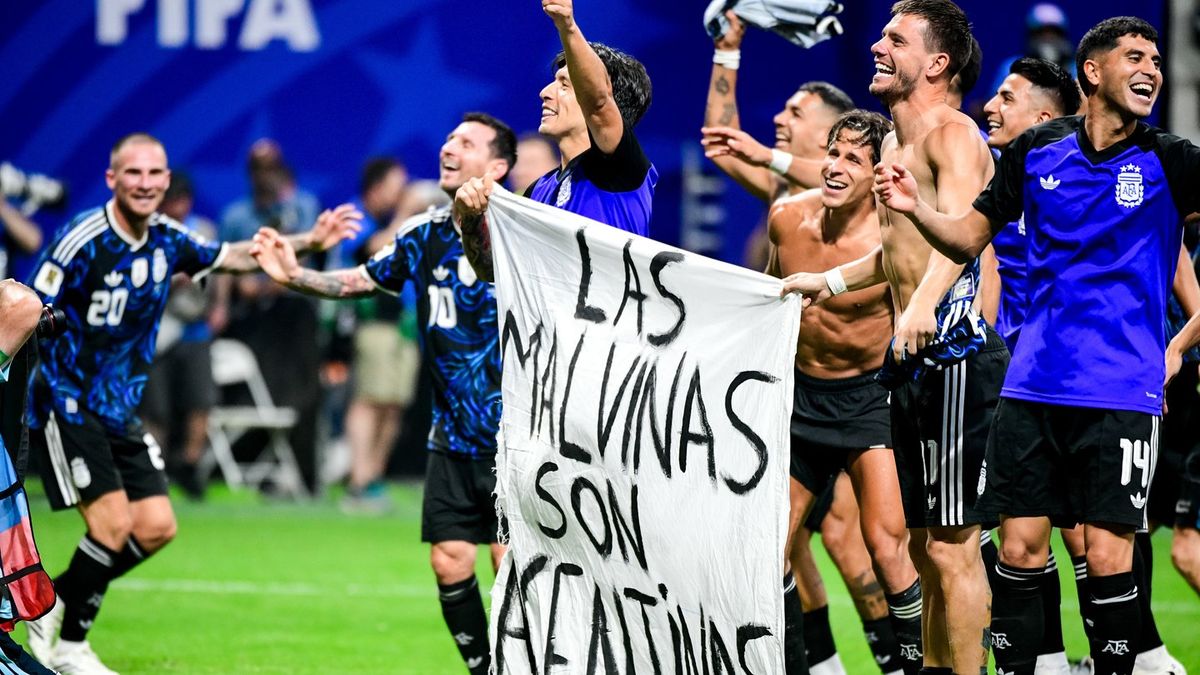
FIFA has launched an investigation into Argentina after players displayed a banner asserting the country’s claim to the Falkland Islands following their 2-1 World Cup semi-final victory over England. The incident, which occurred in Atlanta on Wednesday, has sparked condemnation from the UK government, the Falkland Islands authorities, and political figures, while Argentina’s leadership has defended the gesture as a reflection of national sentiment.
The banner, reading “Las Malvinas son Argentinas” (“The Falklands are Argentine”), was held by players including Lisandro Martínez, Cristian Romero, and Giovani Lo Celso during post-match celebrations. The Falkland Islands, a British Overseas Territory in the South Atlantic, are the subject of a long-standing sovereignty dispute between the UK and Argentina. The 1982 Falklands War, which resulted in 649 Argentine and 255 British military deaths, remains a sensitive historical issue for both nations.
The UK government has called for FIFA to probe the incident, with Business Secretary Peter Kyle describing the banner as “an egregious violation of the rules of not having political activity as part of the football.” Prime Minister Keir Starmer’s spokesperson reiterated the UK’s stance that the Falklands “definitely are” British, emphasizing that self-determination rests with the islanders. The Falkland Islands Government expressed disappointment, stating the banner was “particularly insensitive” given the territory’s history of conflict with Argentina.
FIFA’s independent Disciplinary Committee is assessing match reports to determine potential sanctions. The governing body has previously penalized Argentina for similar actions: in 2014, the Argentine Football Association (AFA) was fined £20,000 for displaying the same banner before a friendly against Slovenia. The current investigation could lead to fines or player suspensions, though sources suggest any penalties may not impact the final against Spain. A precedent exists for stricter measures, such as the 2012 suspension of South Korean midfielder Park Jong-woo for a political banner during the Olympics, though such action would require time.
Argentina’s President Javier Milei called the players’ actions “understandable” but stressed that “the things that happen on the pitch are not part of diplomacy.” Midfielder Leandro Paredes defended the gesture, stating, “The Malvinas will always be Argentine,” while Argentina’s manager Lionel Scaloni had previously insisted the team was focused solely on the match. The AFA has not yet commented on the investigation.
The Liberal Democrats in the UK have urged FIFA to ban players involved in the incident, citing a 2024 case where Spanish players were suspended for a Gibraltar-related chant. However, FIFA’s rules prohibit political messages in sports, and the organization has not yet outlined specific penalties. The controversy has overshadowed Argentina’s dramatic late comeback, which secured their place in the final against Spain.
The incident highlights the tension between national identity and FIFA’s strict neutrality policies. While the AFA faces potential sanctions, the focus remains on the upcoming final, with no indication that the investigation will affect the matchday squads. As the World Cup reaches its climax, the fallout from the banner underscores the enduring political dimensions of football, even in the global spectacle of the tournament.
How significant is this development?
Cast your anonymous vote to register reader sentiment across business and policy circles.
CurrentDeck is dedicated to independent, evidence-backed reporting. This briefing was synthesized from primary source reporting, corroborated across independent newsrooms, and verified against our Editorial Standards.