US launches fresh strikes on Iran as Trump warns Tehran it 'better behave
The United States has intensified its military campaign against Iran, targeting infrastructure in the Strait of Hormuz after strikes on U.S. installations.
- Development: US launches fresh strikes on Iran as Trump warns Tehran it 'better behave
- Core Takeaway: The United States has intensified its military campaign against Iran, targeting infrastructure in the Strait of Hormuz after strikes on U.S. installations.
- Context: Primary reporting aggregated across independent newsrooms and verified against CurrentDeck standards.
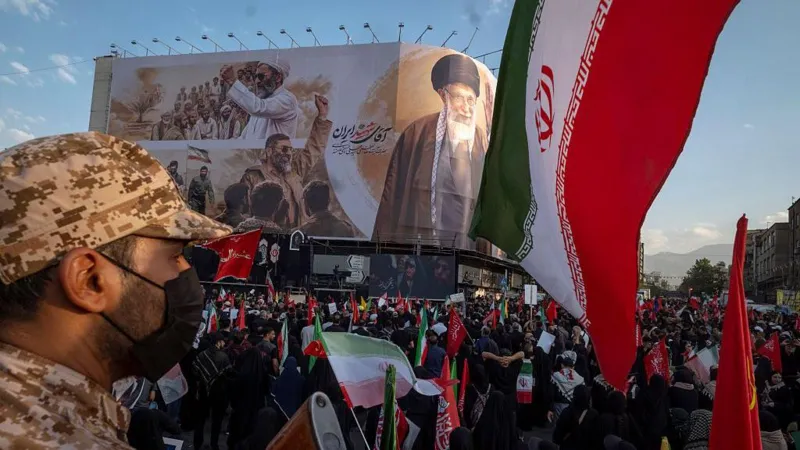
The United States launched a new wave of airstrikes on Iran on Wednesday, intensifying a cycle of retaliation that has destabilized the fragile ceasefire agreement between the two nations. The strikes, targeting Iranian military capabilities in the Strait of Hormuz, came after Iran reportedly struck U.S. Military installations in Bahrain, Kuwait, and Qatar, marking the fifth consecutive day of hostilities. President Donald Trump, speaking at a defense summit, warned Tehran to “better behave,” framing the conflict as a test of Iran’s willingness to negotiate or face further escalation.
The U.S. Military stated it had “further degraded Iran’s ability to attack commercial shipping” in the strategic waterway, citing the targeting of coastal defenses, cruise missile sites, and command centers. A 90-minute strike on Greater Tunb Island, part of the second wave of attacks, focused on Iran’s anti-ship missile infrastructure. The U.S. Central Command (Centcom) also reported redirecting two commercial vessels under its renewed blockade of Iranian ports, a move that has reignited tensions over control of the strait. Iran’s Revolutionary Guard Corps (IRGC) warned the U.S. To “expect the closure of other oil and gas export routes that serve the interests of the United States and its allies,” though it did not specify which routes.
Iran’s response to the strikes included claims of hitting U.S. Military sites in the Gulf, with state media reporting explosions in Bahrain, Kuwait, and Qatar. The IRGC described the attacks as a “fearless” reaction to U.S. Aggression, while Iran’s top negotiator, Mohammad Bagher Ghalibaf, argued that the country had “no reason” to uphold the June memorandum of understanding (MoU) if it did not serve its interests. The deal, intended to de-escalate the conflict, had already faced strain after Iran accused the U.S. Of violating its terms by reimposing sanctions on Iranian oil sales.
Trump’s rhetoric escalated as he dismissed the MoU as “over,” though he did not use the specific language of “scum” or “cuckoo” reported in the article. He reiterated threats to bomb bridges and power plants if Iran did not return to negotiations, though he avoided setting a formal deadline. “They pretty much know, they know the story… they better behave,” he told reporters. The president also claimed Iran had “wrongfully detained” an American citizen, Dena Karari, whom he said had been freed and was “safely outside of Iran.” This assertion is mentioned in the sources but lacks independent verification.
The strikes have heightened fears of a broader regional conflict, with oil prices surging amid concerns over the strait’s security. The U.S. Has deployed warships to patrol the area, while Iran’s grip on the strait has prompted alternative shipping routes through Oman, which the Islamic Republic has repeatedly targeted. Experts warn that the cycle of tit-for-tat attacks risks a miscalculation that could spiral into full-scale war. Retired U.S. Army officer Clark H. Summers noted that Iranian forces are likely to continue using drones and missiles to threaten neutral shipping, while the U.S. Will respond with targeted strikes against launch sites.
Amid the escalation, diplomatic efforts remain in limbo. Iran’s parliamentary speaker, Ghalibaf, accused the U.S. Of breaching the MoU on sanctions and military actions, while U.S. Officials emphasized that the deal’s 60-day framework had been undermined by Iranian aggression. Trump’s dismissive stance has left the future of negotiations uncertain, with his special envoy, Steve Witkoff, and son-in-law Jared Kushner reportedly available to mediate if needed. However, Trump’s comments at a NATO summit suggested he views further talks as a “waste of time,” leaving the path forward unclear.
The conflict’s human toll is also growing. Iranian state media reported casualties in cities like Bandar Abbas and Bushehr, while the U.S. Acknowledged over 260 wounded in recent strikes. The situation underscores the broader stakes: the Strait of Hormuz, a vital artery for global energy trade, remains a flashpoint in a broader struggle for influence in the Middle East. As both sides trade blows, the question lingers whether the cycle of violence will end in a negotiated settlement—or plunge the region into deeper chaos.
How significant is this development?
Cast your anonymous vote to register reader sentiment across business and policy circles.
CurrentDeck is dedicated to independent, evidence-backed reporting. This briefing was synthesized from primary source reporting, corroborated across independent newsrooms, and verified against our Editorial Standards.