US launches retaliatory strikes on Iran after Gulf and Strait of Hormuz …
The United States has initiated a multi-domain assault on Iranian military installations following Tehran's attempts to block navigation in the Strait of Hormuz. The military escalation has triggered a significant spike in global oil prices and prompted regional security warnings.
- Development: US launches retaliatory strikes on Iran after Gulf and Strait of Hormuz …
- Core Takeaway: The United States has initiated a multi-domain assault on Iranian military installations following Tehran's attempts to block navigation in the Strait of Hormuz. The military escalation has triggered a significant spike in global oil prices and prompted regional security warnings.
- Context: Primary reporting aggregated across independent newsrooms and verified against CurrentDeck standards.
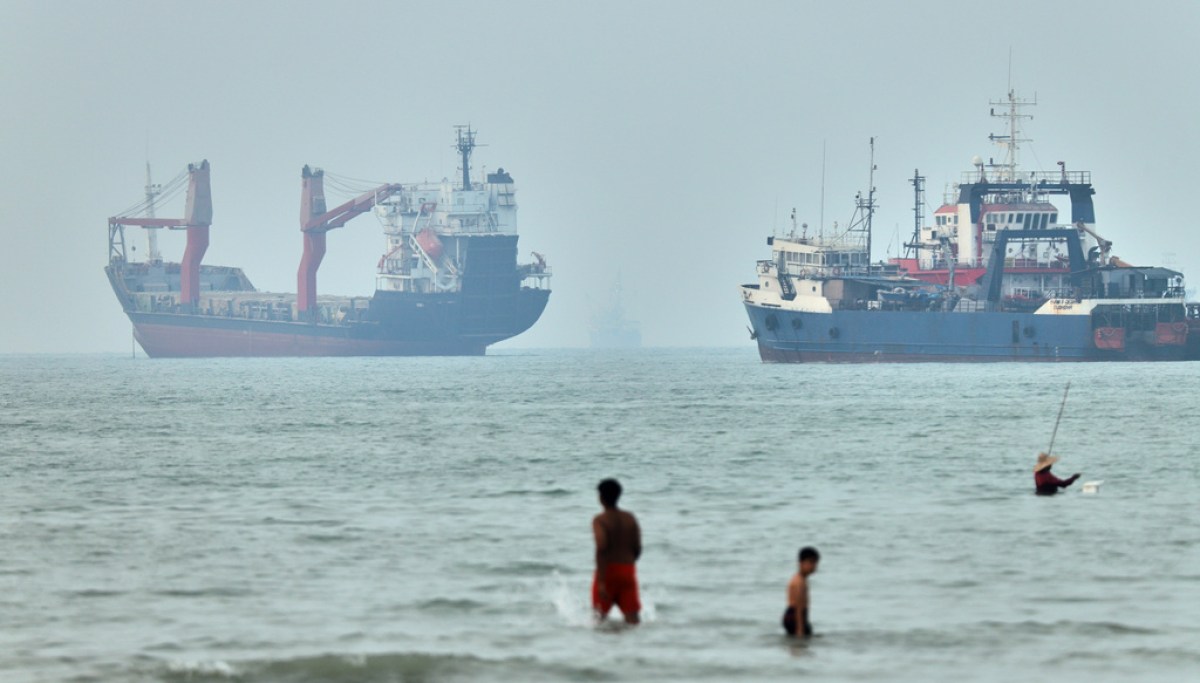
The United States launched a series of retaliatory strikes on Iran on Sunday, escalating tensions in the Gulf and the Strait of Hormuz, a critical global energy corridor. The attacks followed Iranian missile and drone strikes on multiple Gulf states, including Bahrain, Kuwait, Qatar, Oman, and Jordan, which Tehran claimed were part of an "eye-for-an-eye" operation. The U.S. Central Command (CENTCOM) stated the strikes were aimed at degrading Iran’s ability to disrupt commercial shipping and maintaining freedom of navigation through the Strait of Hormuz, which Iran has repeatedly sought to control.
The conflict intensified after Iran targeted a Cyprus-flagged merchant vessel in the Strait of Hormuz earlier in the week, prompting the U.S. To conduct airstrikes on Iranian military installations. In response, Tehran expanded its attacks, striking U.S. Military facilities and allied infrastructure across the Gulf. CENTCOM reported launching over 300 strikes on Iranian targets in the past three nights, including missile launchers, drone facilities, and coastal defense systems. The U.S. Military described the operation as a "multi-domain assault," utilizing fighter aircraft, naval vessels, and for the first time, one-way attack aerial and sea drones, according to source 2 and source 3.
Iranian state media claimed the Strait of Hormuz was "not currently possible" for navigation, asserting it had suspended vessel permits and required authorization for ships to pass. However, CENTCOM and the U.S. Government rejected these claims, emphasizing that the waterway remains an international route. "Iran does not control the Strait of Hormuz," a CENTCOM statement said, while U.S. Officials reiterated their commitment to ensuring free passage for commercial vessels. The U.S. Navy also highlighted an alternative southern route near Oman, which it said remained open despite the security risks, as noted in source 3.
The clashes have disrupted regional trade and raised concerns about global energy supplies. Oil prices surged over 4% as markets feared prolonged disruptions to the Strait, which handles about 20% of global oil trade. Iran’s Revolutionary Guard claimed to have damaged U.S. Military bases in Bahrain, Jordan, and Kuwait, while the U.S. Reported intercepting Iranian missiles and drones in several Gulf states. A security guard in southwest Iran was killed after a projectile struck a water pumping station, according to CNN, as reported in source 1.
President Donald Trump showcased U.S. Military capabilities by sharing images of F-22A Raptor fighter jets and B-2 bombers on social media, framing the strikes as a necessary response to Iranian aggression. "We bombed the hell out of them last night," he said, referencing the U.S. Attacks. Meanwhile, Iran’s Foreign Ministry accused the U.S. Of violating international law and called on the United Nations to hold Washington accountable. The ministry also dismissed Trump’s claims about recent talks in Muscat, stating the discussions had focused solely on Strait of Hormuz security, not broader diplomatic efforts, as detailed in source 2.
The conflict has further strained an already fragile 60-day interim agreement aimed at halting hostilities. Iran’s new supreme leader, Ayatollah Mojtaba Khamenei, vowed to avenge the death of his father, Ayatollah Ali Khamenei, adding to regional tensions. Diplomatic efforts continue, with mediators including Pakistan, Qatar, and Egypt urging de-escalation. However, both sides have accused each other of undermining negotiations, with Iran insisting it alone must dictate terms for the Strait of Hormuz, as reported in source 5.
Regional governments have issued heightened security advisories, with Qatar and Oman suspending maritime activities and the U.S. Embassy in Oman urging citizens to shelter in place. The U.S. Military has also faced criticism for its role in the conflict, with Iran warning that any nation allowing its territory to be used for attacks against Iran could become a target. As the standoff continues, the Strait of Hormuz remains a focal point of global energy security, with both sides vying for control of a waterway that has long been a flashpoint in Middle East geopolitics, according to source 4.
How significant is this development?
Cast your anonymous vote to register reader sentiment across business and policy circles.
CurrentDeck is dedicated to independent, evidence-backed reporting. This briefing was synthesized from primary source reporting, corroborated across independent newsrooms, and verified against our Editorial Standards.