Drones test laser-based gas sensing in Sicily to predict volcanic eruptions
Scientists are deploying advanced drone technology to measure volcanic gases remotely, providing a safer and more accurate way to predict potential eruptions. This innovation, combined with new seismic monitoring techniques, aims to offer earlier warnings for communities near active volcanoes.
- Development: Drones test laser-based gas sensing in Sicily to predict volcanic eruptions
- Core Takeaway: Scientists are deploying advanced drone technology to measure volcanic gases remotely, providing a safer and more accurate way to predict potential eruptions. This innovation, combined with new seismic monitoring techniques, aims to offer earlier warnings for communities near active volcanoes.
- Context: Primary reporting aggregated across independent newsrooms and verified against CurrentDeck standards.
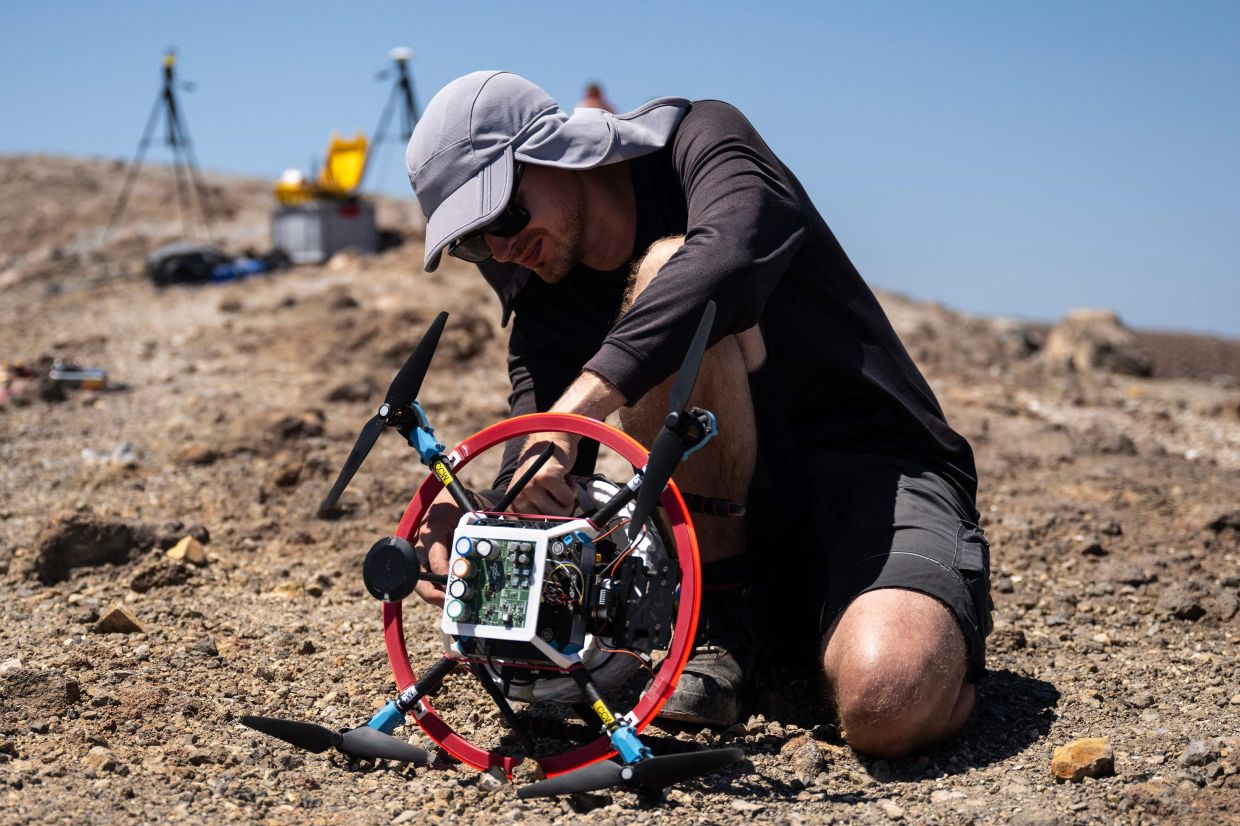
Researchers in Sicily are advancing volcanic eruption prediction through the deployment of drones equipped with laser-based gas sensing technology, marking a significant step in geoscientific monitoring. On the Aeolian island of Vulcano, German scientists from the Technical University of Munich (TUM) and the University of Mainz are testing systems that use drones to measure volcanic gas emissions, offering a safer and more precise alternative to traditional ground-based methods.
The TUM team, led by researcher Marius Schaab, has developed a system where a laser beam is directed through volcanic gas plumes and reflected by a drone. The sensor, mounted on a tripod, calculates gas concentrations by analyzing the intensity of the reflected light. This method avoids direct exposure to corrosive gases, which would otherwise require frequent recalibration. “Our drone flies behind the plume, and our ground unit is not in the plume,” Schaab explained, emphasizing the system’s safety and accuracy. The drone, weighing 2.5 kilograms, follows a predefined path up to 60 meters from the sensor, capturing 3,000 measurements over 10 to 15 minutes to generate a gas concentration map.
Meanwhile, a team from the University of Mainz, collaborating with researcher Tjarda Roberts of the National Centre for Scientific Research (CNRS) in Paris, employs drones equipped with onboard sensors to analyze chemical substances in volcanic plumes. These sensors measure gases, particles, and halogens like chlorine and bromine, providing data on the composition of emissions. Roberts highlighted that changes in gas ratios, such as carbon dioxide to sulfur dioxide, can signal magma movement beneath the surface. “The ratio of these gases provides insight into what is happening underground,” she said, noting the potential for early eruption warnings.
The technology is not limited to Vulcano. The TUM system, designed to operate at altitudes up to 3,000 meters, is set to face its next challenge on Mount Etna, an active volcano in eastern Sicily. A recent eruption there has underscored the urgency of improving predictive tools. Researchers aim to integrate artificial intelligence to automate data analysis, refining the ability to interpret gas patterns and anticipate volcanic activity.
Complementary approaches are also emerging. A study published in *Science* by Italy’s National Institute of Geophysics and Volcanology reveals that monitoring the “b value”—a measure of earthquake magnitude ratios—can detect magma movement weeks before geochemical anomalies like gas release. This method, tested on Mount Etna, correlates b value fluctuations with magma ascent, offering an additional layer of predictive capability. “B value monitoring could have anticipated volcanic crises,” the researchers noted, citing data from 2005 to 2024.
Drone technology is also being tested beyond Sicily. In Costa Rica, the University of Alaska Fairbanks (UAF) deployed drones to measure soil gas emissions at Poás volcano, a site known for frequent eruptions. The project demonstrated the feasibility of remote gas sampling, reducing risks for researchers. “Using drones allows us to measure emissions from a safe distance,” said Társilo Girona, a UAF researcher involved in the mission. The success of such projects highlights the growing role of unmanned systems in volcanic monitoring worldwide.
While laser-based sensing and b value analysis represent distinct methodologies, both underscore the importance of real-time data in mitigating volcanic hazards. As researchers refine these tools, the goal remains clear: to provide communities near active volcanoes with earlier, more reliable warnings. With advancements in robotics, AI, and sensor technology, the future of eruption prediction may hinge on the synergy of these innovations.
How significant is this development?
Cast your anonymous vote to register reader sentiment across business and policy circles.
CurrentDeck is dedicated to independent, evidence-backed reporting. This briefing was synthesized from primary source reporting, corroborated across independent newsrooms, and verified against our Editorial Standards.


