US launches strikes on Iranian targets following cargo ship attack
US Central Command conducted major strikes on Iranian military facilities following an attack on the M/V GFS Galaxy, fueling fears of regional instability.
- Development: US launches strikes on Iranian targets following cargo ship attack
- Core Takeaway: US Central Command conducted major strikes on Iranian military facilities following an attack on the M/V GFS Galaxy, fueling fears of regional instability.
- Context: Primary reporting aggregated across independent newsrooms and verified against CurrentDeck standards.
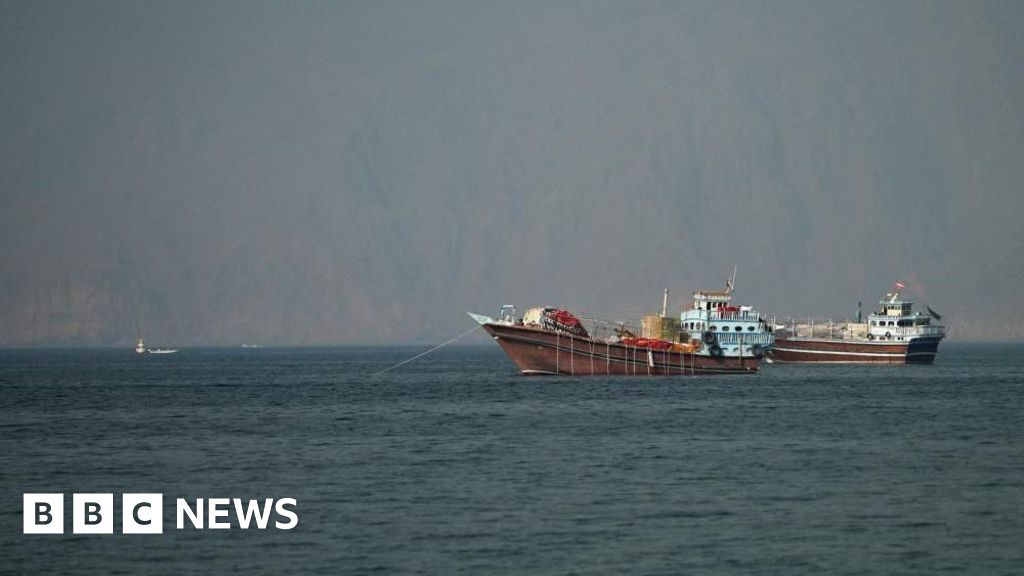
The United States launched a new round of military strikes against Iran on Friday, escalating tensions in the Strait of Hormuz following an attack on a commercial vessel and Iran’s declaration to close the critical waterway. The strikes, conducted by U.S. Central Command (Centcom), targeted Iranian missile and drone facilities, coastal radar systems, and naval assets, according to a statement from the U.S. Military. This marked the third consecutive weekend of hostilities between the two nations, with Iran accusing the U.S. Of violating a ceasefire agreement and the U.S. Asserting its commitment to maintaining freedom of navigation in the strait.
The immediate trigger was an Iranian attack on the M/V GFS Galaxy, a Cyprus-flagged container ship, which sustained "significant engine room damage" and left one crew member missing, according to Centcom. The vessel had been traveling along a route recommended by the UK Maritime Trade Operations (UKMTO) when it was struck. Iran claimed the ship had violated an "unauthorized route," accusing the U.S. Of interfering in the strait’s governance. In response, the U.S. Struck 140 military targets, including air-defense systems, radar sites, and small boats used by Iran’s Revolutionary Guard, as part of efforts to "degrade Iran’s ability to attack commercial shipping," according to Centcom.
Iran retaliated by launching missile and drone attacks on U.S. Allies in the region, including Jordan, Qatar, Kuwait, and Oman. Bahrain reported intercepting "hostile attacks," while the UAE and Qatar described missile strikes on their territories. The Iranian Revolutionary Guard claimed to have targeted U.S. Military bases in Bahrain and Kuwait, as well as an oil drilling platform in Kuwait. The U.S. Reiterated its stance that the Strait of Hormuz remains an "international waterway," despite Iran’s assertion that it had "closed" the strait to enforce its control over transit routes. Iran’s foreign ministry accused the U.S. Of violating a memorandum of understanding by revoking a license that allowed Iran to sell oil in the global market, a move the U.S. Justified as a response to Iran’s "unacceptable" actions.
The conflict has deepened amid a fragile ceasefire agreement signed in June, which aimed to ease hostilities and allow free passage through the strait. However, repeated attacks have undermined the deal. The U.S. Also accused Iran of charging fees for vessel passage, a practice it claims breaches international maritime law. Regional tensions have been further inflamed by the funeral of Iran’s late Supreme Leader, Ayatollah Ali Khamenei, who was killed in a U.S.-Israeli airstrike in February. His successor, Mojtaba Khamenei, issued a statement vowing to "take revenge for the pure blood of the martyred leader," while Iran’s foreign ministry condemned U.S. "aggressive" actions. Meanwhile, U.S. President Donald Trump threatened Iran with "1,000 missiles locked and loaded," following calls for his assassination during Khamenei’s funeral ceremonies.
The clashes have disrupted global energy markets, with Brent crude oil prices surging over 4% as traders fear supply disruptions. The Strait of Hormuz, which handles about one-fifth of the world’s oil trade, has seen a sharp decline in vessel traffic, with only six ships recorded crossing between Thursday and Friday, compared to 18-22 daily crossings earlier in the month. The U.S. And Iran’s ongoing tit-for-tat strikes risk further destabilizing the region, with the UN warning of "catastrophic consequences" if hostilities escalate. As negotiations between Iran and Oman continue, the path to de-escalation remains unclear, with Iran’s new leadership rejecting U.S. Demands for a "toll-free" strait and insisting on its right to regulate passage.
How significant is this development?
Cast your anonymous vote to register reader sentiment across business and policy circles.
CurrentDeck is dedicated to independent, evidence-backed reporting. This briefing was synthesized from primary source reporting, corroborated across independent newsrooms, and verified against our Editorial Standards.