Oil Prices Hit One-Month High as US-Iran Attacks in Strait of Hormuz
Renewed hostilities in the Strait of Hormuz have triggered a surge in Brent crude as naval blockades and missile strikes disrupt vital energy shipping lanes. Analysts warn that persistent conflict could push prices toward $115 per barrel amid concerns of supply deficits.
- Development: Oil Prices Hit One-Month High as US-Iran Attacks in Strait of Hormuz
- Core Takeaway: Renewed hostilities in the Strait of Hormuz have triggered a surge in Brent crude as naval blockades and missile strikes disrupt vital energy shipping lanes. Analysts warn that persistent conflict could push prices toward $115 per barrel amid concerns of supply deficits.
- Context: Primary reporting aggregated across independent newsrooms and verified against CurrentDeck standards.
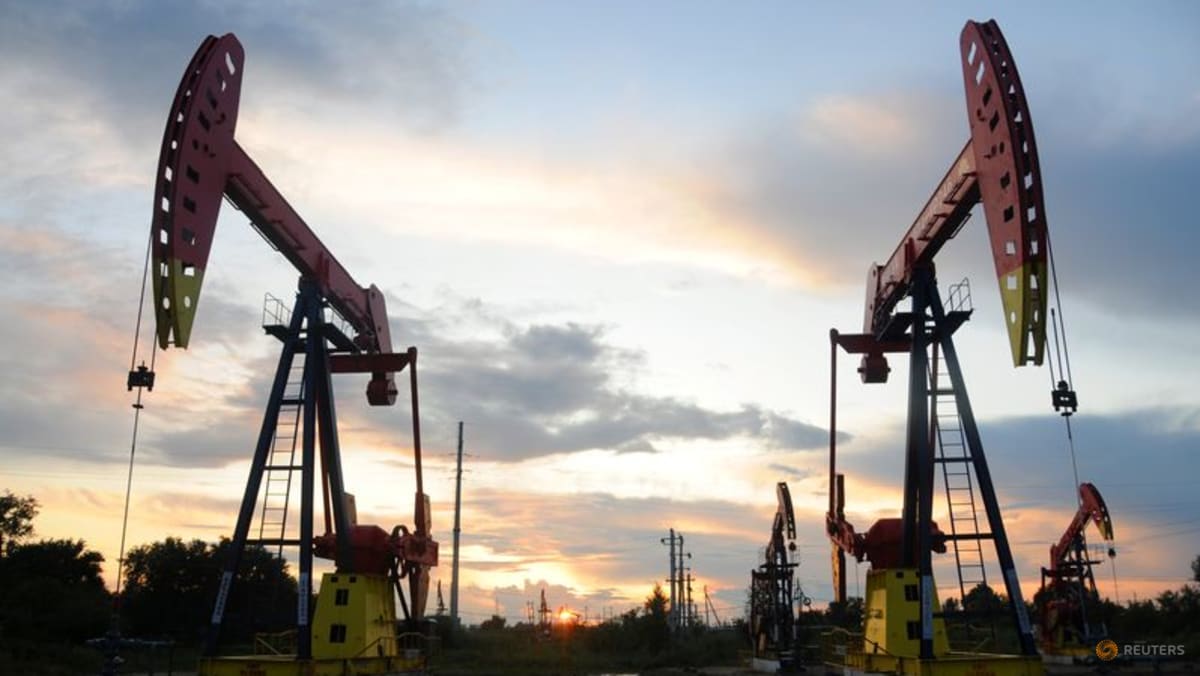
Oil prices surged to a one-month high as renewed hostilities between the United States and Iran escalated tensions in the Strait of Hormuz, a critical global shipping lane. Brent crude futures reached $84.80 per barrel, while U.S. West Texas Intermediate (WTI) crude climbed to $79.84, reflecting heightened fears of disrupted energy flows and geopolitical instability.
The conflict intensified after U.S. President Donald Trump announced the reinstatement of a naval blockade on Iranian shipping in the Strait, demanding a 20% fee for "protection" of the waterway. This move followed a series of U.S. Military strikes against Iran, which the White House framed as a response to Iranian attacks on commercial vessels. Iran retaliated by targeting two United Arab Emirates tankers with cruise missiles in Omani territorial waters, killing one Indian crew member and injuring eight others. The attacks marked the third consecutive night of strikes by U.S. Forces, according to reports.
Shipping data revealed a sharp decline in tanker traffic through the Strait, with transits falling to a two-month low. The number of vessels passing through the waterway dropped to 57 from Friday to Sunday, a 50% decrease compared to the previous week. Prior to the conflict, daily traffic averaged around 130 vessels. Analysts warned that prolonged disruptions could further strain global oil markets. "The key variable to monitor is the physical movement of crude through the Strait," said Phillip Nova analyst Priyanka Sachdeva. "Any meaningful blockage of tanker traffic would likely trigger another leg higher in oil prices."
The U.S. Military has sought to reassure markets that the Strait remains open, citing a reported 8.5 million barrels of oil passing through the waterway the day before. However, Iran has declared the strait "closed until further notice," complicating efforts to stabilize supply. The World Bank’s April 2026 Commodity Markets Outlook highlighted the scale of the disruption, noting a global oil supply crash of 10.1 million barrels per day (mb/d) in March due to attacks on energy infrastructure and restricted tanker traffic. The report projected a 3.7 mb/d deficit in 2026Q2, with oil prices potentially rising to $115 per barrel if hostilities persist.
Analysts pointed to broader economic risks, including inflationary pressures and central bank policy shifts. The U.S. Federal Reserve’s focus on tightening monetary policy amid rising energy costs added to market anxiety. Fed funds futures indicated a 43.3% probability of a 25-basis-point rate hike at the July meeting, up from 34.2% the previous week. "Persistently higher oil prices would increase the risk that the Fed would hike rates later this year," said Eastspring Investments’ Vis Nayar.
Despite the turmoil, some analysts cautioned against overestimating the immediate impact. "The market isn’t panicking," said Saul Kavonic of MST Marquee, noting that oil transport infrastructure had not yet been targeted. However, warnings of a potential $100-per-barrel benchmark persisted. Bart Melek of TD Securities suggested that "a move to $100 is quite possible" if physical shortages materialize. The World Bank’s baseline forecast of $86 per barrel for 2026 could rise to $115 if conflicts escalate, while a faster-than-expected recovery in supply could push prices below $70.
As the crisis unfolds, the Strait of Hormuz remains a flashpoint for global energy security. The interplay between U.S. Military actions, Iranian retaliation, and broader geopolitical dynamics will shape the trajectory of oil prices and market stability in the coming months.
How significant is this development?
Cast your anonymous vote to register reader sentiment across business and policy circles.
CurrentDeck is dedicated to independent, evidence-backed reporting. This briefing was synthesized from primary source reporting, corroborated across independent newsrooms, and verified against our Editorial Standards.