DR Congo Ebola outbreak spreading undetected as WHO warns of wider scale
Health officials report that the Bundibugyo Ebola strain is outpacing containment efforts, with community transmission significantly higher than confirmed data suggests.
- Development: DR Congo Ebola outbreak spreading undetected as WHO warns of wider scale
- Core Takeaway: Health officials report that the Bundibugyo Ebola strain is outpacing containment efforts, with community transmission significantly higher than confirmed data suggests.
- Context: Primary reporting aggregated across independent newsrooms and verified against CurrentDeck standards.
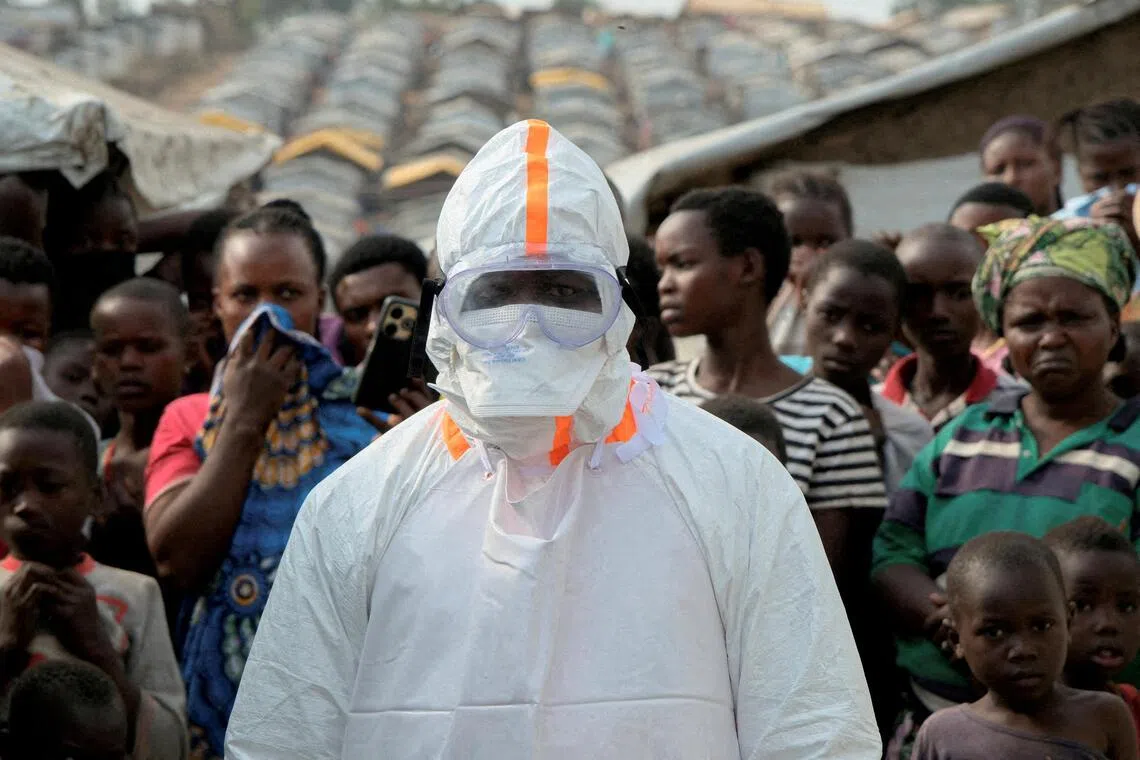
The Democratic Republic of the Congo’s Ebola outbreak, caused by the Bundibugyo strain, is spreading at a pace that health officials describe as largely undetected, with the true scale of the crisis potentially two to four times greater than official figures suggest. The World Health Organization (WHO) has raised alarms as the virus continues to outpace containment efforts in the country’s northeast, with transmission intensifying in Ituri province and spreading to other regions, including North Kivu, South Kivu, and Tshopo. The outbreak, declared in mid-May 2026, has infected 1,792 people and killed 625, according to government data released on July 9, though experts warn these numbers underrepresent the full scope of the crisis.
Undetected Spread and Surveillance Challenges
Senior WHO officials highlight that four out of every five new cases in affected areas have no known link to existing patients, indicating significant gaps in tracking and containment. Chikwe Ihekweazu, WHO Emergencies Director, noted that 80% of newly confirmed patients in Bunia, Ituri province, emerge outside of known contact lists, a stark sign of uncontrolled community transmission. In areas with fewer cases, such as North Kivu, most new infections trace back to contact lists, suggesting some progress. However, the overall challenge remains acute, with the WHO estimating the outbreak could be two to four times larger than confirmed cases due to modeling and test positivity rates.
In Bunia, a city of one million, nearly half of all tested patients show positive results for Ebola, underscoring the intensity of ongoing transmission. The virus’s spread beyond its epicenter has also raised concerns, as cases now appear in provinces previously unaffected. Health zones in Ituri, including Bunia, Rwampara, Mongbwalu, and Nyakunde, remain the hardest hit, with 90% of reported cases concentrated there. However, the virus has extended to Tshopo, a region farther from the initial outbreak zone, signaling a potential escalation in geographic reach.
Bundibugyo Strain and Community Transmission
Preliminary evidence suggests the Bundibugyo strain may cause milder symptoms compared to other Ebola variants, leading to reduced risk perception among affected communities. This has resulted in some families caring for sick relatives at home before seeking treatment, which, while improving survival rates for those who reach healthcare facilities, also prolongs the time infected individuals remain in the community. “Patients are out there much longer than we would like,” Ihekweazu said, emphasizing that extended exposure increases the likelihood of further transmission.
Community deaths remain a critical issue, with 70% of the first 400 recorded Ebola fatalities occurring outside treatment centers. This highlights gaps in early detection and access to care, as well as the risks posed by unsafe burial practices. The WHO has prioritized strengthening surveillance, including the training of 21,000 community health workers to conduct house-to-house visits and identify suspected cases. However, operational challenges, including security incidents in affected provinces, have disrupted response efforts and hindered access to hard-to-reach areas.
Regional Spread and Cross-Border Risks
The outbreak’s reach extends beyond DR Congo, with 19 confirmed cases and two deaths reported in Uganda as of June 6. Ugandan health officials warn that cross-border movement, driven by shared cultural and linguistic ties, complicates containment. Dr. Daniel Kyabayinze, Uganda’s National Director of Public Health, noted that while no community transmission has been documented in Uganda, all cases there are linked to travelers from DR Congo. The porous 500-mile border between the two countries remains a focal point for concern, as informal crossings and trade routes could facilitate further spread.
Uganda has implemented strict measures, including QR code checks for travelers and heightened border surveillance, but officials acknowledge the difficulty of fully controlling movement. The WHO has categorized the risk of regional spread as high for countries sharing borders with DR Congo and Uganda, though global risk remains low. The agency has advised against travel restrictions, citing the lack of evidence to justify such measures.
Response Efforts and Persistent Challenges
Health authorities in DR Congo and Uganda, supported by the WHO and international partners, are implementing a multi-pronged response. This includes expanding laboratory capacity, deploying field teams, and establishing treatment centers. However, funding gaps and logistical hurdles persist, with the WHO emphasizing the need for sustained resources to address the crisis. The agency has also convened technical advisory groups to evaluate potential medical countermeasures, though no approved vaccines or treatments exist for the Bundibugyo strain.
As the outbreak enters its third month, the WHO’s warnings underscore the urgency of curbing transmission before the virus gains further traction. With community engagement, surveillance, and cross-border collaboration remaining critical, the coming weeks will determine whether the response can keep pace with the virus’s spread.
How significant is this development?
Cast your anonymous vote to register reader sentiment across business and policy circles.
CurrentDeck is dedicated to independent, evidence-backed reporting. This briefing was synthesized from primary source reporting, corroborated across independent newsrooms, and verified against our Editorial Standards.