Astronomers detect complex sugar in interstellar space
Researchers have confirmed the first detection of a complex sugar molecule in interstellar space, offering new clues into how life's essential building blocks may have reached early Earth.
- Development: Astronomers detect complex sugar in interstellar space
- Core Takeaway: Researchers have confirmed the first detection of a complex sugar molecule in interstellar space, offering new clues into how life's essential building blocks may have reached early Earth.
- Context: Primary reporting aggregated across independent newsrooms and verified against CurrentDeck standards.
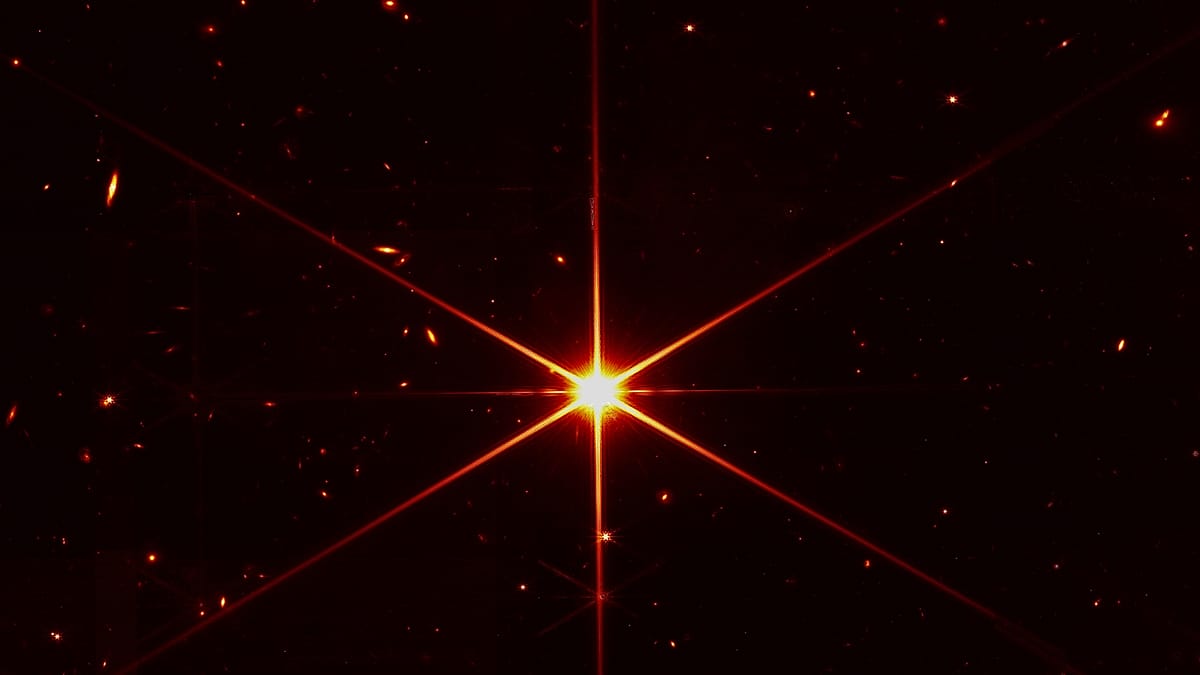
Astronomers have identified a complex sugar molecule, erythrulose, in the interstellar medium near the center of the Milky Way, marking the first confirmed detection of a "true sugar" in space. The discovery, published in *Nature Astronomy*, offers new insights into the chemical processes that may have contributed to the origins of life on Earth and the potential for life elsewhere in the universe.
The sugar, a four-carbon compound found in raspberries and self-tanning products, was detected in a molecular cloud called G+0.693-0.027, located approximately 26,745 light-years from Earth. Researchers used two radio telescopes in Spain — the Yebes 40-meter dish and the IRAM 30-meter dish — to analyze the cloud’s composition. By comparing radio signals from the cloud to laboratory measurements of erythrulose, the team confirmed its presence. The molecule’s detection relied on a novel technique that stabilized the sugar by mixing it with talcum powder, enabling precise spectral analysis.
Erythrulose, while not essential for life itself, can convert into forms critical for prebiotic chemistry, such as ribose, a key component of RNA. This finding strengthens the hypothesis that life’s building blocks may have formed in space before being delivered to Earth via asteroids or comets. Scientists estimate that up to 50 million tonnes of the sugar could have reached Earth’s surface during the planet’s early history, when it was bombarded by space rocks.
The discovery builds on prior findings of simpler sugar-related molecules in space. In 2000, astronomers detected glycolaldehyde, a two-carbon molecule, between stars, though it was not classified as a true sugar. Earlier this year, NASA’s Osiris-Rex mission identified ribose and glucose in samples from asteroid Bennu, suggesting that sugars could form in extraterrestrial environments. However, erythrulose’s detection in the interstellar medium represents a significant leap in complexity, as it contains four carbon atoms, a threshold for being considered a "true sugar" by some researchers.
“This is a pristine example of the stuff that’s just floating out in the galaxy,” said Erika Hamden, an astrophysicist at the University of Arizona, who was not involved in the study. “It shows that complex organic molecules can form naturally in space, which has implications for the distribution of life’s ingredients across the cosmos.”
The research team, led by Izaskun Jiménez-Serra of the Centre for Astrobiology in Spain, noted that erythrulose’s presence challenges assumptions about how sugars form in space. Rather than developing sequentially by adding one carbon atom at a time, the molecule may have emerged from more complex precursors like glycolaldehyde and ethylene glycol, both of which were also detected in the same cloud. This suggests that molecular clouds act as “huge chemical factories,” capable of producing intricate organic compounds under specific conditions.
The findings align with broader efforts to understand how life’s essential molecules originate. While sugars are fragile and difficult to synthesize in lab experiments simulating early Earth, their detection in space implies alternative pathways for their formation. “The interstellar medium could be a viable source of sugar feedstock for the prebiotic synthesis of nucleic acids,” Jiménez-Serra said. “This opens the possibility that life’s ingredients are widespread in the universe.”
Scientists now aim to search for additional sugars in space, including ribose, which could further illuminate the chemical links between cosmic and terrestrial biology. The discovery also raises questions about the role of molecular clouds in shaping the chemical diversity of planetary systems. As research progresses, the interstellar medium may prove to be a critical yet underappreciated player in the story of life’s emergence.
How significant is this development?
Cast your anonymous vote to register reader sentiment across business and policy circles.
CurrentDeck is dedicated to independent, evidence-backed reporting. This briefing was synthesized from primary source reporting, corroborated across independent newsrooms, and verified against our Editorial Standards.


