Astronomers find evidence of magnetic fields on seven distant exoplanets
A new study using the Very Large Telescope has detected magnetic fields on seven exoplanets, providing a vital tool for assessing atmospheric retention and long-term habitability.
- Development: Astronomers find evidence of magnetic fields on seven distant exoplanets
- Core Takeaway: A new study using the Very Large Telescope has detected magnetic fields on seven exoplanets, providing a vital tool for assessing atmospheric retention and long-term habitability.
- Context: Primary reporting aggregated across independent newsrooms and verified against CurrentDeck standards.
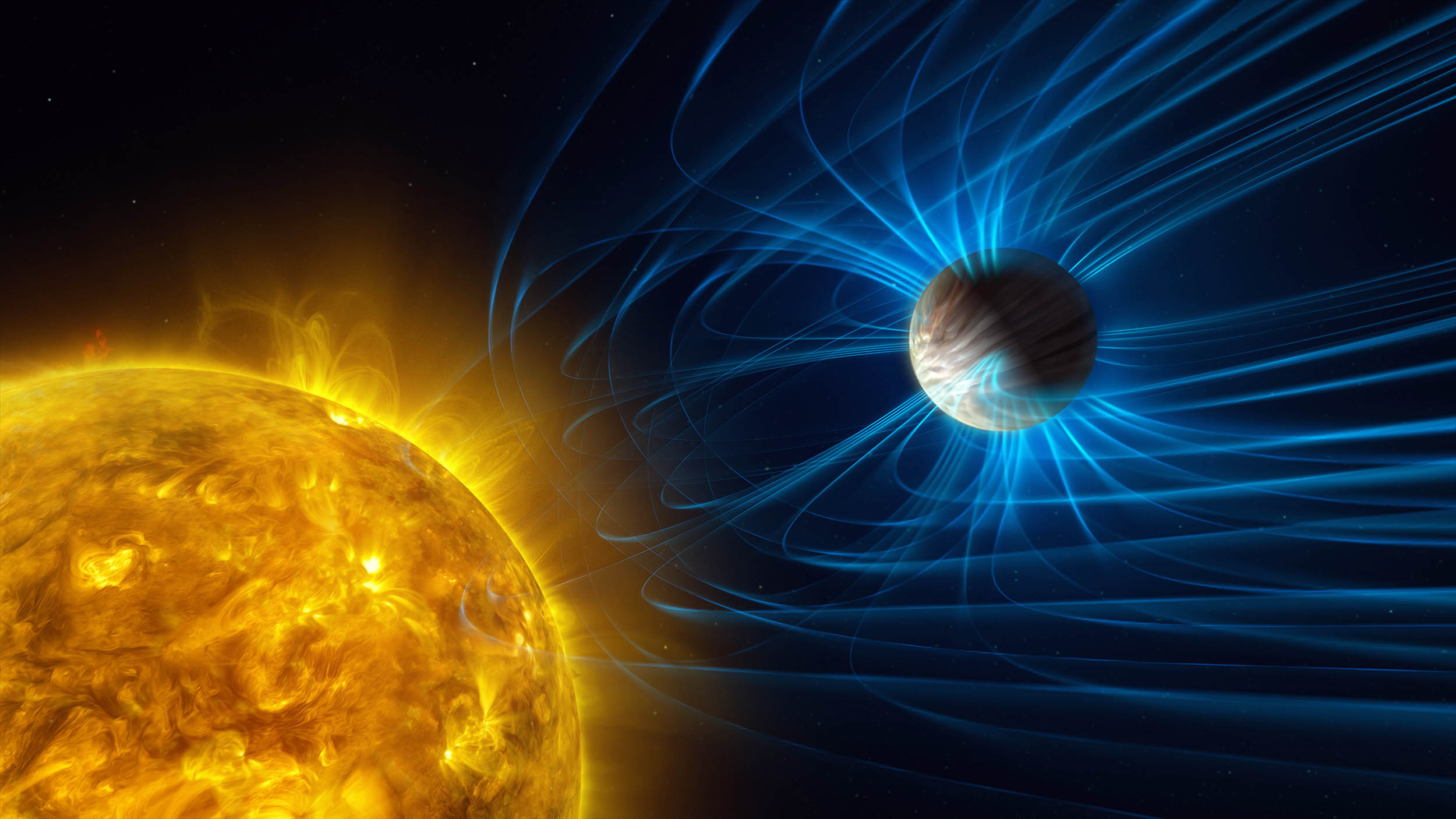
Astronomers have uncovered the strongest evidence yet of magnetic fields on seven distant exoplanets, marking a pivotal advancement in understanding planetary environments beyond the Solar System. The discovery, published in *Nature Astronomy*, reveals that these gas giants — known as ultra-hot Jupiters — possess magnetic fields capable of influencing their extreme atmospheric conditions, offering new insights into planetary habitability and atmospheric retention.
The study, led by Julia Seidel of the Laboratoire Lagrange at the Observatoire de la Côte d’Azur in France, focused on seven tidally locked exoplanets orbiting close to their host stars. These planets, similar in size to Jupiter, are locked in a state where one hemisphere perpetually faces their star, creating scorching daytime temperatures and frigid nights. The temperature contrast drives winds reaching speeds of up to 25,000 kilometers per hour, far exceeding the fastest winds measured on Jupiter. However, researchers observed an unexpected pattern: the hotter the planet, the slower its winds. This contradicted conventional expectations, as higher temperatures typically correlate with increased atmospheric energy and faster winds.
The team attributed this anomaly to the presence of powerful magnetic fields. By analyzing how wind speeds varied with temperature, they inferred that magnetic fields interact with charged particles in the planets’ atmospheres, effectively slowing their motion. The fields, estimated to be roughly four times stronger than Saturn’s and half as strong as Jupiter’s, appear to act as a brake on atmospheric currents. This mechanism aligns with observations of magnetic activity on Earth, where fields protect atmospheres from solar radiation and generate auroras.
“This breakthrough opens a completely new window on exoplanet research,” Seidel said. “It’s the first time we can compare the magnetic environments of other worlds, a key step toward understanding which planets can retain their atmospheres, water, and potentially host life.” The findings suggest that magnetic fields may play a critical role in shielding exoplanets from stellar radiation, a factor essential for long-term habitability. On these distant worlds, auroras driven by magnetic activity could be far more intense than Earth’s northern and southern lights, with charged particles colliding in atmospheres superheated by proximity to their stars.
The research utilized data from the European Southern Observatory’s Very Large Telescope (ESO’s VLT) and the Gemini North telescope, employing instruments like ESPRESSO and MAROON-X to measure wind speeds. By linking wind patterns to magnetic field strength, the team developed a method to indirectly detect magnetism on exoplanets, a challenge that had persisted for over 15 years. The study’s authors emphasized that future observatories, such as ESO’s Extremely Large Telescope (ELT), could expand this approach to smaller, Earth-like planets, potentially revealing magnetic fields that influence conditions for life.
The implications extend beyond astronomy. Understanding magnetic fields on exoplanets could inform efforts to identify habitable worlds, as these fields may help retain atmospheres and protect against stellar winds. For instance, Mars’ lack of a global magnetic field is believed to have contributed to its atmospheric loss, rendering it inhospitable. By contrast, the detected fields on ultra-hot Jupiters suggest that magnetic activity could be widespread among gas giants, shaping their climates and evolutionary trajectories.
As observational technologies advance, scientists aim to refine their ability to study magnetic environments on a broader range of exoplanets. The research not only deepens knowledge of planetary science but also fuels speculation about the diversity of worlds in the galaxy. “I like to imagine that some of these worlds have skies filled with vast curtains of colorful light,” said co-author Bibiana Prinoth, describing the potential for auroras on planets locked in perpetual day and night. The study underscores the growing capacity to probe the hidden properties of distant planets, bringing humanity closer to answering fundamental questions about the universe.
How significant is this development?
Cast your anonymous vote to register reader sentiment across business and policy circles.
CurrentDeck is dedicated to independent, evidence-backed reporting. This briefing was synthesized from primary source reporting, corroborated across independent newsrooms, and verified against our Editorial Standards.


