James Webb Space Telescope celebrates four years with major photo release
Marking four years of discovery, the JWST has released a collection of groundbreaking images that showcase its unparalleled ability to pierce through cosmic dust. From the heart of distant galaxies to planetary rings, these visuals highlight the telescope's ongoing role in reshaping astrophysical research.
- Development: James Webb Space Telescope celebrates four years with major photo release
- Core Takeaway: Marking four years of discovery, the JWST has released a collection of groundbreaking images that showcase its unparalleled ability to pierce through cosmic dust. From the heart of distant galaxies to planetary rings, these visuals highlight the telescope's ongoing role in reshaping astrophysical research.
- Context: Primary reporting aggregated across independent newsrooms and verified against CurrentDeck standards.
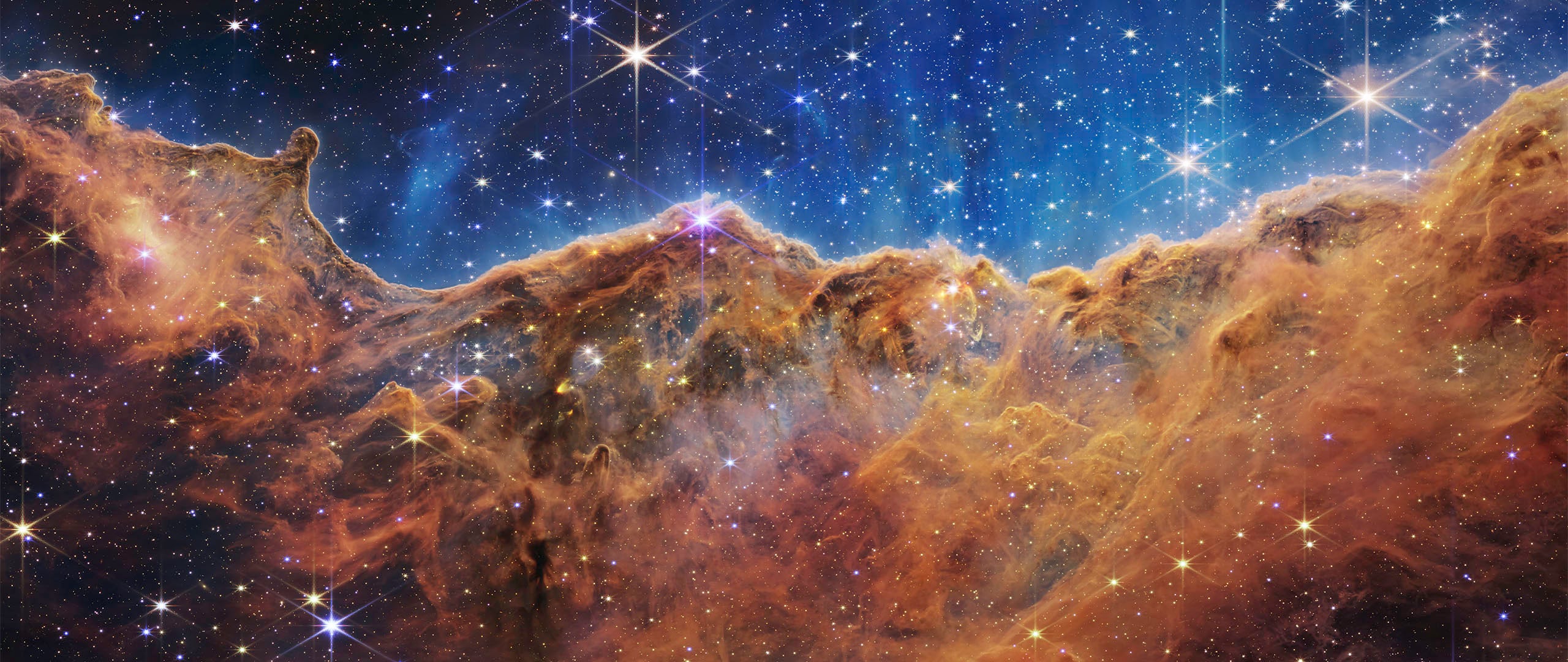
The James Webb Space Telescope (JWST) marked its fourth anniversary in space on July 12, 2026, with the release of a series of novel images that underscore its transformative role in astronomy. Celebrated as the most powerful observatory ever deployed, the telescope has redefined humanity’s understanding of the cosmos, capturing breathtaking visuals of distant galaxies, star-forming regions, and planetary systems. These images, including those featured in PetaPixel’s "25 Best James Webb Space Telescope Photos" and similar collections from outlets like livescience.com and esawebb.org, highlight the telescope’s ability to merge scientific precision with artistic beauty.
Among the newly unveiled images is a mid-infrared view of Centaurus A, a galaxy 12 million light-years away, revealing its dusty core and hidden cosmic activity. This image, alongside others, demonstrates the telescope’s capacity to peer through interstellar gas and dust, uncovering phenomena invisible to previous observatories. The James Webb’s Mid-Infrared Instrument (MIRI) and Near-Infrared Camera (NIRCam) have been instrumental in capturing such details, allowing scientists to study the universe’s most elusive structures. For example, the telescope’s MIRI instrument revealed the dust-shrouded heart of Centaurus A, while its NIRCam captured Jupiter’s rings in unprecedented clarity and resolved nine of Uranus’ 27 moons.
The telescope’s anniversary coincides with a broader celebration of its achievements, including iconic scenes such as the Pillars of Creation, the Tarantula Nebula, and the Cigar Galaxy (M82). These images, featured in PetaPixel’s 2026 article, showcase the telescope’s advanced infrared capabilities. One image, taken by NIRCam, highlights the Phantom Galaxy (Messier 74), a spiral galaxy whose intricate arms were revealed through the telescope’s mid-infrared observations. The article also references the discovery of the farthest known galaxy, MoM-z14, which existed just 280 million years after the Big Bang, as noted in the PetaPixel source.
Scientists have also highlighted the telescope’s role in gravitational lensing research. A recent image of the galaxy cluster SDSS J1226+2152 illustrates how Webb uses the bending of light by massive objects to observe distant, faint galaxies. This phenomenon, critical for studying the early universe, has provided scientists with a “window” into cosmic history, revealing thousands of galaxies in a single frame. The article also references the telescope’s ability to study planetary atmospheres, such as its detailed imaging of Neptune’s dim rings and methane ice clouds.
The anniversary also reflects the telescope’s ongoing contributions to astrophysical research. The PetaPixel article emphasizes the telescope’s capacity to combine images from different wavelengths, as seen in the iconic Pillars of Creation, where data from MIRI and NIRCam created a "colorful, sharp photo full of galaxies, stars, and wild cosmic detail." Other notable images include the "Cosmic Cliffs" of the Carina Nebula, the "Red Spider Nebula" (NGC 6537), and the "Cartwheel Galaxy," which experienced a high-speed collision billions of years ago. These visuals, described as "jaw-dropping," have sparked renewed public interest in space exploration.
Since its launch in December 2021, the James Webb Space Telescope has exceeded expectations, delivering data that challenges existing theories and opens new avenues for research. Its ability to observe the universe in infrared wavelengths has allowed scientists to study objects obscured by cosmic dust, from the birth of stars to the formation of galaxies. As the telescope continues its mission, it remains proof of international collaboration, with contributions from NASA, the European Space Agency (ESA), and the Canadian Space Agency (CSA). The 2026 anniversary serves as a reminder of the telescope’s enduring impact, blending science and art to illuminate the vast, mysterious cosmos.
How significant is this development?
Cast your anonymous vote to register reader sentiment across business and policy circles.
CurrentDeck is dedicated to independent, evidence-backed reporting. This briefing was synthesized from primary source reporting, corroborated across independent newsrooms, and verified against our Editorial Standards.


