Solar eclipse and Perseid meteor shower to align on August 12 2026
On August 12, 2026, observers will witness a rare combination of a total solar eclipse during the day and the peak of the Perseid meteor shower at night.
- Development: Solar eclipse and Perseid meteor shower to align on August 12 2026
- Core Takeaway: On August 12, 2026, observers will witness a rare combination of a total solar eclipse during the day and the peak of the Perseid meteor shower at night.
- Context: Primary reporting aggregated across independent newsrooms and verified against CurrentDeck standards.
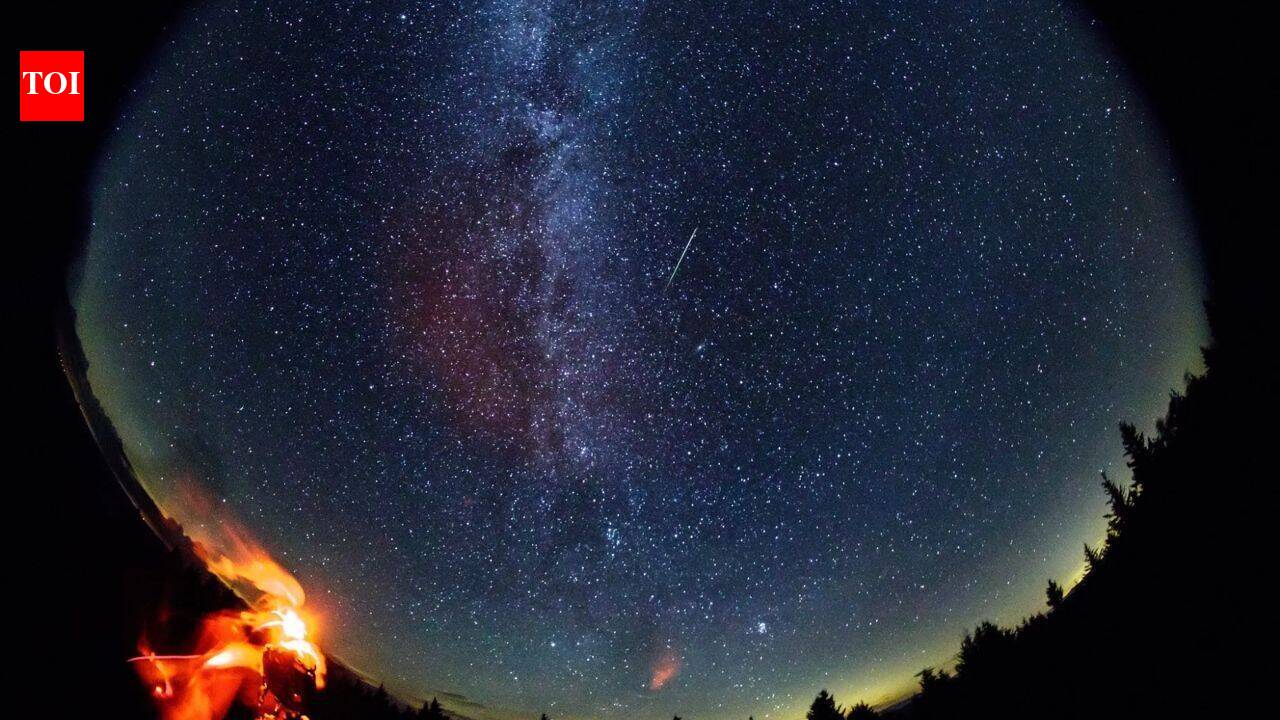
Observers in the Northern Hemisphere are preparing for a rare celestial "double whammy" on August 12, 2026. In a single rotation of the Earth, the sky will produce two major astronomical spectacles: a total solar eclipse during the day and the peak of the Perseid meteor shower at night.
The alignment is a fortunate coincidence of timing. The solar eclipse requires a new Moon, which occurs when the Moon and Sun occupy the same region of the sky. This specific lunar phase is ideal for meteor watching because the Earth-facing side of the Moon remains dark, eliminating the lunar glare that typically washes out fainter shooting stars. According to reports from the BBC, this means the Perseids will benefit from some of the darkest skies of the month.
Daytime: The Solar Eclipse
The daytime event begins as the Moon passes between the Earth and the Sun, casting a shadow across the planet. For those located within a narrow "path of totality," the Moon will completely cover the solar disc, plunging the environment into a surreal twilight for a few minutes and revealing the Sun's outer atmosphere, known as the corona.
Spain is described as arguably the best viewing location, as the path crosses the northern part of the country and the island of Mallorca.
Outside the path of totality, observers will see a partial solar eclipse. Many major UK cities, including London, Birmingham, Manchester, Liverpool, Cardiff, Belfast, and Glasgow, will see over 90% of the Sun covered. In the Republic of Ireland, Dublin is expected to see about 94% obscuration, while Cork may see up to 96%.
Because the eclipse occurs in the late afternoon and evening for western Europe, observers may witness a partially eclipsed Sun sinking toward the western horizon.
Safety Requirements
Looking directly at the Sun without protection can cause serious eye damage. Certified eclipse glasses must be worn during all partial phases. Even if the Sun is 99% covered, protection is essential.
Those without glasses can use indirect methods, such as projecting sunlight through a colander or other perforated surfaces to create miniature images on the ground. Within the path of totality, glasses may theoretically be removed only during the brief window of 100% coverage, but they must be replaced immediately after.
Nighttime: The Perseid Meteor Shower
As darkness settles on August 12 and into the early hours of August 13, the focus shifts to the Perseid meteor shower. This annual event occurs as Earth passes through debris from Comet 109P/Swift-Tuttle, a giant ball of rock and ice with a nucleus estimated to be about 16 miles across.
The Perseids are noted for producing high rates of bright meteors and "fireballs"—exceptionally bright streaks that can outshine the planet Venus. These fireballs are caused by larger particles, some the size of a marble, slamming into the atmosphere at 133,000 mph.
Viewing Conditions and Tips
The 2026 peak is expected to be the finest viewing opportunity since 2024 and the best until 2028 due to the absence of moonlight. The predicted Zenithal Hourly Rate is approximately 100 meteors per hour, though actual counts vary based on light pollution and the altitude of the radiant point in the constellation Perseus.
- Equipment: No telescopes or binoculars should be used, as they restrict the field of view. Naked-eye observation is recommended.
- Environment: Observers should move away from city lights to rural areas or local parks to avoid light pollution.
- Preparation: Eyes require at least 20 minutes to adjust to the darkness. Avoid looking at phone screens, which can reset night vision; use a dim red light torch if necessary.
- Timing: The most productive window is typically between 2:00 AM and 5:00 AM on August 13, when the radiant is highest in the sky.
Scientific Monitoring and Future Events
While ground observers enjoy the display, NASA’s Meteoroid Environment Office monitors such activity to protect spacecraft. Bill Cooke, who leads the office, stated that meteoroids remain one of the most significant hazards for crews traveling beyond Earth orbit.
How significant is this development?
Cast your anonymous vote to register reader sentiment across business and policy circles.
CurrentDeck is dedicated to independent, evidence-backed reporting. This briefing was synthesized from primary source reporting, corroborated across independent newsrooms, and verified against our Editorial Standards.


