Hungary President Tamas Sulyok to step down following constitutional ame…
President Tamas Sulyok has signed a constitutional amendment to end his term following pressure from Prime Minister Péter Magyar’s new government. The move marks a significant shift in Hungary's political landscape as the administration moves to dismantle the legacy of the former regime.
- Development: Hungary President Tamas Sulyok to step down following constitutional ame…
- Core Takeaway: President Tamas Sulyok has signed a constitutional amendment to end his term following pressure from Prime Minister Péter Magyar’s new government. The move marks a significant shift in Hungary's political landscape as the administration moves to dismantle the legacy of the former regime.
- Context: Primary reporting aggregated across independent newsrooms and verified against CurrentDeck standards.
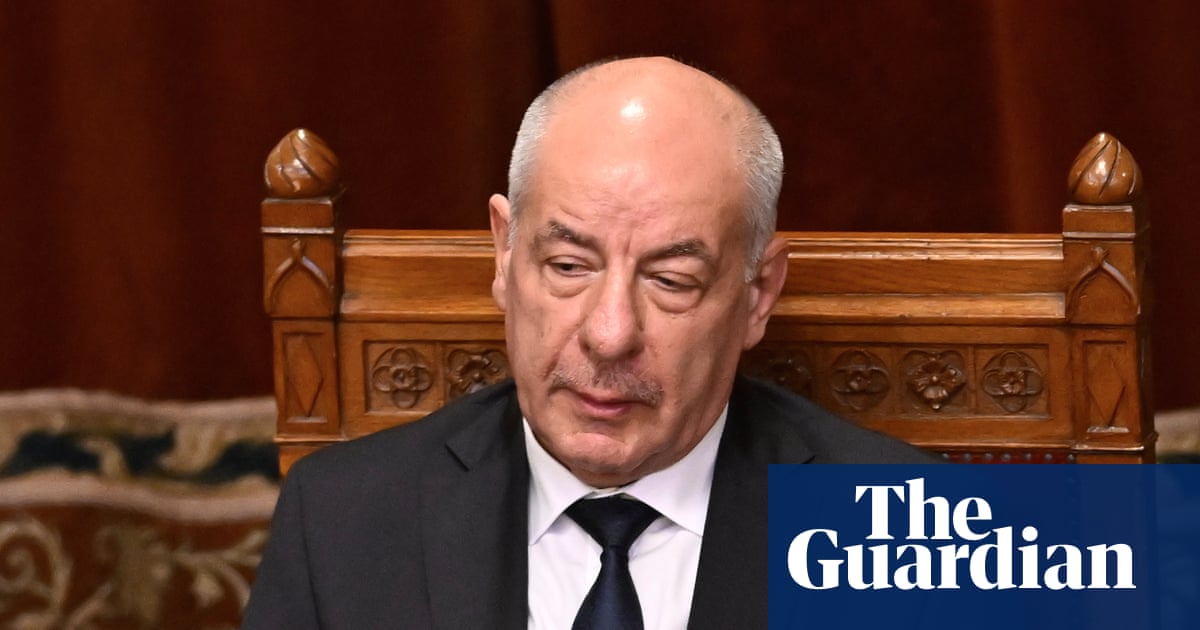
Hungary’s President Tamás Sulyok has signed a constitutional amendment that ends his term in office, marking a pivotal shift in the country’s political landscape following the ousting of former Prime Minister Viktor Orbán. The move, passed by the ruling Tisza party led by Prime Minister Péter Magyar, resolves a standoff between Sulyok and the new government, which had accused the president of serving as a loyalist to Orbán’s former regime.
The 17th amendment to Hungary’s Fundamental Law, approved by Parliament, immediately terminates Sulyok’s presidency, citing a “serious loss of confidence” in him as a leader. Sulyok, who was elected in March 2024 by lawmakers from Orbán’s Fidesz party, had five days to sign the legislation or face a constitutional crisis. He complied on the final deadline, stating he had no choice but to “rubber-stamp the legislation” as it adhered to the letter of the law. However, he condemned the move as a violation of democratic principles.
“The seventeenth amendment to the Constitution has marked a watershed in Hungary’s constitutional democracy,” Sulyok said in a statement. “By removing public office holders in a manner that openly violates the rule of law… it sets a negative precedent that inflicts a deep wound on the constitutional values of democracy, the separation of powers, and the rule of law.”
The amendment, part of Magyar’s broader effort to dismantle Orbán’s political legacy, also introduces institutional reforms, including a 12-year term limit for lawmakers and a retirement age of 70 for Constitutional Court judges. These changes will force the current court president, Orbán ally Péter Polt, to retire. Magyar, who defeated Orbán in a landslide April election, framed the reforms as a restoration of democratic norms, claiming they return power to the people after years of authoritarian governance.
“With these decisions, we are restoring something that the Orbán regime spent many years trying to take away from the Hungarian people,” Magyar said in a Facebook post. “The certainty that power can be constrained, that public assets can be recovered, and that the state can once again serve its citizens.”
Orbán, who has largely retreated from public life since his defeat, criticized the amendment as an act of tyranny. “Tyranny is no longer a threat but reality. If this could be done to the president, tomorrow, no one will be safe,” he wrote on social media. His remarks underscored the deepening rift within Hungarian politics, as Fidesz faces internal disarray and declining public support.
Sulyok’s term will end at midnight on Monday, after which Parliament Speaker Ágnes Forsthoffer will assume interim presidential duties. A new president must be elected within 30 days, with Magyar’s Tisza party aiming to nominate a candidate who embodies national unity. The government has also signaled plans for a new constitution, potentially introducing direct elections for the presidency.
The fallout from the amendment highlights the volatility of Hungary’s political transition. Sulyok, a former constitutional court judge, warned that the move risks normalizing the removal of officials through political pressure rather than legal processes. “The core values of a free society… have been trampled underfoot for the sake of political power,” he said, echoing concerns raised by critics of the Tisza government’s rapid reforms.
Magyar’s administration has already begun dismantling institutions tied to Orbán’s rule, including suspending public media outlets and shuttering the Sovereignty Protection Office, which opponents claimed targeted dissent. The latest constitutional shift underscores the new government’s focus on reasserting control over state institutions, even as it faces scrutiny over its methods.
As Hungary navigates this transition, the role of the presidency—and the balance of power between branches of government—remains a focal point. For now, Sulyok’s departure signals the end of an era, but the long-term impact of the reforms on Hungary’s democracy will depend on how future leaders navigate the challenges ahead.
How significant is this development?
Cast your anonymous vote to register reader sentiment across business and policy circles.
CurrentDeck is dedicated to independent, evidence-backed reporting. This briefing was synthesized from primary source reporting, corroborated across independent newsrooms, and verified against our Editorial Standards.