US hits Iranian infrastructure for seventh consecutive night of strikes
U.S. airstrikes have targeted Iranian military logistics and surveillance infrastructure, prompting retaliatory missile and drone attacks against U.S. allies.
- Development: US hits Iranian infrastructure for seventh consecutive night of strikes
- Core Takeaway: U.S. airstrikes have targeted Iranian military logistics and surveillance infrastructure, prompting retaliatory missile and drone attacks against U.S. allies.
- Context: Primary reporting aggregated across independent newsrooms and verified against CurrentDeck standards.
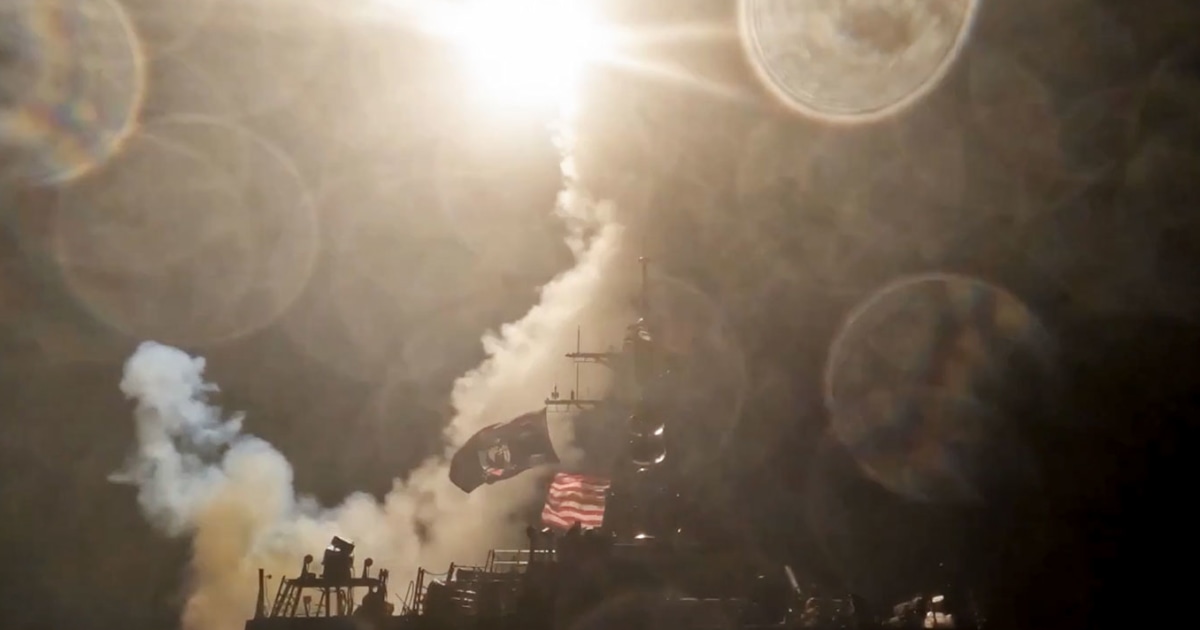
United States military forces carried out a seventh consecutive night of airstrikes against Iranian territory, targeting what Central Command (CENTCOM) described as military logistics infrastructure, surveillance sites, and underground weapons storage. The campaign, which escalated overnight into Friday, July 17, 2026, marks an intensifying struggle for control over the Strait of Hormuz.
The U.S. Central Command announced that the latest round of strikes commenced at 3 p.m. ET on Friday and concluded by 9:30 p.m. ET. U.S. Forces utilized fighter aircraft, aerial drones, and warships to conduct the operations. The strikes specifically targeted southern Iran, causing damage to bridges, a railway junction near Bandar Abbas, and a maritime control tower in Chabahar. The tower, which CENTCOM stated was part of a maritime surveillance network used by the Revolutionary Guard to track and target commercial vessels, collapsed following the strikes. Defense Secretary Pete Hegseth shared images of the structure after the impact.
In response to the U.S. Operations, Iranian state media reported that the strikes impacted civilian infrastructure, including power and water facilities. The Iranian Energy Ministry requested that residents in southern provinces reduce power consumption. Iranian state news agency IRNA reported that 46 people have been killed and over 400 wounded during the recent sequence of U.S. Strikes. Conversely, other Iranian state media reports indicated three deaths and eight injuries specifically following the most recent overnight activity in Hormozgan province. U.S. Officials acknowledged 13 additional U.S. Service members—10 Army soldiers and three Navy sailors—have been injured since Monday. Since the war began, the U.S. Reports 14 service members killed and 427 wounded.
Tehran strikes back at U.S. Allies
Iran responded by launching missile and drone operations against U.S. Military assets and host nations. Kuwait reported that a power generation and water desalination plant was damaged by an Iranian strike, resulting in a fire and the disruption of electricity generation units. In Bahrain, air sirens were activated; the Revolutionary Guards claimed to have attacked a U.S. Drone depot and destroyed a national artificial intelligence center. Iran also claimed to have targeted U.S. Assets in Qatar, Jordan, and the Al-Tanf base in Syria. NBC News noted that the U.S. Military had announced the handover of the Al-Tanf base to Syrian forces in February.
The conflict has resulted in a significant decline in shipping through the Strait of Hormuz. On Thursday, eight ships transited the waterway, down from 15 the previous day. The U.S. Has reimposed a naval blockade, while the Revolutionary Guards claimed to have stopped four vessels using missile and drone operations. Iranian media further alleged that two oil tankers exploded after entering a mined route in the strait. CENTCOM labeled the report regarding the tankers as "false."
Regional and political implications
The collapse of a ceasefire agreement has prompted concern from international figures, including United Nations Secretary-General Antonio Guterres, who expressed alarm over "attacks on civilian infrastructure in Iran and across the region." Mohsen Rezaei, an adviser to Iran’s supreme leader, warned on Friday that if U.S. Strikes continue for several more days, Iran would move into a phase of "full-scale offensive operations."
In the United States, President Donald Trump stated in a primetime address, "We are likewise winning big in Iran, and you will see the fruits of that labor very, very shortly." White House press secretary Karoline Leavitt told reporters that Iran wants to "make a deal with us." The White House also confirmed the release of Dena Karari, an American citizen held in Iran since 2024, who is expected to return home in the coming days.
Global energy markets have reacted to the escalation, with Brent crude oil prices climbing three percent. The persistent strikes have led to increased military activity, including U.S. Marines boarding a tanker near the Strait of Hormuz and reports of an armed seizure of another vessel off the coast of Yemen.
How significant is this development?
Cast your anonymous vote to register reader sentiment across business and policy circles.
CurrentDeck is dedicated to independent, evidence-backed reporting. This briefing was synthesized from primary source reporting, corroborated across independent newsrooms, and verified against our Editorial Standards.