Experimental HIV vaccine elicits broadly neutralizing antibodies in prim…
Scientists have reported success in training primate immune systems to produce broadly neutralizing antibodies against HIV using new immunization strategies. These findings provide a vital proof of concept for overcoming the virus's rapid mutation rate.
- Development: Experimental HIV vaccine elicits broadly neutralizing antibodies in prim…
- Core Takeaway: Scientists have reported success in training primate immune systems to produce broadly neutralizing antibodies against HIV using new immunization strategies. These findings provide a vital proof of concept for overcoming the virus's rapid mutation rate.
- Context: Primary reporting aggregated across independent newsrooms and verified against CurrentDeck standards.
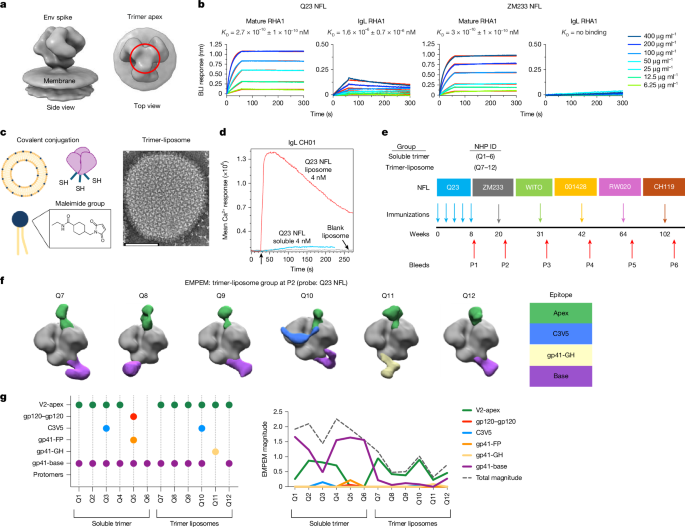
Scientists have reported a significant development in the pursuit of an HIV vaccine, demonstrating that new immunization strategies can successfully elicit broadly neutralizing antibodies (bnAbs) in non-human primates. These antibodies, which are capable of recognizing and blocking diverse strains of the rapidly mutating virus, represent a long-sought benchmark in vaccine research. The findings, published in the journal Nature on April 29, 2026, outline two distinct but related approaches to overcoming the virus's historical ability to evade immune detection.
In one study, researchers from Scripps Research and Sweden's Karolinska Institute utilized an experimental vaccine targeting the apex of the HIV envelope (Env) spike protein. By creating virus-sized nanoparticles studded with hundreds of copies of the Env trimer, the team aimed to train the immune system to recognize a highly conserved region of the virus. When tested in six rhesus macaques, the vaccine triggered the production of antibodies that exhibited tier-2 cross-neutralization—the ability to act against genetically distinct HIV strains the animals had never encountered. In this specific cohort, all six animals developed these apex-targeted antibodies. Structural analyses confirmed these antibodies target the Env trimer apex in a manner highly similar to the human-infection-elicited bnAb, PG9.
A separate research effort, led by scientists at the La Jolla Institute for Immunology (LJI), Scripps Research, and the International AIDS Vaccine Initiative (IAVI), employed a germline-targeting approach. This strategy aims to "walk" B cells from their naive state to a mature, antibody-producing state through a series of priming and booster vaccinations. By mimicking specific HIV antigens, the vaccine guides B cells through a training process designed to replicate the rare immune responses seen in the small number of people who naturally develop protection against HIV. According to the research, this method resulted in the development of broadly neutralizing antibodies in approximately 44 percent of the rhesus macaques tested.
The challenge of creating an HIV vaccine has long been attributed to the virus’s rapid mutation rate, its shifting glycan shield, and its structural volatility during infection. Because the virus constantly changes its surface appearance, traditional vaccine methods have often failed to keep pace. The research teams behind these studies emphasize that these new strategies represent a "bootcamp" for the immune system, effectively flipping the response so that rare, potent antibody production becomes common.
"We succeeded in taking ultra-rare antibody responses and turning them into common responses by the end of the vaccination process."
Shane Crotty, Professor and Chief Scientific Officer at La Jolla Institute for Immunology
"The fact that we see this response in all our animals tells us that we’re on to something. It’s better than we could have hoped for and incredibly gratifying."
Richard Wyatt, Professor at Scripps Research
While these preclinical results mark a technical milestone, the vaccines are not yet ready for human use. Manufacturing the specialized nanoparticles remains costly and complex, and researchers are exploring alternative delivery methods, such as mRNA technology. Furthermore, the studies did not assess whether these antibodies provide direct protection against HIV infection in the animals. The researchers note that a fully protective vaccine will likely need to target multiple vulnerable sites on the virus simultaneously, such as the apex and the CD4 binding site.
The path forward involves optimizing the vaccination schedules and booster sequences to increase response rates. Despite the current limitations, the scientific community views these results as a vital proof of concept. The priming immunogen used in the LJI-led study has already been evaluated in human clinical trials, specifically the HVTN 144 trial, and is currently being studied in the Phase 1 IAVI G004 trial. Researchers are now working to advance plans for further evaluating the full immunization regimen in future human studies, with Dr. Crotty noting, "We believe this vaccine approach is even more likely to succeed in humans, because of the immunogenetics."
How significant is this development?
Cast your anonymous vote to register reader sentiment across business and policy circles.
CurrentDeck is dedicated to independent, evidence-backed reporting. This briefing was synthesized from primary source reporting, corroborated across independent newsrooms, and verified against our Editorial Standards.