US launches seventh night of strikes as Iran expands attacks on Gulf states
Tensions in the Persian Gulf escalate as the US continues its military campaign against Iran, which has responded with retaliatory strikes on regional infrastructure.
- Development: US launches seventh night of strikes as Iran expands attacks on Gulf states
- Core Takeaway: Tensions in the Persian Gulf escalate as the US continues its military campaign against Iran, which has responded with retaliatory strikes on regional infrastructure.
- Context: Primary reporting aggregated across independent newsrooms and verified against CurrentDeck standards.
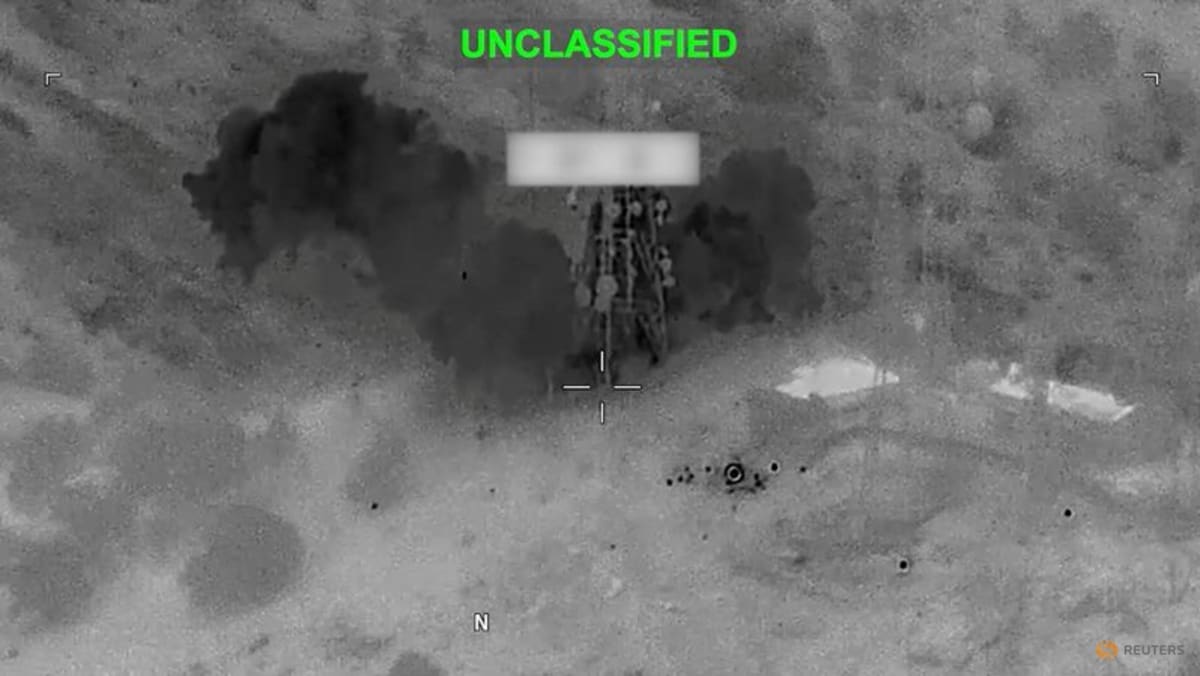
The United States launched its seventh consecutive night of strikes on Iran on Saturday, July 18, 2026, as the conflict in the Persian Gulf intensified, with Iran retaliating by targeting Gulf states and shipping traffic. The escalating violence has raised fears of a broader regional war, with both sides accusing each other of attacking civilian and military infrastructure. The strikes, which began a week after a fragile ceasefire collapsed, have disrupted global oil supplies and drawn international condemnation.
US Central Command stated that its forces targeted surveillance sites, military logistics infrastructure, underground weapons storage, and maritime capabilities during the latest round of attacks. The operation involved fighter aircraft, drones, and warships, with more than 50,000 American service members operating across the Middle East. Iranian media reported strikes on coastal Hormozgan Province, where three people were killed and eight wounded, along with damage to bridges and a road tunnel. In the southern city of Jask, missiles reportedly targeted power facilities and desalination pumps, cutting off drinking water in villages, according to a local official.
Iran responded by expanding its attacks on Gulf states, including Bahrain, Kuwait, Qatar, and Jordan, as well as a US vessel in the northern Indian Ocean. Kuwait’s authorities confirmed that a power generation and water desalination station was hit, causing fires and disrupting electricity. The Kuwaiti army reported repelling Iranian drone attacks, while Bahrain’s Revolutionary Guards claimed to have destroyed a US drone depot and the country’s main artificial intelligence center using ballistic missiles and drones. Iranian state media also alleged that a shore-to-sea cruise missile was fired at a “hostile” US vessel, forcing it to retreat from Iranian waters.
The conflict has spilled into shipping lanes, with the US enforcing a naval blockade of Iran and Iran accusing the US of targeting vessels in the Strait of Hormuz, a critical chokepoint for global oil trade. The US claimed it redirected four commercial ships, disabled one, and boarded another to enforce the blockade. Iran, however, alleged that four vessels violating its navigation rules were intercepted using a combined missile and drone operation. It also reported that two oil tankers exploded after passing through a mined route south of the strait, though the US dismissed this as false. Meanwhile, armed men seized another vessel off Yemen, heightening concerns about instability in the Red Sea.
Iranian officials warned of further escalation, with Mohsen Rezaei, an adviser to the supreme leader, cautioning against US aggression. The Revolutionary Guards also claimed responsibility for attacks on US bases in Syria, though American forces had withdrawn from the region earlier in the year. In Jordan, Iranian strikes reportedly injured several US troops, according to a report by CBS News. The Pentagon has not confirmed the extent of the injuries, but the US military’s death toll in the conflict has risen to 14, with over 400 service members wounded since the war began.
The violence has sent oil prices surging, with benchmarks climbing more than 4% amid fears of supply disruptions. The US has threatened to broaden its strikes on Iranian infrastructure, with President Donald Trump signaling openness to a ground assault on Iran’s coast or islands. However, such moves risk provoking Iran to target the critical infrastructure of Gulf states or prompting allies in Yemen to disrupt shipping from the Red Sea. Saudi Arabia issued rare early warnings for the first time in months, though no damage was reported.
International leaders have expressed concern over the escalating conflict. UN Secretary-General Antonio Guterres criticized attacks on civilian infrastructure, while Iran’s Revolutionary Guards warned that exports of oil, gas, and fertilizers would be halted until US “aggression” ceased. The US has maintained that its strikes are directed solely at military targets, but independent verification of damage—such as footage of a destroyed bridge in Bandar Khamir—suggests broader impacts on local communities.
As the seventh night of strikes concluded, the region remains on edge. The collapse of the ceasefire has left no clear path to de-escalation, with both sides doubling down on military actions. The situation in the Strait of Hormuz, which handles one-fifth of global oil shipments, remains particularly volatile, with shipping traffic largely halted. Analysts warn that without renewed diplomacy, the conflict could spiral into a full-scale war with catastrophic consequences for global energy markets and regional stability.
How significant is this development?
Cast your anonymous vote to register reader sentiment across business and policy circles.
CurrentDeck is dedicated to independent, evidence-backed reporting. This briefing was synthesized from primary source reporting, corroborated across independent newsrooms, and verified against our Editorial Standards.