Spain wildfire kills 12 as blaze spreads through southern Andalusia region
A rapidly spreading wildfire in Almería has claimed 12 lives as record-breaking heatwaves and drought conditions continue to impact southern Spain. Emergency crews are working to contain the blaze while officials warn the death toll could increase.
- Development: Spain wildfire kills 12 as blaze spreads through southern Andalusia region
- Core Takeaway: A rapidly spreading wildfire in Almería has claimed 12 lives as record-breaking heatwaves and drought conditions continue to impact southern Spain. Emergency crews are working to contain the blaze while officials warn the death toll could increase.
- Context: Primary reporting aggregated across independent newsrooms and verified against CurrentDeck standards.
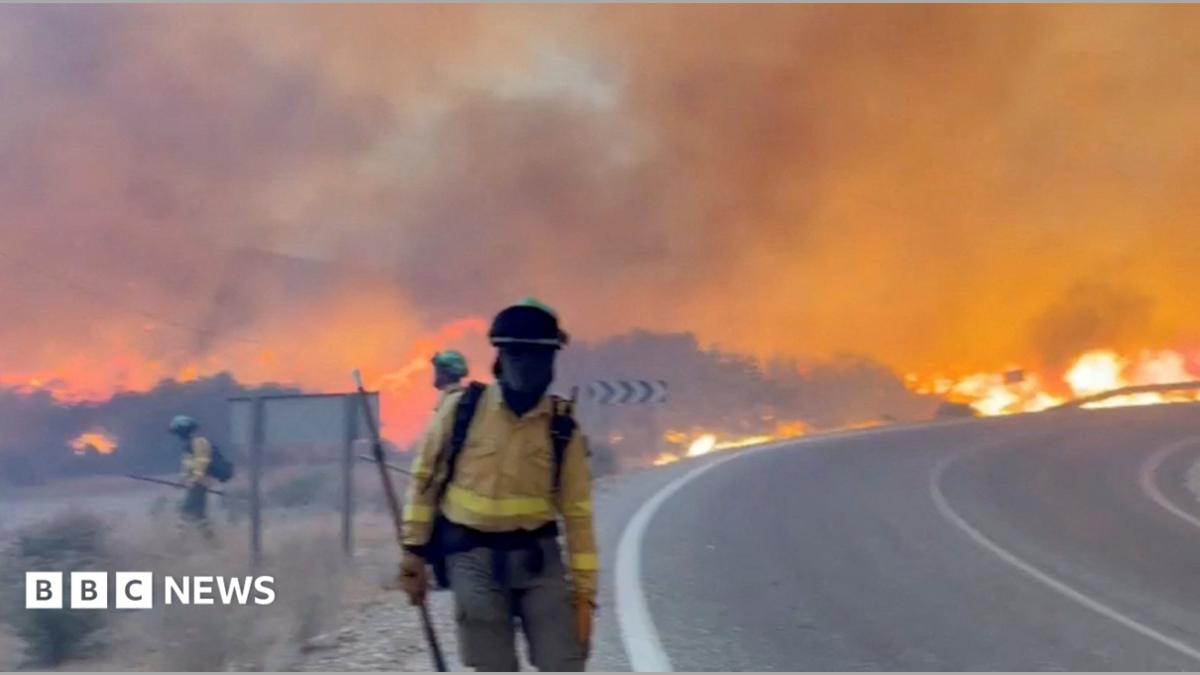
A wildfire in southern Spain killed 12 people on 10 July 2026 as a heatwave continued to scorch the region, with temperatures reaching 40C (104F) and forcing thousands to evacuate their homes. The blaze, which spread rapidly through the mountainous terrain of Almería’s Los Gallardos area, claimed lives in the nearby hamlet of Bedar, where victims were found trapped in vehicles attempting to flee the flames. At least six others were injured, according to regional authorities and emergency services.
The fire, which broke out amid extreme drought conditions and strong winds, was initially attributed to a downed power line by witnesses, though officials have not confirmed the cause. Over 150 firefighters, supported by aircraft and the Spanish Military Emergency Unit (UME), worked through the night to contain the blaze, which forced the evacuation of more than 1,000 residents. Road closures and smoke inhalation risks compounded the challenges, with emergency crews treating four people for minor burns and respiratory issues at the scene.
Andalusia’s regional government confirmed the death toll had risen from six to 12 after additional victims were recovered from burned areas. Antonio Sanz, the region’s emergency management minister, called the disaster “the worst wildfire in the region’s history,” describing it as an “unprecedented tragedy.” Juanma Moreno, president of the Andalusian regional government, expressed grief over the losses, stating, “Our hearts are heavy and we are devastated by grief.” Prime Minister Pedro Sánchez extended condolences to the victims’ families, emphasizing the scale of the crisis.
The fire is part of a broader pattern of extreme weather gripping southern Europe. A sustained heatwave has driven temperatures to record levels, with June 2026 marking the second-warmest June on record globally. The European Union’s Copernicus climate service reported that the region’s temperatures were 3.06C above average during the heatwave, exacerbating drought conditions and fueling wildfires across Spain, France, and Portugal. Last year, Spain recorded over 393,000 hectares of burned land, more than six times its average for 2006–2024, according to the European Forest Fire Information System.
Climate scientists have linked the escalating frequency and intensity of wildfires to global warming, which is driving Europe to warm twice as fast as the global average. A study by the World Weather Attribution group found that the Mediterranean’s worsening fire season is directly tied to climate change. “The result is increasingly intense heatwaves, a persistently warm ocean, and growing risks for people, ecosystems, and infrastructure,” said Samantha Burgess, a climate scientist at Copernicus.
Emergency services in Almería faced additional pressure as the fire spread to nearby towns, including Almocaizar, El Chocolate, and Los Collados. Over 50 residents were temporarily housed in a cultural center, while authorities warned of ongoing risks as changing weather conditions threatened to reignite the blaze. The regional government emphasized that the death toll could still rise as search operations continue.
The tragedy underscores the growing challenges posed by climate-driven extreme weather. In recent weeks, Spain has seen a surge in wildfires, with firefighters battling multiple blazes simultaneously. Last month, France recorded 2,025 excess heat-related deaths, while Barcelona set a new heat record at 40.5C. Meteorologists warn that such events will become more frequent without significant reductions in carbon emissions and improved climate adaptation measures.
How significant is this development?
Cast your anonymous vote to register reader sentiment across business and policy circles.
CurrentDeck is dedicated to independent, evidence-backed reporting. This briefing was synthesized from primary source reporting, corroborated across independent newsrooms, and verified against our Editorial Standards.