Thames swan census begins as officials hope for recovery despite bird flu
Conservationists are conducting the centuries-old Thames swan count while battling high mortality rates linked to the ongoing bird flu crisis.
- Development: Thames swan census begins as officials hope for recovery despite bird flu
- Core Takeaway: Conservationists are conducting the centuries-old Thames swan count while battling high mortality rates linked to the ongoing bird flu crisis.
- Context: Primary reporting aggregated across independent newsrooms and verified against CurrentDeck standards.
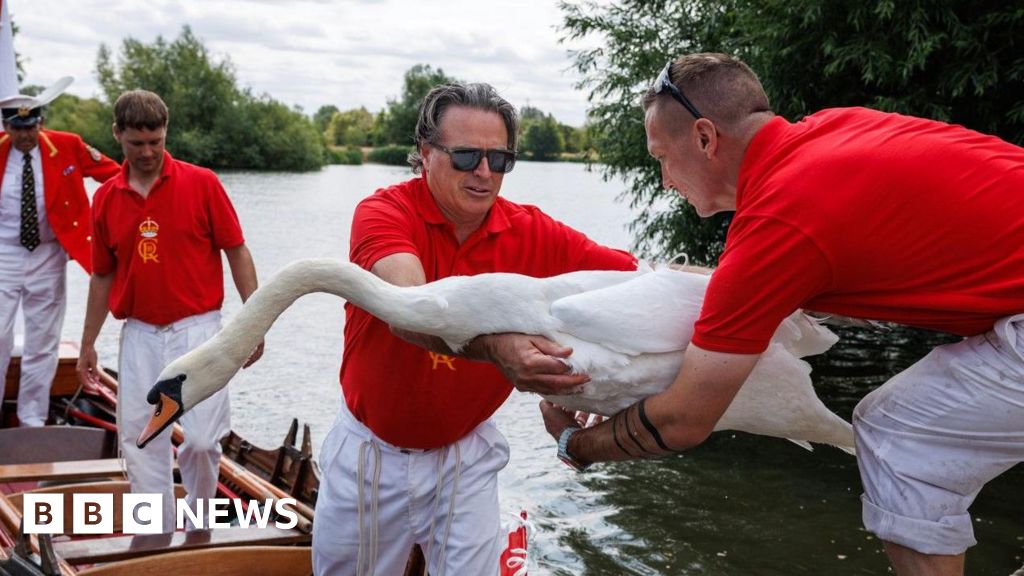
The annual Thames swan census, a tradition dating back to the 12th century, commenced this week amid growing concerns over a bird flu outbreak threatening the region’s mute swan population. Organizers, including the King’s Swan Marker David Barber, expressed cautious optimism about a potential recovery in cygnet numbers, despite the virus’s impact on waterfowl. The five-day census, which spans 79 miles from Sunbury Lock Cut to Abingdon Bridge, aims to count, weigh, and examine swans and cygnets, with all cygnets fitted with identification rings to track their movements.
Recent data from the British Trust for Ornithology (BTO) and the Animal and Plant Health Agency (APHA) highlights a troubling trend: swans are disproportionately affected by the highly pathogenic H5N1 strain of avian influenza. Dr. Teresa Frost, BTO’s waterbird monitoring head, noted that swans exhibit “genuine susceptibility” to the virus due to their aquatic habitats and social behaviors. “In winter, water birds congregate in still waters, creating ideal conditions for viral transmission,” she explained. Symptoms such as swollen heads, runny eyes, and lethargy have been observed in affected swans, with some dying in clusters across Berkshire, Windsor, and other regions.
Charities like Swan Support report alarming mortality rates. Wendy Hermon, operations director at the organization, stated that 46 dead swans were found in Windsor and Maidenhead since January, with additional deaths in Newbury and Hurley. “The true number is likely double the official count,” she said, citing underreporting as a critical challenge. APHA confirmed 39 bird flu cases in swans in the first four weeks of 2026, though independent reports suggest the scale is far greater. The virus’s rapid spread has prompted calls for enhanced surveillance and public vigilance, with officials advising against handling dead or sick birds.
The outbreak has intensified fears for swan populations already struggling with environmental pressures. Dr. Frost highlighted that mute swans, along with migratory species like Whooper and Bewick’s swans, face “double the risk” due to their habitat and migration patterns. She warned that the virus’s persistence in still water and its ability to jump between species could lead to cascading effects on wildlife. “We’re seeing large numbers of deaths in different places, not just in Southern England,” she said, citing reports from Scotland as well.
Despite the challenges, efforts to protect swans continue. The 2025 census recorded 115 cygnets, up from 86 in 2024, offering a glimmer of hope. Barber, who has overseen the census for decades, emphasized the importance of public collaboration. “Members of the public monitoring swans locally are a great help,” he said. Schools along the Thames route will also participate, educating children on swan ecology and conservation. However, the bird flu’s impact on breeding success remains uncertain, with experts warning that disease and predation could undermine recovery efforts.
The crisis has broader implications for wildlife and agriculture. The BTO is collaborating with APHA to map virus hotspots, as the presence of avian flu in wild birds raises concerns about spillover to poultry. As the census unfolds, officials and volunteers alike remain on high alert, balancing hope for recovery with the stark realities of a virus that shows no signs of abating.
How significant is this development?
Cast your anonymous vote to register reader sentiment across business and policy circles.
CurrentDeck is dedicated to independent, evidence-backed reporting. This briefing was synthesized from primary source reporting, corroborated across independent newsrooms, and verified against our Editorial Standards.