China test-launches nuclear-capable ballistic missile into South Pacific
Beijing's launch of a nuclear-capable ballistic missile into the South Pacific has drawn condemnation from regional leaders and the United States. The move highlights China’s growing nuclear triad capabilities and the ongoing geopolitical friction across the Pacific.
- Development: China test-launches nuclear-capable ballistic missile into South Pacific
- Core Takeaway: Beijing's launch of a nuclear-capable ballistic missile into the South Pacific has drawn condemnation from regional leaders and the United States. The move highlights China’s growing nuclear triad capabilities and the ongoing geopolitical friction across the Pacific.
- Context: Primary reporting aggregated across independent newsrooms and verified against CurrentDeck standards.
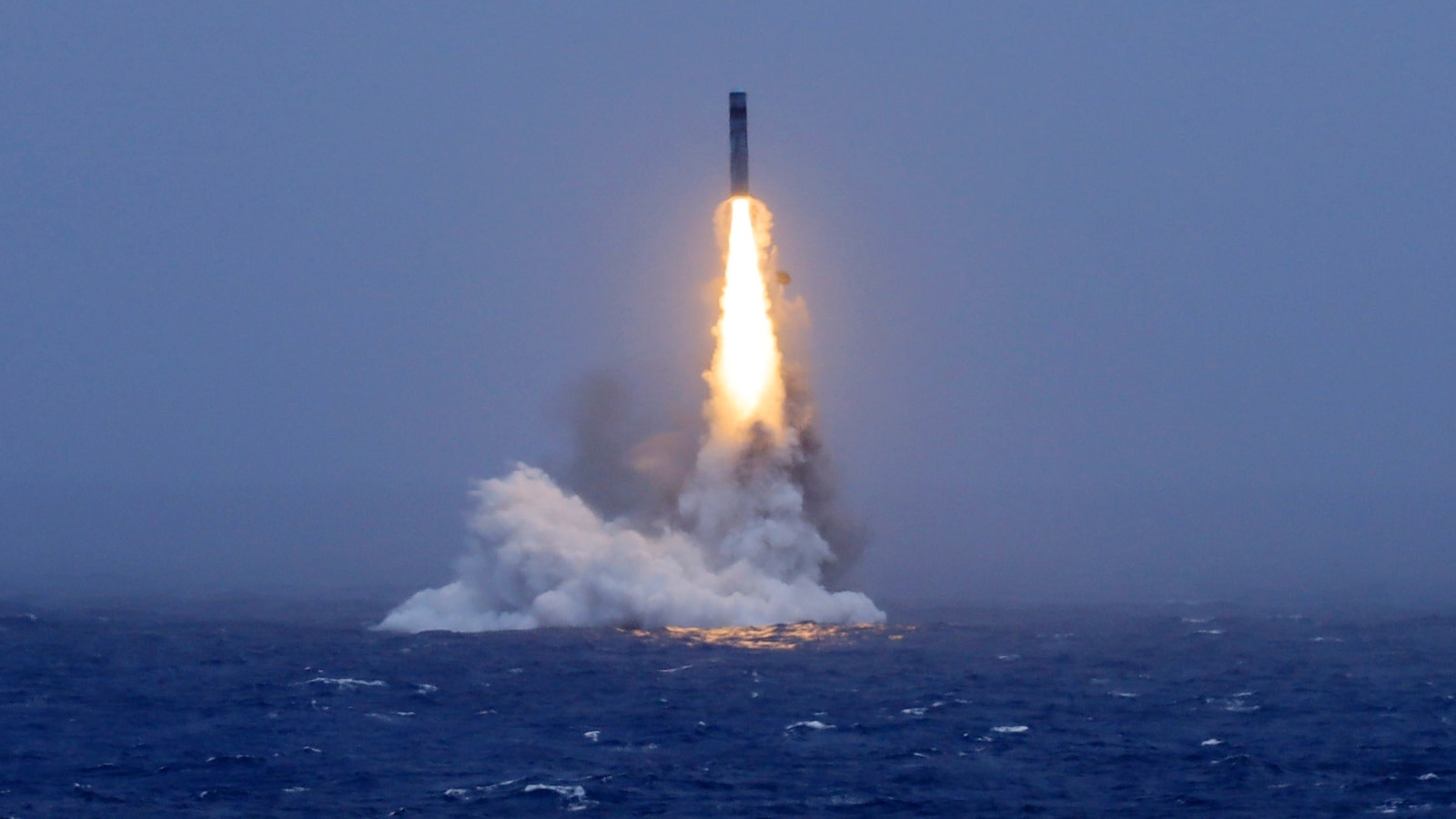
China conducted a test-launch of a nuclear-capable ballistic missile into the South Pacific on Monday, July 6, 2026, drawing sharp condemnation from regional nations and the United States. The missile, launched from a nuclear-powered submarine, was described by Beijing as part of routine annual exercises, though experts and governments across the Pacific viewed it as a strategic demonstration of China’s growing military capabilities.
The test occurred in the South Pacific Nuclear Free Zone established by the 1986 Treaty of Rarotonga, which prohibits nuclear weapons in the region. China ratified the treaty’s protocols in 1987, pledging not to test nuclear weapons within the zone or threaten signatories with territory in the area. However, the missile’s trajectory violated these norms, prompting criticism from Pacific nations and international observers. According to Chinese state media, the missile was a JL-3 submarine-launched ballistic missile, capable of striking targets on the eastern side of the Pacific from the western side. However, the secretary-general of Taiwan’s National Security Council identified it as a JL-2 missile, an older model, while Chinese state media emphasized the JL-3’s extended range. The Chinese Defense Ministry stated the launch carried a dummy warhead and was not directed at any specific country or target.
Regional leaders condemned the move as provocative. Solomon Islands Prime Minister Matthew Wale called it “not something a friend does,” while Australia’s Prime Minister Anthony Albanese labeled it a destabilizing act. New Zealand’s Foreign Minister Winston Peters criticized China for failing to provide adequate notice, despite Beijing’s claim that it had informed relevant nations in advance. Japan’s Defense Ministry expressed concerns over the lack of transparency and urged China to avoid actions that could threaten regional security. The test also reignited tensions over historical grievances, as Pacific nations, many of which suffered from nuclear testing by the U.S., UK, and France in the 20th century, voiced concerns about environmental and health impacts. “These kinds of missile tests haven’t been conducted since,” said Dominic Meagher, a research fellow at the Crawford School of Public Policy, referencing the Rarotonga Treaty’s enforcement.
The launch underscored China’s advancement in its nuclear triad, a capability that includes land, sea, and air-based nuclear systems. Experts highlighted its demonstration of a “second-strike capability,” ensuring China could retaliate even after a first strike. Tong Zhao of the Carnegie Endowment for International Peace noted that the test reflected China’s emergence as a major military force. The missile testing comes as China accelerates its buildup of nuclear-powered submarines, outpacing the U.S. In production over the past five years. The Pentagon’s 2025 report estimated China’s nuclear warhead stockpile at around 600, projecting it could surpass 1,000 by 2030. Analysts argued the test was part of a broader strategy to assert influence in the Pacific, particularly as Beijing deepens bilateral ties with small island nations, prompting Australia and others to strengthen defense alliances.
The U.S. State Department condemned the launch, calling China’s nuclear buildup a “grave concern” and urging dialogue on arms control. However, the test coincided with the signing of an Australia-Fiji defense treaty aimed at countering Chinese influence, highlighting the shifting geopolitical landscape. Critics emphasized that China’s lack of transparency and adherence to international norms, such as the non-binding Hague Code of Conduct, exacerbates regional anxieties. As China continues to modernize its military, the Pacific region faces a complex challenge: balancing engagement with a rising power against the need to uphold international agreements and regional stability. The missile test serves as a stark reminder of the delicate interplay between military ambition, historical legacies, and the fragile diplomacy required to navigate an increasingly multipolar world.
How significant is this development?
Cast your anonymous vote to register reader sentiment across business and policy circles.
CurrentDeck is dedicated to independent, evidence-backed reporting. This briefing was synthesized from primary source reporting, corroborated across independent newsrooms, and verified against our Editorial Standards.